How to Grind a Concrete Floor
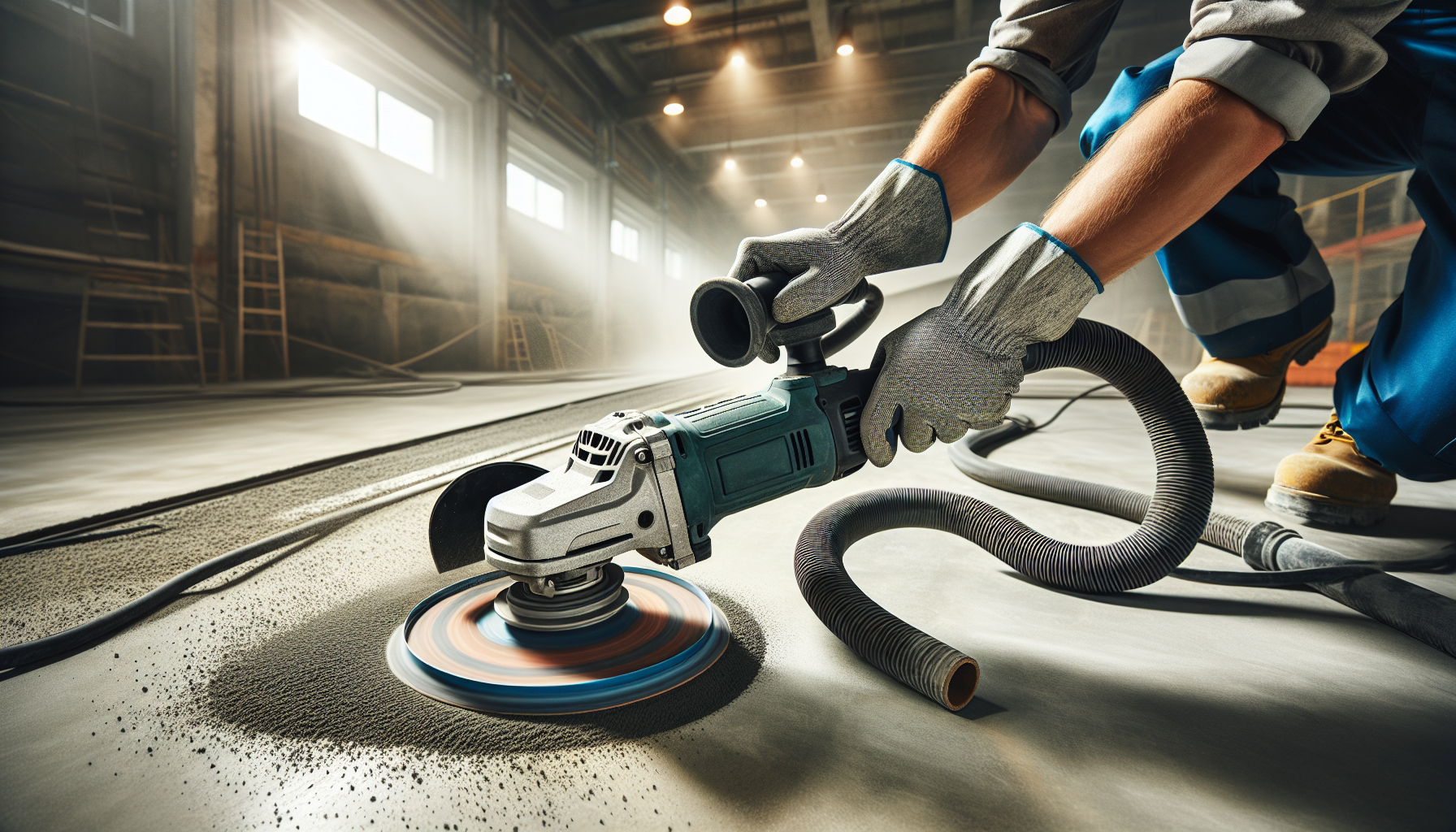
When you grind concrete floor surfaces, you set the foundation for everything that follows — polishing, coating application, or leveling. Whether you’re prepping a garage floor for epoxy or starting a decorative polish, the technique and equipment matter. This guide covers how to grind a concrete floor from equipment selection through finishing. Whether this is your first time or you grind concrete floor surfaces regularly, the fundamentals apply.
Equipment You Need to Grind a Concrete Floor
For small areas (under 200 sq ft): An angle grinder (4.5” or 7”) with a diamond grinding cup wheel and a vacuum shroud + HEPA dust extractor. This is the DIY-friendly setup.
For large areas (200+ sq ft): A walk-behind planetary floor grinder. These machines have 3-4 rotating heads that spin simultaneously, covering large areas efficiently. Rental cost is typically $200-400/day from equipment rental companies. Brands include HTC, Husqvarna, Lavina, and Diamatic.
Dust control (mandatory): Either a vacuum shroud (for grinders) or a built-in dust extraction system (for floor grinders). Concrete grinding generates massive amounts of silica dust. See Silica Dust Safety Guide.
Step 1: Assess the Floor
Before grinding, identify what’s on the floor: existing coatings (epoxy, paint, sealers), adhesive residue (carpet glue, tile mastic), high spots and lips between pours, and cracks or spalls that need repair. Each condition requires a different approach. Heavy coatings need aggressive tooling (PCD cup wheels or single-row diamond cups). Bare concrete just needs standard diamond grinding.
Step 2: Choose Your Grinding Tooling
For coating removal: Single row cup wheel or PCD segments. See Single Row vs Double Row vs Turbo Cup Wheels.
For leveling and stock removal: Single row or turbo cup wheel with coarse (30-60 grit) diamond segments.
For surface prep (before coating): Double row or turbo cup wheel at medium grit (60-120). Create enough profile for the coating to bond without going too deep.
For polishing prep: Start with metal bond segments at 30-50 grit on a floor grinder, then progress through finer grits. See Concrete Polishing Grit Progression Guide.
Step 3: Grind the Floor
Work in overlapping passes, moving steadily across the surface. Don’t dwell in one spot — keep the grinder moving to avoid creating low spots. For floor grinders, work in a grid pattern with 50% overlap between passes. Make multiple light passes rather than one aggressive pass.
Step 4: Inspect and Repeat
After each pass, inspect the floor. Are coatings fully removed? Are high spots level? Is the surface profile consistent? Run your hand across the surface — it should feel uniformly rough with no smooth spots (which indicate missed areas).
Common Mistakes When You Grind a Concrete Floor (and How to Avoid Them)
No dust control — the most dangerous mistake. One grinding session without extraction can expose you to harmful silica levels.
Wrong cup wheel pattern — using a double row for heavy coating removal is painfully slow; using a single row for finish prep leaves too rough a surface.
Going too deep — aggressive grinding can expose aggregate prematurely or create low spots that are hard to fix.
For product recommendations Every time you grind concrete floor areas, the prep and dust control steps remain the same., see Best Grinding Cup Wheels for Concrete. For the next step after grinding, see How to Polish Concrete Floors.
Recommended Grinding Cup Wheels
Virginia Abrasives manufactures diamond grinding cup wheels — check the VA Amazon store for current availability. For diamond blades to pair with your grinding work, the VA 14-inch Ultra Value handles any cutting you need on the same job.
Frequently Asked Questions
What equipment do I need to grind a concrete floor? ▼
At minimum: an angle grinder with a diamond cup wheel for small areas, or a walk-behind floor grinder for large areas. You'll also need a vacuum/dust shroud, respirator, and knee pads.
How much concrete does grinding remove? ▼
A single pass with a grinding cup wheel typically removes 1/16 to 1/8 inch of concrete. Multiple passes can remove more, but for heavy removal (1/4 inch+), a scarifier or shot blaster is more efficient.
Can I grind concrete myself? ▼
Yes — small areas with an angle grinder and cup wheel are DIY-friendly. Large floor areas require a walk-behind grinder, which can be rented from equipment rental companies.
Related Guides
- Best Grinding Cup Wheels for Concrete— Best diamond grinding cup wheels for concrete leveling, coating removal, and sur…
- Grinding Cup Wheels: The Complete Buying Guide— Diamond grinding cup wheel buying guide. Segment patterns, bond types, and how t…
- How to Polish Concrete Floors— How to polish concrete floors — equipment, grit progression, densifier applicati…
- Single Row vs Double Row vs Turbo Cup Wheels— Single row vs double row vs turbo diamond cup wheels — which segment pattern to …
Shop Virginia Abrasives on Amazon
Diamond blades, cut-off wheels, and grinding tools. U.S. manufactured. Free Prime shipping.
Browse Products →