Wet vs Dry Cutting Concrete: Which Is Better?
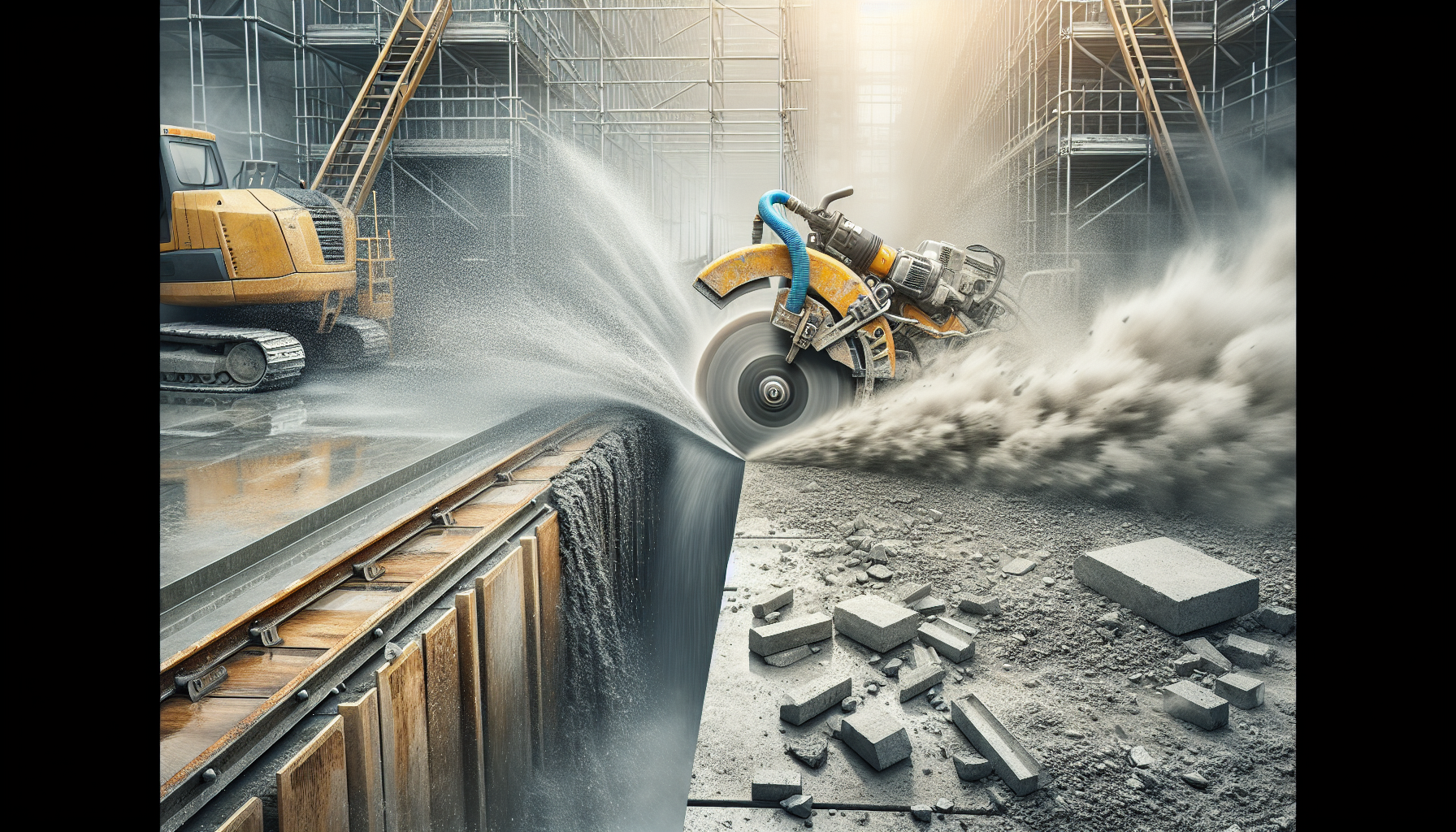
Every concrete cutting job presents the same question: wet or dry? The answer affects blade life, dust exposure, cut quality, and job site logistics. This guide breaks down wet vs dry cutting concrete so you can make the right call for every situation.
How Wet Cutting Works
Wet cutting uses water delivered to the blade during operation. The water serves three functions: it cools the blade (preventing heat damage to diamond segments), it lubricates the cut (reducing friction and extending blade life), and it suppresses dust (trapping silica particles in slurry instead of releasing them into the air).
Most walk-behind saws, tile saws, and masonry table saws are designed for wet cutting. Many handheld cut-off saws (Stihl TS 420, Husqvarna K 770) have optional water kits. The water supply can be a pressurized tank, a gravity-fed bottle, or a hose connection.
How Dry Cutting Works
Dry cutting uses no water. The blade relies on air cooling from gullets between segments and periodic pauses to manage heat. Dry cutting is standard for angle grinder work and common with handheld cut-off saws in field conditions where water isn’t practical.
The critical requirement for dry cutting is dust control. Concrete dust contains crystalline silica, which causes silicosis — a serious, irreversible lung disease. OSHA’s silica standard (29 CFR 1926.1153) requires engineering controls for dust suppression. For dry cutting, that means a vacuum shroud on grinders or working with adequate ventilation and a respirator. See our Silica Dust Safety Guide for full compliance details.
Wet vs Dry Cutting Concrete: Blade Life Impact
Wet cutting typically extends diamond blade life by 2-3x compared to dry cutting on the same material. The water prevents thermal damage to the bond matrix, reduces segment glazing, and flushes abrasive debris from the cut. If blade longevity is your priority, wet cutting wins every time.
For more on maximizing blade life, see our Diamond Blade Lifespan Guide.
Wet vs Dry Cutting Concrete: Cut Quality
Wet cutting produces smoother, cleaner cuts with less edge chipping. The water lubricates the blade-to-material contact and reduces vibration. For decorative concrete, countertop fabrication, and tile work, wet cutting is strongly preferred.
Dry cutting produces rougher edges and more chipping, which is fine for demolition, joint cutting, and structural work where aesthetics don’t matter.
When to Cut Wet
- Walk-behind saw operations (virtually always wet)
- Tile and stone cutting on table saws
- Long-duration cutting where blade life matters
- Indoor work where dust suppression is critical (though slurry must be managed)
- Countertop and decorative concrete fabrication
- Any job where cut quality matters
When to Cut Dry
- Angle grinder work (grinders and water don’t mix safely)
- Quick field cuts where water setup isn’t practical
- Short cuts where blade life impact is minimal
- Electrical work areas where water is a hazard
- Situations where slurry cleanup is impractical
The Dust Problem with Dry Cutting
The biggest downside of dry cutting concrete isn’t blade wear — it’s health risk. Concrete dust contains respirable crystalline silica, and OSHA limits exposure to 50 micrograms per cubic meter over an 8-hour shift. A single dry cut through concrete without controls can exceed this limit in minutes.
For angle grinders: Use a vacuum shroud connected to a HEPA-filtered dust extractor.
For handheld cut-off saws: OSHA Table 1 requires either a water delivery system or an integrated dust collection system. Most contractors use water on cut-off saws.
For walk-behind saws: Wet cutting with adequate water flow meets Table 1 requirements.
Making the Decision: Wet vs Dry Cutting Concrete
For most professional concrete cutting, wet cutting is the better choice. It extends blade life, improves cut quality, and handles dust control in one step. Dry cutting is appropriate for quick field cuts, angle grinder work, and situations where water creates problems.
Whatever method you choose, never ignore dust control. Silicosis is preventable — but only if you take the right precautions every time you cut.
For blade selection guidance, see our Diamond Blade Buying Guide. For saw selection, see our Concrete Saw Buying Guide.
Blades Rated for Wet and Dry Cutting
| Blade | Best For | Link |
|---|---|---|
| VA 14-inch Ultra Value | Best all-around for cured concrete, block, and general masonry | Check price on Amazon |
| VA 14-inch BD Asphalt/Green Concrete | Hard bond for asphalt, green concrete, and soft materials | Check price on Amazon |
Frequently Asked Questions
Does wet cutting concrete extend blade life? ▼
Yes — wet cutting typically extends diamond blade life by 2-3x compared to dry cutting. Water cools the blade, reduces friction, and flushes cutting debris from the kerf.
When should I dry cut concrete? ▼
Dry cutting is appropriate when water isn't available, when water damage is a concern (indoor work near electronics or finishes), or for quick shallow cuts with an angle grinder.
Is dry cutting concrete safe? ▼
Dry cutting generates silica dust, which is a serious health hazard. OSHA requires dust controls — either a vacuum shroud or a respirator. Wet cutting is the safer method for dust control.
Related Guides
- Concrete Saws: The Complete Buying Guide— Concrete saw buying guide — gas vs electric vs battery, handheld vs walk-behind,…
- Diamond Blades: The Complete Buying Guide— Complete diamond blade buying guide covering bond types, segment styles, sizes, …
- Diamond Blade Lifespan: How Long Should It Last?— Diamond blade lifespan explained. Factors that affect wear, expected cutting fee…
- Silica Dust Safety for Concrete Cutting Pros— OSHA silica dust standards for concrete cutting. Table 1 compliance, dust contro…
Shop Virginia Abrasives on Amazon
Diamond blades, cut-off wheels, and grinding tools. U.S. manufactured. Free Prime shipping.
Browse Products →