Diamond Blades: The Complete Buying Guide
Matt Lipman is a board member of Virginia Abrasives. This relationship is disclosed for full transparency in our reviews and recommendations.

Not sure which diamond blade you need? This diamond blade buying guide explains how diamond blades work, what makes one blade right for your job and another wrong, and how to match blade size, segment type, and bond hardness to the material you’re cutting and the saw you’re using.
Whether you’re a contractor cutting concrete every day or a homeowner tackling a single project, the wrong blade wastes money and time. The right blade cuts faster, lasts longer, and keeps you safer. Here’s everything you need to know in this diamond blade buying guide.
How Diamond Blades Work
A diamond blade doesn’t actually “cut” — it grinds. The blade’s rim is made up of segments containing tiny industrial diamonds embedded in a metal matrix (the “bond”). As the blade spins and contacts the material, the diamonds scratch and grind through it. As each diamond wears down and falls out, the bond matrix erodes just enough to expose fresh diamonds underneath. This self-sharpening cycle is what makes diamond blades work — and why matching the bond to your material matters so much.
The steel core of the blade provides rigidity and transfers power from the saw’s arbor to the cutting segments. Between the segments, you’ll see gaps called “gullets” — these help clear debris (slurry) from the cut and allow air to cool the blade.
Choosing a Blade by What You’re Cutting
The single most important factor in this diamond blade buying guide is the material you’re cutting. Different materials have very different hardness levels, and that directly determines which blade bond and segment type you need.
Concrete (Cured)
Cured concrete is the most common material for diamond blade cutting. It’s abrasive, which means it wears through the bond quickly. You need a blade with a hard bond to resist that wear and give you a reasonable blade life. Most general-purpose diamond blades are designed for cured concrete. If the concrete contains heavy rebar, look for blades specifically rated for reinforced concrete — they use a softer bond and a diamond concentration that can handle both the steel and the aggregate without glazing over.
For our top picks, see Best Diamond Blades for Concrete.
Green (Fresh) Concrete
Green concrete (less than roughly 48 hours old) is softer and much less abrasive than cured. Because it doesn’t wear the bond down quickly, you need a soft bond blade so new diamonds keep getting exposed. Use a hard-bond blade on green concrete and it’ll glaze over — the diamonds go dull, the bond doesn’t erode, and the blade stops cutting.
See our Best Diamond Blades for Green Concrete for specific recommendations.
Asphalt
Asphalt is very abrasive and soft, which chews through diamond blade segments quickly. You need a hard bond blade — even harder than what you’d use for cured concrete. Many manufacturers make asphalt-specific blades with wider segments for longer life.
See our Best Diamond Blades for Asphalt for our top picks.
Pavers, Brick, and Block
These masonry materials vary widely. Clay pavers and bricks are generally very abrasive (hard bond needed). Concrete pavers act like cured concrete. For all of these, a general-purpose “masonry” blade usually works well. If you’re doing high-volume paver cutting on a table saw, invest in a blade specifically designed for pavers.
See our Best Diamond Blades for Pavers.
Natural Stone (Granite, Marble, Limestone, Sandstone)
Natural stone spans a huge range of hardness. Granite is extremely hard and non-abrasive — you need a soft bond blade with high diamond concentration. Limestone and sandstone are softer and more abrasive — a harder bond works better. For any natural stone work, get a blade specifically rated for the stone type.
Porcelain and Ceramic Tile
Porcelain is extremely hard and dense. It requires a continuous rim blade with a very soft bond and fine diamond grit to cut without chipping. These are almost always used wet on tile saws. Never use a segmented concrete blade on porcelain — you’ll get chips and a terrible cut.
Reinforced Concrete (with Rebar)
Cutting through rebar embedded in concrete is one of the toughest applications. The blade needs to handle two completely different materials: abrasive concrete (wants a hard bond) and steel rebar (wants a soft bond). Combo blades for reinforced concrete split the difference with a medium bond and segments designed for versatility.
Choosing a Diamond Blade by Your Saw
Your saw determines the blade size, arbor hole size, and in many cases whether you should run wet or dry. Here’s what you need to know for each saw type covered in this diamond blade buying guide.
Hand-Held Cut-Off Saws (Concrete Saws)
The Stihl TS 420, TS 500i, Husqvarna K 770, and K 1 PACE are the workhorses of the concrete cutting world. These gas and battery-powered hand-held saws typically take 12″ or 14″ blades with a 1″ (25.4mm) arbor. Most field use is dry.
For brand-specific recommendations, see our guides for Stihl, Husqvarna, DeWalt, Milwaukee, and Makita.
Walk-Behind Saws (Flat Saws)
Walk-behind flat saws are used for joint cutting, road repair, and large-scale concrete removal. They take 14″ to 36″ blades with 1″ arbors and almost always run wet.
Angle Grinders
Small grinders (4.5″ and 5″) take 4″, 4.5″, or 5″ blades. Larger grinders (7″ and 9″) take 7″ or 9″ blades. The standard arbor is 7/8″ (22.23mm). Almost always run dry. See our guide on How to Cut Concrete with an Angle Grinder.
Table Saws and Masonry Saws
Masonry table saws use 14″ or 20″ blades with 1″ arbors. These saws run wet and are designed for repetitive, precise cuts on pavers, brick, block, and stone.
Ring Saws, Wall Saws, and Wire Saws
These specialty saws use proprietary blade formats — always match the blade to the manufacturer’s specifications.
Blade Sizes Explained
- 4″ to 5″ — Small angle grinders. Arbor: 7/8″.
- 7″ — Large angle grinders. Arbor: 7/8″.
- 9″ — 9″ angle grinders. Arbor: 7/8″.
- 10″ — Some masonry table saws and tile saws. Arbor: typically 5/8″.
- 12″ — Hand-held cut-off saws (some models). Arbor: 1″ or 20mm.
- 14″ — The most popular size. Fits most hand-held cut-off saws, walk-behinds, and masonry table saws. Arbor: 1″ or 20mm.
- 16″ to 20″ — Walk-behind saws, large table saws. Arbor: 1″.
- 24″ to 36″+ — Large walk-behind saws for deep road cuts. Arbor: 1″.
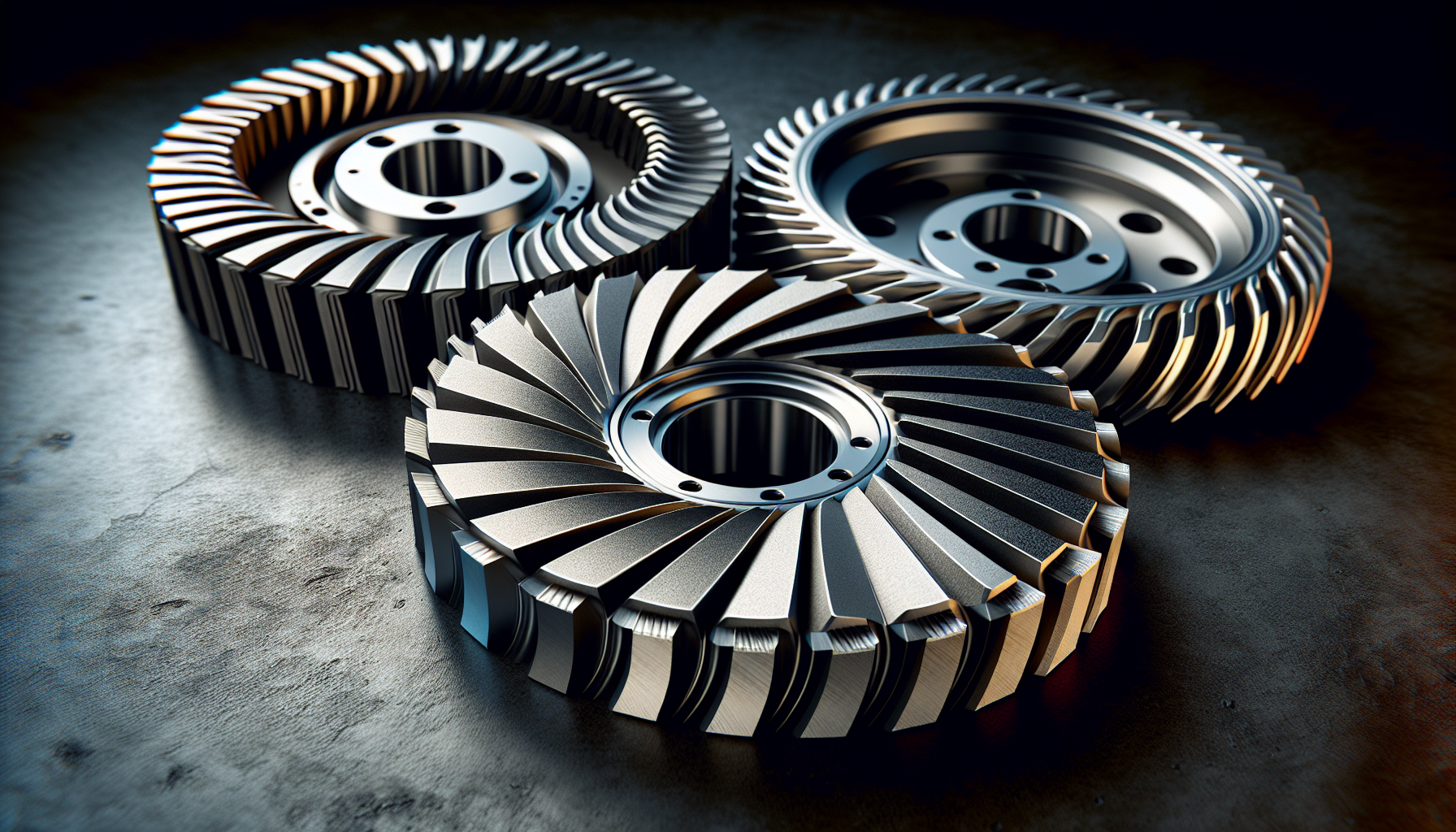
Segment Types: Segmented, Turbo, and Continuous Rim
Segmented
The most common type for concrete cutting. The rim is divided into separate segments with gullets between them. Aggressive cutters, work well dry or wet, produce a rougher cut. Best for: general concrete, asphalt, masonry, and demolition work.
Turbo
Continuous rim with serrated edges. Faster cutting than continuous rim, smoother cut than segmented. Best for: general-purpose cutting where you want a cleaner finish — concrete, brick, stone, and tile. Popular on angle grinders.
Continuous Rim
No gullets — the diamond rim goes all the way around. Smoothest, cleanest cut with the least chipping. Generates more heat and almost always needs wet cutting. Cuts more slowly. Best for: porcelain tile, ceramic, marble, granite, and any application where chip-free edges matter.
Wet vs. Dry Cutting
Wet cutting uses water to cool the blade and suppress dust. It dramatically extends blade life, reduces silica dust exposure, and allows more effective cutting of harder materials. Walk-behind saws, tile saws, and masonry table saws almost always run wet.
Dry cutting is more convenient for field work. Hand-held cut-off saws and angle grinders are commonly used dry. When cutting dry, take shallow passes and let the blade cool periodically. Dust control is critical — use a vacuum shroud on grinders or work upwind.
Important: Some blades are rated “wet or dry” and some are “wet only.” Never run a wet-only blade dry. The blade can overheat, warp, lose segments, or shatter.
Bond Hardness: The Most Important Concept in This Diamond Blade Buying Guide
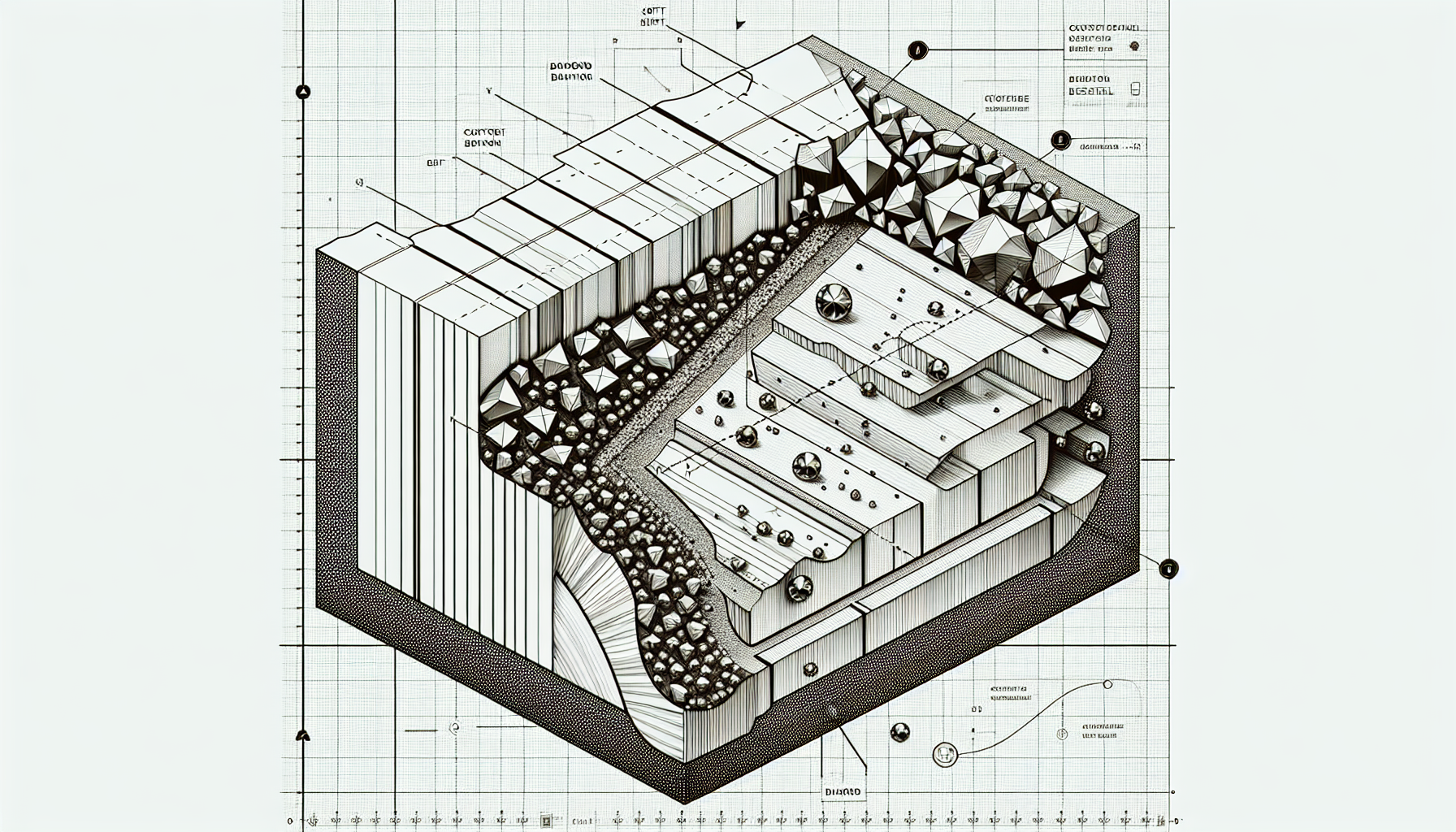
This is counterintuitive: hard materials need a soft bond, and soft materials need a hard bond.
The bond matrix holds the diamonds in place. If the material is hard (like granite), it doesn’t wear the bond much — so you need a soft bond that erodes on its own to keep exposing fresh diamonds. If the material is soft and abrasive (like asphalt), it wears the bond very quickly — so you need a hard bond to hold the diamonds longer.
If you get this backwards:
- Hard bond on hard material: the blade “glazes” — diamonds go dull, bond doesn’t erode, blade stops cutting. See How to Fix a Glazed Diamond Blade.
- Soft bond on soft material: the bond wears too fast, diamonds fall out prematurely, blade life is a fraction of expected.
Most manufacturers describe bond hardness as soft, medium, or hard. When in doubt, medium bond is the safest general-purpose choice.
Common Mistakes to Avoid
Using the wrong blade for the material. A concrete blade on asphalt wears out too fast. A granite blade on concrete is overkill and cuts slowly. Always match the blade to the material.
Running a wet-only blade dry. Dangerous — the blade overheats, the steel core can warp, and segments can fly off.
Exceeding the max RPM. If your saw spins faster than the blade is rated for, the blade can come apart. Always check.
Forcing the blade through the cut. Let the blade do the work. Applying too much pressure overloads the segments and overheats the blade.
Ignoring dust. Concrete dust contains crystalline silica, which causes silicosis. Always use water suppression, a vacuum system, or at minimum an N95 respirator. See our Silica Dust Safety Guide.
Not dressing a glazed blade. If your blade has glazed over, make a few cuts in cinder block or asphalt to re-expose fresh diamonds. More detail in our glazed blade fix guide.
How Much Should You Spend?
Diamond blade pricing ranges from under $20 for a basic 4.5″ grinder blade to $500+ for a premium 14″ professional blade. For daily professional use, a premium blade with taller segments and higher diamond concentration pays for itself in longer life and faster cutting speed. Calculate cost per cut or cost per linear foot, not just the sticker price.
The biggest waste of money is buying a premium blade in the wrong specification. A $300 blade that’s wrong for your material will underperform a $50 blade that’s right for it.
For blade longevity tips, see our Diamond Blade Lifespan Guide.
Recommended Blades by Application
| Blade | Best For | Link |
|---|---|---|
| VA 14-inch Ultra Value | Best all-around for cured concrete, block, and general masonry | Check price on Amazon |
| VA 14-inch BD Asphalt/Green Concrete | Hard bond for asphalt, green concrete, and soft materials | Check price on Amazon |
| VA 14-inch DuroGrid | Joint cutting and general-purpose performance | Check price on Amazon |
| VA 14-inch Premium Sparkie | Premium blade for high-volume production cutting | Check price on Amazon |
| VA 9-inch Ultra Value | For 9-inch angle grinders and cordless cut-off saws | Check price on Amazon |
Frequently Asked Questions
What diamond blade do I need for cutting concrete? ▼
For cured concrete, use a segmented blade with a soft-to-medium bond. The concrete's abrasiveness wears the bond down, exposing fresh diamonds. For reinforced concrete with rebar, choose a combo blade rated for both concrete and steel.
Can I use a wet blade for dry cutting? ▼
Only if it's rated 'wet or dry.' Never run a wet-only blade (typically continuous rim) without water — it can overheat, warp, or lose segments. Always check the manufacturer's rating before cutting dry.
Why did my diamond blade stop cutting? ▼
Most likely glazing — the bond has smeared over the diamonds so no fresh cutting edges are exposed. This happens when you use a hard-bond blade on hard material. Fix it by making a few cuts in abrasive material like cinder block to re-expose the diamonds.
What's the difference between segmented, turbo, and continuous rim blades? ▼
Segmented blades cut aggressively with gaps between segments for cooling and debris removal — best for concrete and masonry. Turbo blades have a serrated continuous rim for a balance of speed and smoothness. Continuous rim blades cut slowest but smoothest with no chipping — best for tile and stone.
Related Guides
- Best Diamond Blades for Cutting Asphalt (2026)— Best diamond blades for asphalt cutting — hard bond blades tested and ranked. To…
- Best Diamond Blades for Cutting Concrete— Best diamond blades for concrete in every size — 4" to 20". Good, Better, Best p…
- Best Diamond Blades for Green Concrete— Best diamond blades for cutting green (fresh) concrete. Soft-bond blades for ear…
- Best Diamond Blades for Husqvarna Power Cutters (K 770, K 970, K 1 PACE)— Best diamond blades for Husqvarna K 770, K 970, and K 1 PACE power cutters. Comp…
- Best Diamond Blades for Cutting Pavers (2026 Reviews)— Best diamond blades for pavers — clean cuts on brick, concrete pavers, and natur…
- Best Diamond Blades for Stihl Cut-Off Saws (TS 420, TS 500i, TS 700, TS 800)— Best diamond blades for Stihl TS 420, TS 500i, TS 700, and TS 800. Compatibility…
- Diamond Blade Lifespan: How Long Should It Last?— Diamond blade lifespan explained. Factors that affect wear, expected cutting fee…
- How to Fix a Glazed Diamond Blade— How to fix a glazed diamond blade that stopped cutting. Dressing techniques, cau…
Shop Virginia Abrasives on Amazon
Diamond blades, cut-off wheels, and grinding tools. U.S. manufactured. Free Prime shipping.
Browse Products →