Cut-Off Wheels: The Complete Buying Guide
Matt Lipman is a board member of Virginia Abrasives. This relationship is disclosed for full transparency in our reviews and recommendations.
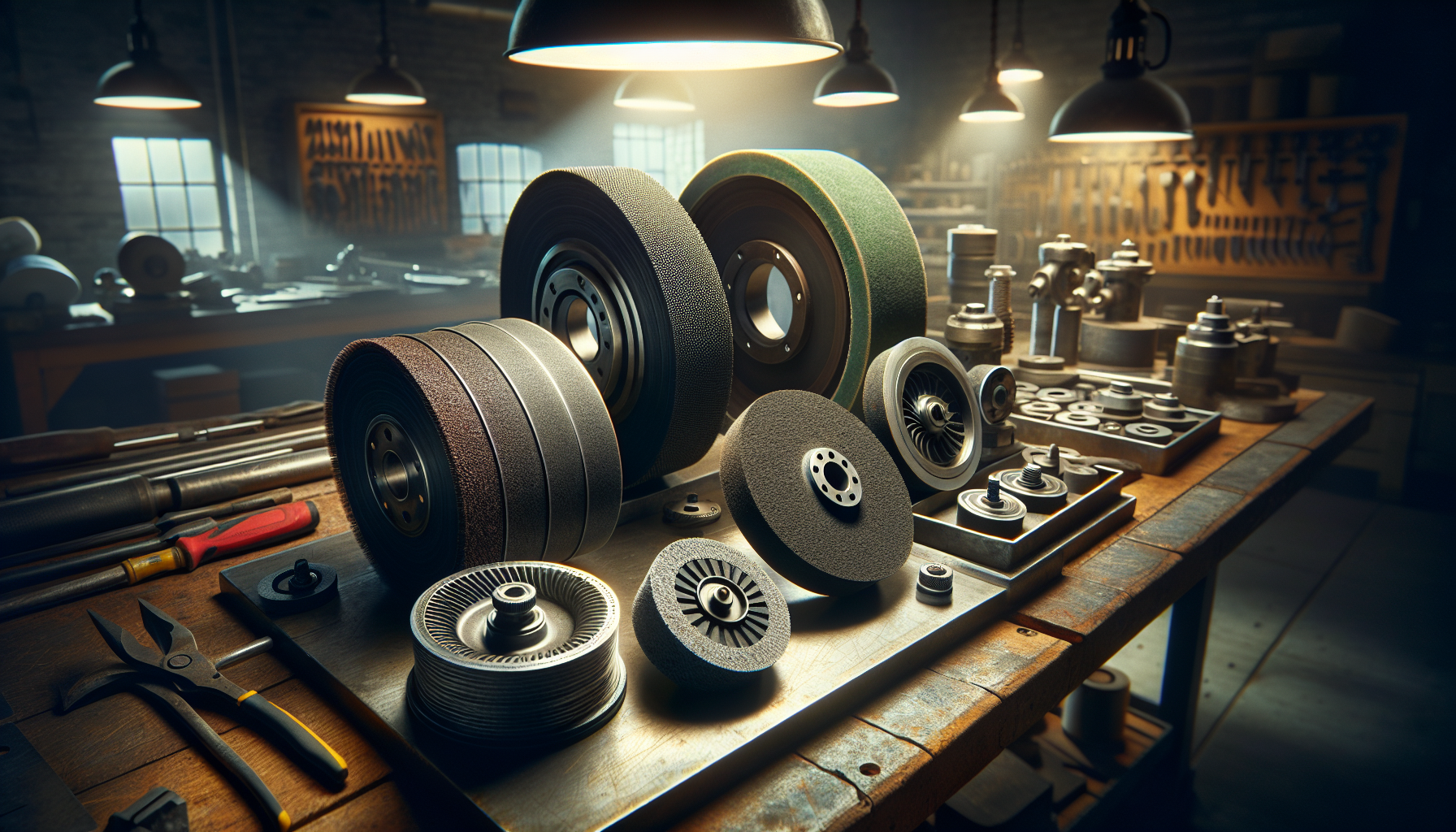
Cut-off wheels are one of the most used — and most misunderstood — consumables on a job site. This cut-off wheel buying guide covers everything you need to know: abrasive vs. diamond, Type 1 vs. Type 27, how to match wheel size and RPM rating to your tool, and which wheel to pick for the material you’re cutting.
Abrasive vs. Diamond Cut-Off Wheels
Abrasive Cut-Off Wheels
Abrasive cut-off wheels are made from bonded abrasive grains (aluminum oxide, silicon carbide, or zirconia alumina) reinforced with fiberglass mesh. They cut by grinding through material and wear down as they work — getting smaller with every cut. They’re inexpensive, cut fast, and available everywhere. The trade-off is they need frequent replacement on high-volume jobs.
Abrasive wheels are the standard for metal cutting (steel, stainless, rebar, pipe) and widely used for concrete and masonry.
Diamond Cut-Off Wheels
Diamond cut-off wheels use industrial diamonds embedded in a metal segment, similar to larger diamond blades. They don’t shrink in diameter — the diamond rim wears but the steel core stays. Diamond wheels last 50-100x longer than abrasive wheels but cost more upfront. On high-volume jobs, cost per cut is usually much lower with diamond.
Diamond wheels are primarily for concrete, masonry, stone, and tile. For more on the economics, see Diamond vs Abrasive Cut-Off Wheels.
Type 1 vs. Type 27: Flat vs. Depressed Center
Type 1 (Flat) — Completely flat, designed for straight plunge cuts. Used on chop saws and hand-held cut-off saws. Most 12″ and 14″ wheels are Type 1.
Type 27 (Depressed Center) — Raised hub that offsets the cutting surface from the mounting flange. Designed for angle grinders, allowing cuts flush with or below a surface. Most 4.5″ through 9″ grinder wheels are Type 27.
Safety note: Never swap types between tools. The guard position, flange configuration, and cutting angle are different. Wrong type = risk of wheel breakage.
Cut-Off Wheel Sizes
This cut-off wheel buying guide covers all common sizes:
- 4.5″ — Most common angle grinder size. Arbor: 7/8″. Standard for field work on rebar, pipe, concrete, and masonry.
- 7″ — Large angle grinders. Deeper cuts than 4.5″. Arbor: 7/8″.
- 9″ — Heavy rebar and demolition. Arbor: 7/8″.
- 12″ — Chop saws. Type 1 flat. Arbor: 1″ or 20mm.
- 14″ — Standard chop saw size, highest-volume in the industry. Arbor: 1″ or 20mm. See Best 14-Inch Cut-Off Wheels for our top picks.
Choosing by Material
Mild Steel and Carbon Steel
Standard aluminum oxide abrasive wheels. Look for “metal” or “steel” labels. See Best Cut-Off Wheels for Metal.
Stainless Steel
Requires wheels free of iron, sulfur, and chlorine contaminants. Look for “stainless” or “INOX” labels. Never use a standard metal wheel on stainless — contamination causes rust spots.
Concrete and Masonry
Abrasive wheels use silicon carbide (green/gray color). Diamond cut-off wheels are increasingly popular for professional concrete work. See Best Cut-Off Wheels for Concrete.
Multi-Material
“Multi-purpose” wheels handle both metal and masonry — useful on demo jobs where you hit rebar in concrete. They compromise on single-material optimization but provide convenience.
RPM Ratings and Safety
Every cut-off wheel has a maximum RPM rating. Your tool’s speed must never exceed the wheel’s max RPM. Common ratings: 4.5″ = 13,300 RPM, 7″ = 8,500 RPM, 14″ = 4,400-5,500 RPM.
A wheel that comes apart at speed sends fragments at extreme velocity. Always check the RPM printed on every wheel before mounting.
Wheel Thickness
Thinner wheels cut faster and require less power but flex more and are less forgiving of side pressure. Standard 4.5″ wheels are 0.045″ (1.0mm) thick. Thicker versions at 1/16″ provide more rigidity and longer life. For 14″ chop saw wheels, standard is 3/32″ to 1/8″.
Shelf Life and Storage
Unlike diamond blades, abrasive cut-off wheels have a limited shelf life — typically 3 years from manufacture. The resin bond degrades with moisture, temperature swings, and UV light. Never use an expired abrasive wheel. Store flat, dry, and in original packaging.
When to Choose Diamond Over Abrasive
Diamond makes economic sense when wheel changes become a significant time and cost factor. If you’re burning through multiple abrasive wheels per day on concrete, a single diamond wheel saves money even at 10-20x upfront cost. For occasional metal cutting, abrasive wheels are still the practical choice.
Common Mistakes
Using a metal wheel on masonry (or vice versa) — different abrasive grains, not interchangeable.
Exceeding RPM rating — the most dangerous power tool scenario. Always verify.
Applying side pressure — cut-off wheels are for plunge cuts, not grinding. Side force can shatter the wheel.
Using expired wheels — check the date stamp. Old resin bonds break more easily.
Skipping PPE — safety glasses, hearing protection, gloves. For masonry: add a respirator. See our Silica Dust Safety Guide.
Recommended Diamond Cut-Off Wheels (Longer Lasting Alternative)
| Blade | Best For | Link |
|---|---|---|
| VA 14-inch Ultra Value | Best all-around for cured concrete, block, and general masonry | Check price on Amazon |
| VA 9-inch Ultra Value | For 9-inch angle grinders and cordless cut-off saws | Check price on Amazon |
Frequently Asked Questions
What's the difference between a cut-off wheel and a diamond blade? ▼
Cut-off wheels are thin abrasive discs that wear down as they cut — they're cheaper but disposable. Diamond blades have diamond-embedded segments on a steel core and last much longer. For heavy concrete cutting, diamond blades are more cost-effective.
Can I use a metal cut-off wheel on concrete? ▼
No — metal cut-off wheels are designed for steel and will shatter or burn through immediately on concrete. Use a masonry or concrete-rated cut-off wheel instead.
What RPM should I run a cut-off wheel at? ▼
Never exceed the wheel's rated RPM — it's printed on the label. Most 4.5-inch wheels are rated for 13,300 RPM. Running over-speed risks wheel failure, which is a serious safety hazard.
Related Guides
- Best Cut-Off Wheels for Concrete— Best cut-off wheels for concrete on angle grinders and chop saws. Diamond vs abr…
- Diamond Blades: The Complete Buying Guide— Complete diamond blade buying guide covering bond types, segment styles, sizes, …
- How to Cut Metal with an Angle Grinder— How to cut metal with an angle grinder — wheel selection, safety, technique, and…
Shop Virginia Abrasives on Amazon
Diamond blades, cut-off wheels, and grinding tools. U.S. manufactured. Free Prime shipping.
Browse Products →