How to Choose the Right Diamond Blade for Any Job
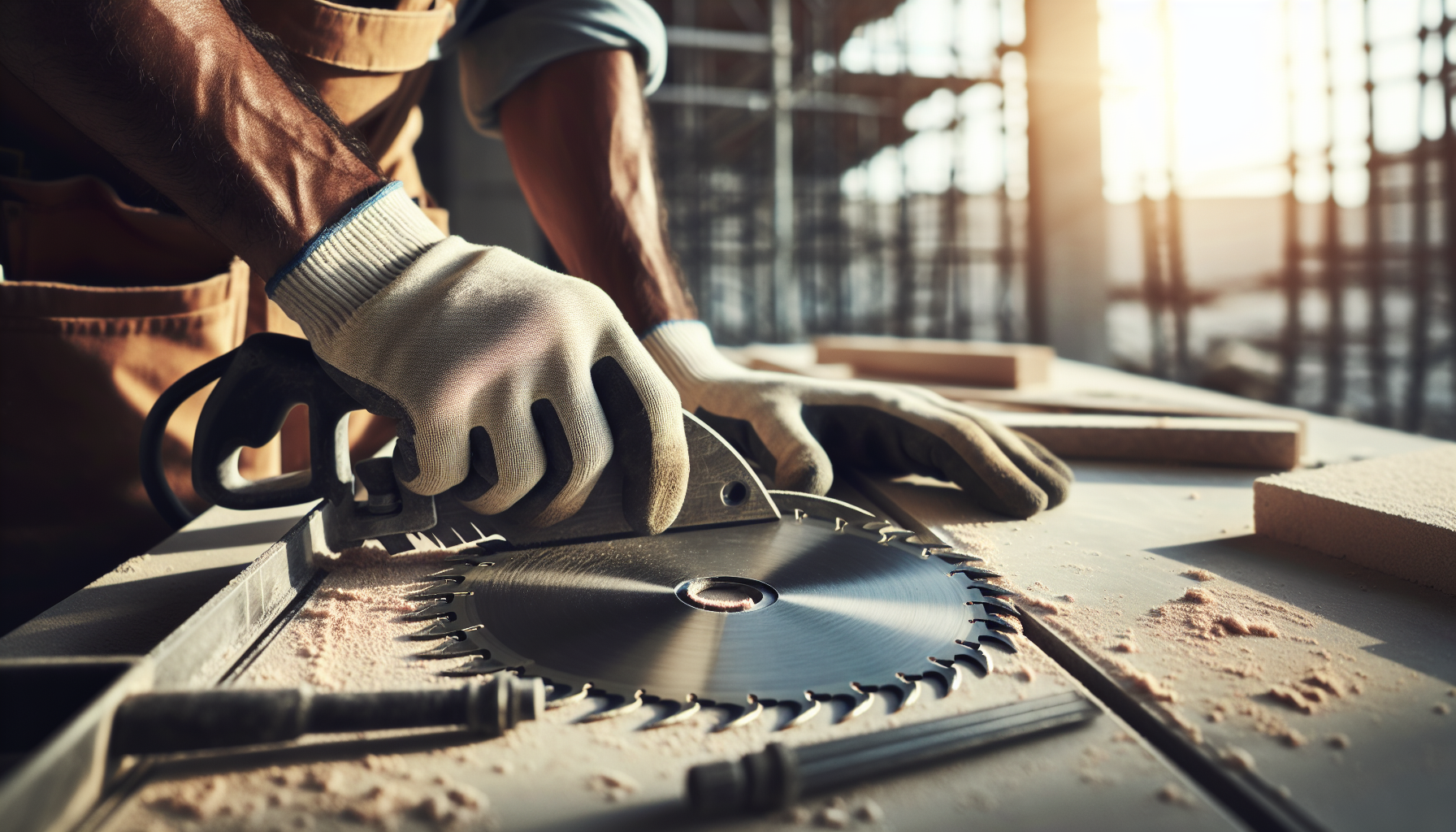
Knowing how to choose a diamond blade correctly prevents the most expensive mistake in concrete cutting — not because of the blade cost, but because of the wasted time, wasted material, and frustrated crew. This guide walks through the decision process for how to choose a diamond blade for any cutting job, step by step. Understanding how to choose diamond blade specs correctly saves time and money on every job.
How to Choose a Diamond Blade: Step 1 — Identify Your Material
The material you’re cutting is the single most important factor. Different materials have different hardness levels, and that determines which blade bond you need.
Hard materials (granite, hard aggregate concrete, porcelain) need a soft bond so the blade self-sharpens as it cuts. Soft/abrasive materials (asphalt, green concrete, sandstone) need a hard bond to resist premature wear.
Get this backwards and you’ll either glaze the blade (hard bond on hard material) or burn through it in minutes (soft bond on soft material). For a deep dive on bond science, see our Diamond Blade Buying Guide.
Step 2: Match the Blade to Your Saw
Your saw determines the blade diameter and arbor size. Never use a blade larger than your saw’s maximum rated size.
Handheld cut-off saws (Stihl, Husqvarna): 12” or 14” blades, 1” or 20mm arbor. See Best Diamond Blades for Stihl and Husqvarna.
Angle grinders: 4.5”, 5”, 7”, or 9” blades, 7/8” arbor.
Walk-behind saws: 14” to 36”, 1” arbor.
Table/masonry saws: 14” or 20”, 1” arbor.
Step 3: Choose the Rim Type
Segmented — fastest, roughest cut. Best for concrete, block, masonry, demolition. See Segmented vs Continuous vs Turbo for the full comparison.
Continuous rim — slowest, smoothest, chip-free. Best for tile, marble, granite.
Turbo — middle ground. Good for pavers, natural stone, general-purpose work.
Step 4: Wet or Dry?
Check whether your blade is rated for wet, dry, or both. Never run a wet-only blade dry — it can overheat and fail catastrophically. For a full comparison, see Wet vs Dry Cutting Concrete.
Step 5: Check RPM Compatibility
Your saw’s RPM must not exceed the blade’s maximum rated RPM. This is a safety-critical specification. See our Diamond Blade RPM Guide.
Step 6: Consider Blade Life vs. Price
For occasional use, an inexpensive blade in the correct specification is fine. For daily professional use, calculate cost per linear foot — not just the sticker price. A $65 blade that cuts 200 feet ($0.33/ft) beats a $30 blade that cuts 60 feet ($0.50/ft). See Diamond Blade Lifespan Guide for detailed cost analysis.
Quick Reference: How to Choose a Diamond Blade by Job
| Job | Material | Bond | Rim | Size |
|---|---|---|---|---|
| Slab joint cutting | Cured concrete | Medium-soft | Segmented | 14” |
| Paver cutting (table saw) | Clay/concrete pavers | Medium-hard | Turbo | 14” |
| Tile installation | Porcelain | Soft | Continuous | 4.5”-10” |
| Road patch | Asphalt | Hard | Segmented | 14” |
| Rebar cutting (grinder) | Steel in concrete | Medium | Segmented | 4.5”-7” |
| Countertop fabrication | Granite | Soft | Continuous | 4”-5” |
| Block wall (grinder) | CMU | Medium-hard | Segmented | 4.5”-7” |
| Demolition | Reinforced concrete | Medium | Segmented | 14” |
How to Choose a Diamond Blade: The Most Common Mistake
Using a general-purpose blade for everything. A “universal” blade is a compromise — it works okay on multiple materials but excels at none. For your primary cutting material, invest in a blade specifically designed for it. Use the general-purpose blade for the occasional cut in a different material.
For specific product recommendations by material, see Best Diamond Blades for Concrete, Asphalt, Pavers, Block & CMU, Porcelain Tile, and Natural Stone.
Virginia Abrasives Blades by Application
| Blade | Best For | Link |
|---|---|---|
| VA 14-inch Ultra Value | Best all-around for cured concrete, block, and general masonry | Check price on Amazon |
| VA 14-inch BD Asphalt/Green Concrete | Hard bond for asphalt, green concrete, and soft materials | Check price on Amazon |
| VA 14-inch DuroGrid | Joint cutting and general-purpose performance | Check price on Amazon |
| VA 14-inch Premium Sparkie | Premium blade for high-volume production cutting | Check price on Amazon |
| VA 9-inch Ultra Value | For 9-inch angle grinders and cordless cut-off saws | Check price on Amazon |
Frequently Asked Questions
How do I know which diamond blade to buy? ▼
Start with the material you're cutting (determines bond hardness), then match the blade diameter and arbor to your saw. Our Diamond Blade Buying Guide covers the full decision process.
What's the most common diamond blade mistake? ▼
Using the wrong bond for the material — specifically, using a hard-bond blade on hard material (causes glazing) or a soft-bond blade on soft material (causes rapid wear).
Is a more expensive diamond blade always better? ▼
Not necessarily. A $300 blade in the wrong specification underperforms a $50 blade that matches your material. The right blade at the right price always beats the most expensive blade in the wrong spec.
Related Guides
- Diamond Blades: The Complete Buying Guide— Complete diamond blade buying guide covering bond types, segment styles, sizes, …
- What RPM Should You Run a Diamond Blade? (Speed Guide)— Diamond blade RPM guide — correct operating speeds by blade size, saw type, and …
- Segmented vs Continuous vs Turbo Diamond Blades— Segmented vs continuous vs turbo diamond blades — when to use each rim type, cut…
- Wet vs Dry Cutting Concrete: Which Is Better?— Wet vs dry cutting concrete — pros, cons, dust control, blade life impact, and w…
Shop Virginia Abrasives on Amazon
Diamond blades, cut-off wheels, and grinding tools. U.S. manufactured. Free Prime shipping.
Browse Products →