Diamond vs Abrasive Cut-Off Wheels: Which Is Worth It?
Matt Lipman is CEO of Capstone Holdings Corp. (NASDAQ: CAPS) and a board member of Virginia Abrasives. He discloses this relationship for full transparency in our reviews.
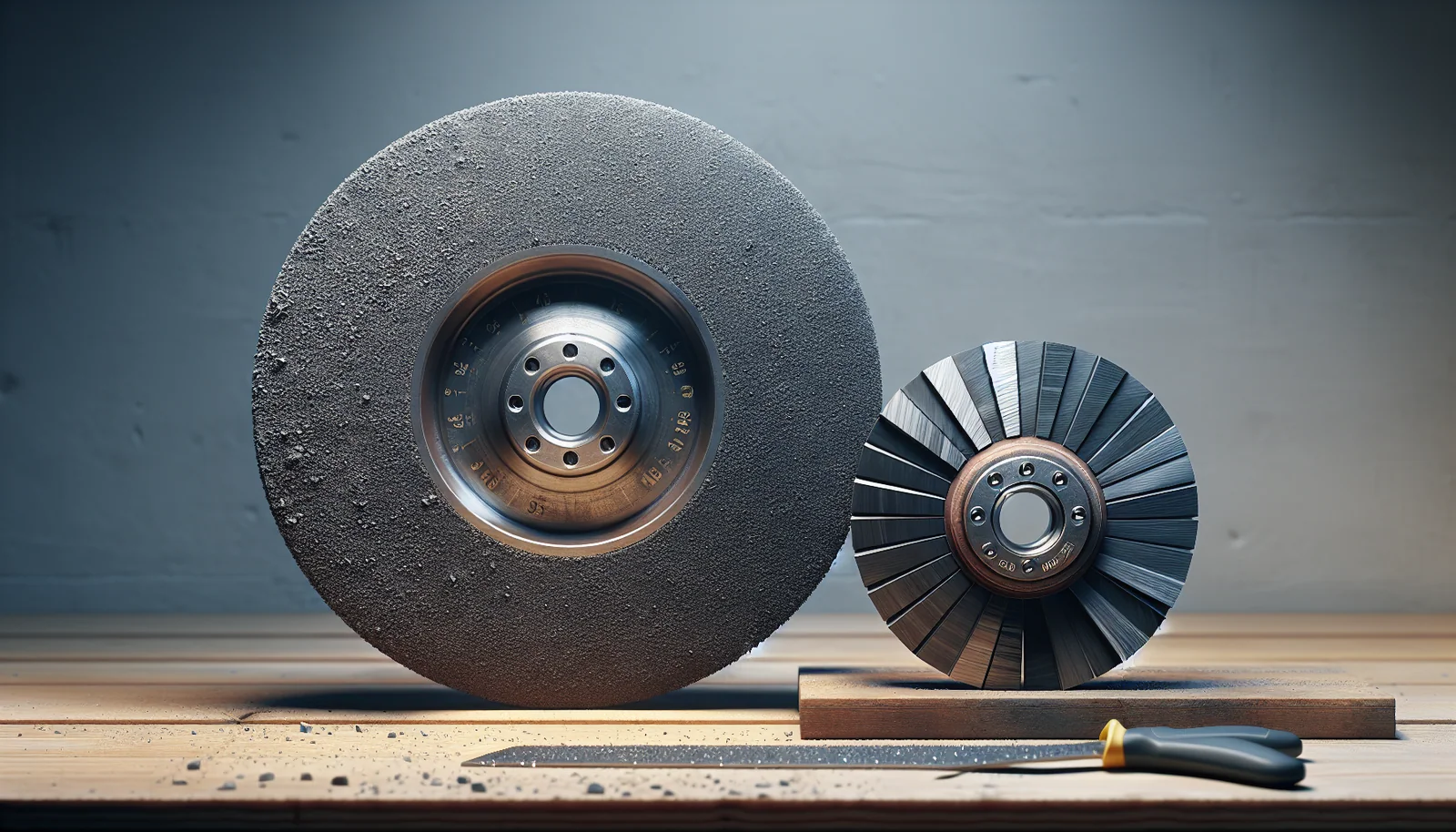
Table of Contents
- The Short Answer
- How They Work: Diamond vs Abrasive Cut-Off Wheels
- Abrasive Wheels
- Diamond Wheels
- Cost Comparison: Per Wheel and Per Cut
- Performance Differences
- Cut Speed
- Cut Quality
- Depth Consistency
- Heat Generation
- Wet Cutting Compatibility
- Safety Differences
- Expiration and Shelf Life
- Shatter Risk
- Common Safety Rules (Both Types)
- When to Choose Abrasive
- When to Choose Diamond
- Mixed-Material Workflows
- Real-World Cost Examples
- Hardscape Contractor (Paver + Stone + Some Metal)
- Masonry Contractor (Block + Brick + Occasional Stone)
- Weekend DIY (One-Off Repair)
- Recommended Diamond Cut-Off Wheels
Diamond cut-off wheels win for concrete cutting on any job larger than 20 cuts. Abrasive wins for one-off cuts, metal work, and any job where the per-wheel cost matters more than per-cut cost. The two technologies work differently — abrasive wears away, diamond cuts with embedded grits — and the economics flip at different volume thresholds. This guide covers the math, the performance differences, and the safety considerations for picking between them.
If you only want the buying threshold and the arithmetic behind it, the break-even decision page has that on one screen. This article is the longer explanation of why the two technologies behave differently.
The Short Answer
| You’re cutting… | Best choice |
|---|---|
| Concrete, 20+ cuts | Diamond |
| Concrete, under 20 cuts | Abrasive (silicon carbide masonry) |
| Steel or carbon steel | Abrasive (aluminum oxide) |
| Stainless steel | Abrasive (INOX-rated) |
| Aluminum or non-ferrous | Abrasive (non-ferrous bond) |
| Mixed material (concrete + steel) | Both — one of each |
| High-volume rebar | Abrasive on chop saw |
| Deep cuts, depth matters | Diamond (no shrinkage) |
How They Work: Diamond vs Abrasive Cut-Off Wheels
Abrasive Wheels
Abrasive cut-off wheels are bonded abrasive grains (aluminum oxide for metal, silicon carbide for concrete) held together with resin. They grind through material by wearing the grain against the workpiece — the grain shatters and fractures as it cuts, exposing new grain beneath.
As the wheel works, the grain and bond wear away together. The wheel physically shrinks in diameter with each cut. A new 4.5-inch abrasive wheel is 4.5 inches; after 20 cuts in concrete, it might be 3.5 inches. After 30 cuts, it’s too small to be useful and gets discarded.
Grain types:
- Aluminum oxide (A/O): for steel, iron, and most common metals
- Silicon carbide (SiC): for concrete, masonry, stone
- Zirconia-alumina (ZA): premium metal grain — longer life than A/O
- Ceramic grain: premium metal for production — longest life, highest price
Diamond Wheels
Diamond cut-off wheels have industrial-grade diamond particles embedded in a metal matrix bonded to a steel core. The diamonds do the cutting; the steel core maintains the wheel’s diameter throughout its life.
The diamond rim wears as it cuts — the bond erodes to expose new diamonds, the self-sharpening cycle — but the wheel diameter stays constant. A 4.5-inch diamond wheel remains 4.5 inches in diameter until the diamond rim is depleted (typically 100+ cuts in concrete).
Diamond types:
- Segmented: gullets between segments for concrete and masonry
- Turbo: serrated continuous rim for softer stone
- Continuous rim: unbroken diamond edge for tile and porcelain
- PCD (polycrystalline diamond): specialty for coating removal
For more on diamond blade types see Segmented vs. Continuous vs. Turbo.
Cost Comparison: Per Wheel and Per Cut
| Size | Abrasive Wheel | Diamond Wheel | Abrasive Cost per Cut (concrete) | Diamond Cost per Cut (concrete) |
|---|---|---|---|---|
| 4.5″ | $2-8 | $15-50 | $0.20-0.50 | $0.02-0.10 |
| 7″ | $4-12 | $25-75 | $0.25-0.60 | $0.03-0.12 |
| 9″ | $6-15 | $35-85 | $0.30-0.70 | $0.04-0.15 |
| 14″ | $5-15 | $50-180 | $0.15-0.40 | $0.02-0.10 |
The math favors diamond for any ongoing concrete work. A $70 14-inch diamond blade delivering our planning range of 150-250 linear feet (not a manufacturer figure) costs roughly $0.28-0.47 per linear foot of cut. Covering that same footage with abrasive wheels means burning through a stack of them — each wheel shrinks as it cuts and dies after a handful of deep cuts — and the wheel cost alone runs several times the diamond number before you count the swap time.
For metal, the math is closer. A $15 abrasive metal wheel at $0.15 per cut equals 100 cuts. A $50 diamond metal wheel at $0.10 per cut equals 500 cuts. Diamond saves $100 but requires higher up-front investment. For occasional metal work, abrasive wins on cash flow.
Performance Differences
Cut Speed
Abrasive: fast initial cut speed, but speed decreases as the wheel shrinks (smaller wheel = slower cut at the same feed rate and RPM).
Diamond: consistent cut speed throughout the wheel’s life because the wheel maintains its diameter. Slightly slower than a fresh abrasive wheel on metal; faster than an abrasive wheel on concrete once abrasive begins wearing.
Cut Quality
Abrasive: decent cut quality on metal, rough cut edges on concrete. Edge chipping on brittle materials.
Diamond: smoother cut edges on concrete. Better control on precise cuts because the wheel diameter doesn’t shift.
Depth Consistency
Abrasive: critical limitation on some jobs. A new wheel cuts 1.5 inches deep; a half-worn wheel cuts 1 inch deep. For depth-critical work (expansion joints, structural cuts), abrasive is problematic.
Diamond: consistent depth throughout the wheel’s life. Critical for joint cutting, flush-mount plumbing, or any job where depth tolerance matters.
Heat Generation
Abrasive: generates more heat. Friction cutting inherently produces heat, and the resin bond can break down at sustained high temperatures.
Diamond: cooler cutting because the diamonds cut rather than grind. Still requires breaks on long cuts to prevent segment damage, but thermal management is easier.
Wet Cutting Compatibility
Abrasive: generally not rated for wet cutting. Resin bonds can weaken with prolonged water exposure.
Diamond: most rated wet or dry (check the label). Wet cutting cools the blade and controls silica dust, and for a handheld saw on concrete, water fed to the blade is the only OSHA Table 1 control.
Slurry note for wet cutting. Water-cutting concrete produces high-pH (12-13) cement slurry — a prohibited non-stormwater discharge under EPA’s NPDES Construction General Permit. Plan containment before you turn on the water: filter berm, vacuum recovery, or solidifier. See Wet vs Dry Cutting Concrete for the four field-proven disposal methods.
Safety Differences
Expiration and Shelf Life
Abrasive: resin-bonded abrasive wheels have a shelf life of 2-3 years from manufacture. Dates are printed on the wheel as “V2026-03” or similar. Expired wheels can delaminate in use — a serious safety hazard.
Diamond: no expiration date. Metal-bonded diamonds don’t degrade with age.
Shatter Risk
Abrasive: more prone to shattering under side-load, drop damage, or over-speed. Always inspect before use and retire any wheel that’s been dropped.
Diamond: more rigid, less prone to shattering. Primary failure mode is segment loss — individual segments can break off if the blade is run at over-speed or side-loaded heavily.
Common Safety Rules (Both Types)
- Guard required: every cut, both types
- Max RPM match: wheel rating ≥ grinder rated speed
- No side-loading: through-cuts only
- Eye and face protection: Z87+ glasses + face shield
- Secure workpiece: clamp or vise
- Inspect before use: cracks, chips, or missing segments = retire
When to Choose Abrasive
Abrasive cut-off wheels make sense when:
- Low cut volume (1-20 cuts). The per-wheel cost wins over the longer-life diamond wheel.
- Immediate availability needed. Every hardware store stocks abrasive wheels. Diamond may require a trip to a specialty supplier or online order.
- Mixed materials, frequent wheel changes. Different abrasive wheels for steel, stainless, aluminum, concrete — total cost still low. Having separate diamond wheels for each material is expensive.
- One-off demolition or repair. Single cuts, paver halving, or small concrete removal.
- Metal cutting specifically. Abrasive still dominates metal cutting — diamond metal wheels exist but are specialty tools.
- Capital budget constraints. Jobs with consumables allowances under $10 per wheel.
When to Choose Diamond
Diamond cut-off wheels win when:
- Regular concrete or masonry cutting (20+ cuts). Per-cut economics flip strongly in favor of diamond.
- Depth consistency matters. Joint cutting, flush cuts, precision depth requirements.
- Dust and efficiency matter. Diamond runs cooler, generates less dust per cut, and doesn’t require frequent wheel changes.
- Wet cutting capability. Most diamond blades are wet/dry rated; most abrasive is dry-only.
- Production environment. Concrete cutting crews, masonry table saws, professional flatwork.
- OSHA silica compliance. Table 1 requires water fed to the blade on a handheld saw cutting concrete. Diamond blades are rated for wet cutting; check the label before running an abrasive wheel wet.
Mixed-Material Workflows
Many contractors cut both concrete and metal. The right approach: both wheel types in the toolkit.
- Diamond wheel for concrete, masonry, block, paver, and stone work
- Abrasive wheels for steel, stainless, aluminum, rebar cutting, and incidental metal
Never use the wrong wheel on the wrong material — concrete wheels shatter on metal; metal wheels load up on concrete.
Real-World Cost Examples
Hardscape Contractor (Paver + Stone + Some Metal)
- Diamond (concrete/paver): 14″ Ultra Value $70 → 150-250 linear feet (our planning range, not a manufacturer figure) → about $0.35 per linear foot at the midpoint
- Abrasive (metal repairs): $5 × 3 wheels per year → $15 → occasional metal work covered
- Total annual: ~$85 for a crew cutting hardscape daily
Compared to abrasive-only:
- Silicon carbide concrete wheels: $8 × 40 wheels per year → $320
- Aluminum oxide metal wheels: $5 × 3 wheels per year → $15
- Total: $335 per year
Diamond saves $250 per year on this profile.
Masonry Contractor (Block + Brick + Occasional Stone)
- Diamond (masonry): 14″ Ultra Value $70 → 800 cuts → $0.09 per cut
- No metal cutting typically
- Total annual: ~$140 for two wheels
Abrasive-only: $400-600 per year in wheels. Diamond payback is roughly 3-4 months.
Weekend DIY (One-Off Repair)
- Abrasive: $5 wheel for a single cut around a broken paver → done
- Diamond: $50 wheel sits unused for 3 years → wasted
Abrasive wins on the DIY profile.
Recommended Diamond Cut-Off Wheels

Virginia Abrasives 14″ Ultra Value Concrete Diamond Blade
14″ × .125″ × 1″/20mm, medium bond, 5,500 max RPM. Best per-cut value for regular concrete cutting on chop saws and handheld cut-off saws.
★★★★☆ 4.2 (10 ratings on Amazon)
$69.99
Buy on Amazon →| Wheel | Type | Best For | Link |
|---|---|---|---|
| VA 14″ Ultra Value (Diamond) | Diamond | Concrete, block, masonry on 14″ saws | Amazon |
| VA 9″ Ultra Value (Diamond) | Diamond | 9″ cordless cut-off saws, 9″ grinders | Amazon |
| VA 4.5″ Segmented (Diamond) | Diamond | 4.5″ grinders, trim cuts | VA Amazon store |
| Generic silicon carbide (Abrasive) | Abrasive | Occasional concrete cuts | Any hardware store |
| Norton BlueFire ZA (Abrasive) | Abrasive | Daily steel cutting | Construction supply |
For material-specific picks, see Best Cut-Off Wheels for Concrete and Best Cut-Off Wheels for Metal. For 14” chop saw picks across both categories, see Best 14-Inch Cut-Off Wheels. For the full buying framework, see Cut-Off Wheel Buying Guide. For cutting technique, see How to Cut Concrete with an Angle Grinder and How to Cut Metal with an Angle Grinder.
Frequently Asked Questions
Are diamond cut-off wheels worth the extra cost? ▼
For regular cutting, yes. A diamond wheel costs 3-10x more upfront but lasts 10-50x longer than abrasive. The crossover point is roughly 25-30 cuts — above that, diamond wins on per-cut cost. Below that, abrasive is cheaper.
Can I use a diamond cut-off wheel on metal? ▼
Diamond wheels rated for metal exist but are specialty tools — most diamond wheels are designed for concrete and masonry. For metal cutting (steel, stainless, aluminum), use an abrasive metal cut-off wheel matched to the metal type. The economics of diamond on metal only work for high-volume stainless or specialty alloy work.
Why do abrasive cut-off wheels wear so fast? ▼
Abrasive wheels are fundamentally consumable — they physically wear away as they cut, getting smaller with each use. The grain breaks away along with the material being cut. Diamond wheels have diamonds embedded in a steel core that maintains its diameter; only the cutting rim wears.
Do abrasive wheels expire? ▼
Yes. Resin-bonded abrasive wheels have a shelf life of 2-3 years from manufacture, printed on the wheel. Expired wheels can delaminate during use — a major safety hazard. Diamond wheels do not expire. Always check abrasive wheel dates before use.
Which is safer, diamond or abrasive cut-off wheels? ▼
Both are safe when used correctly. Diamond is more forgiving of minor side-loads and doesn't shatter like abrasive. Abrasive wheels are more prone to shattering under lateral force and can fail if expired. Both require guards, Z87+ eye protection, face shields, and proper RPM match.
What's the price difference between diamond and abrasive? ▼
4.5-inch: abrasive $2-8 per wheel, diamond $15-50 per wheel. 14-inch: abrasive $5-15, diamond $50-180. Price ratios look extreme but per-cut cost favors diamond above roughly 25-30 cuts due to the dramatic life difference.
Can I use a diamond wheel on any angle grinder? ▼
Yes, with two checks. First, the diamond wheel's max RPM must be at or above your grinder's rated speed. Second, the arbor (center hole) must match — most 4.5-inch diamond wheels use a 7/8-inch arbor, which fits standard 4.5-inch grinders directly.
Related Guides
- Best 14-Inch Cut-Off Wheels— Best 14-inch cut-off wheels for chop saws and cut-off saws — diamond and abrasiv…
- Best Cut-Off Wheels for Concrete— Best cut-off wheels for concrete — diamond vs abrasive break-even math, sizes fo…
- Best Cut-Off Wheels for Cutting Metal— Best cut-off wheels for metal — thin abrasive wheels for steel, stainless, alumi…
- Cut-Off Wheels: The Complete Buying Guide— Cut-off wheel buying guide for concrete and metal: abrasive vs diamond, sizes, R…
- How to Cut Concrete With an Angle Grinder— Pro guide to cutting concrete with a 4.5", 7", or 9" angle grinder — segmented d…
Shop Virginia Abrasives on Amazon
Diamond blades, cut-off wheels, and grinding tools, sold on Amazon.
Browse Products →