Best Diamond Blades for the Stihl TS 420
What size blade does the Stihl TS 420 take?
The Stihl TS 420 takes a 14-inch (350 mm) diamond blade with a 20 mm arbor (or a 1-inch arbor with the included reducer bushing), rated to a maximum 5,350 RPM. Any quality 14-inch blade in that arbor size fits.
On This Page
The Stihl TS 420 Cutquik® takes a 14-inch (350mm) blade on a 20mm arbor, 5,350 RPM max spindle — that's the blade-size answer most people land here for. It's also the lightest pro 14-inch gas handheld cut-off saw (66.7cc, 4.4 hp, 21.5 lb). Below: exactly what fits, what to avoid, and the best diamond blade for your substrate — all verified against the TS 420's arbor and RPM ceiling.
Stihl TS 420 — Tool Specs
| Engine | 66.7 cc 2-stroke |
|---|---|
| Power Output | 4.4 hp (3.2 kW) |
| Max Blade Diameter | 14 in (350 mm) |
| Arbor / Spindle | 20 mm |
| Max Spindle Speed | 5,350 RPM |
| Max Cutting Depth | 4.9 in |
| Weight (no blade) | 21.5 lb |
| Wet / Dry Rating | Both (water kit available) |
Tiered Blade Picks
Good — Most Cured-Concrete Work
The Virginia Abrasives 14-Inch Ultra Value Diamond Blade ($69.99) fits the TS 420 and is our pick for occasional to regular cutting on cured concrete.
Better — Reinforced Concrete / Pro Sweet Spot
VA 14" Premium Sparkie ($174.30). The TS 420 wins jobs on weight — 21.5 lb, lightest in the class — and gives up power to get there, at 4.4 hp. That trade leaves no reserve to lean on when segments dull; operators compensate by pushing, and muscling a light saw cancels the reason you bought it. VA sells the Sparkie as its premium multi-purpose blade for concrete including reinforced; a blade matched to the work keeps cutting under its own feed, which is what a light saw needs. The 14-inch roundup has the full spec table.
Best — Production Cutting
VA 14-inch Supreme Pro ($104.88). VA ranks its Supreme line above its Premium line and describes it as "specifically engineered for long life in a professional use setting." The Supreme Pro is VA's asphalt-and-concrete multi-purpose blade, with what VA calls a medium-hard bond and laser-welded 10mm segments, and it fits the TS 420 on its 1-inch arbor with the 20mm bushing. It has no Amazon ratings yet, and neither VA nor this site publishes a life figure for it. Occasional users can keep the difference and run the Ultra Value; daily cutters who also cut asphalt get one blade for both. Details are on the Supreme Pro page.
Every Amazon-Available Blade That Fits the TS 420, Lowest Price First
Every blade and wheel below fits this saw and is sold on Amazon. The order is price, not rank.
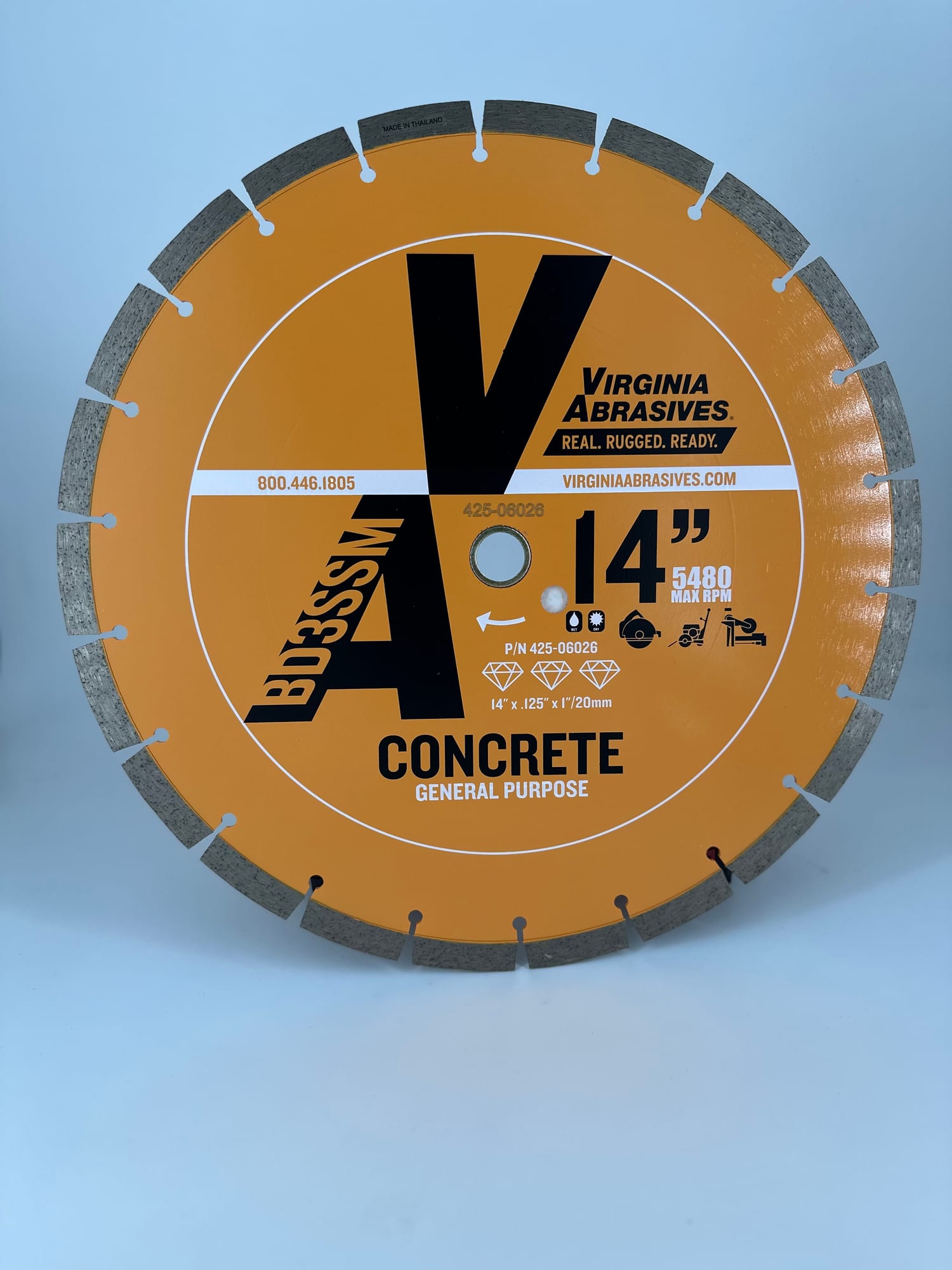
Virginia Abrasives 14-Inch Basic Diamond Concrete Blade
VA's entry-tier 14-inch blade, with a medium bond and 12mm sintered segments, at the lowest price in VA's 14-inch lineup on Amazon. VA rates it for granite and river-rock aggregates.
14″ · 1″ arbor (20mm bushing) · max 5,460 RPM · medium bond · wet-or-dry
$54.99
★ 4.6 (12)
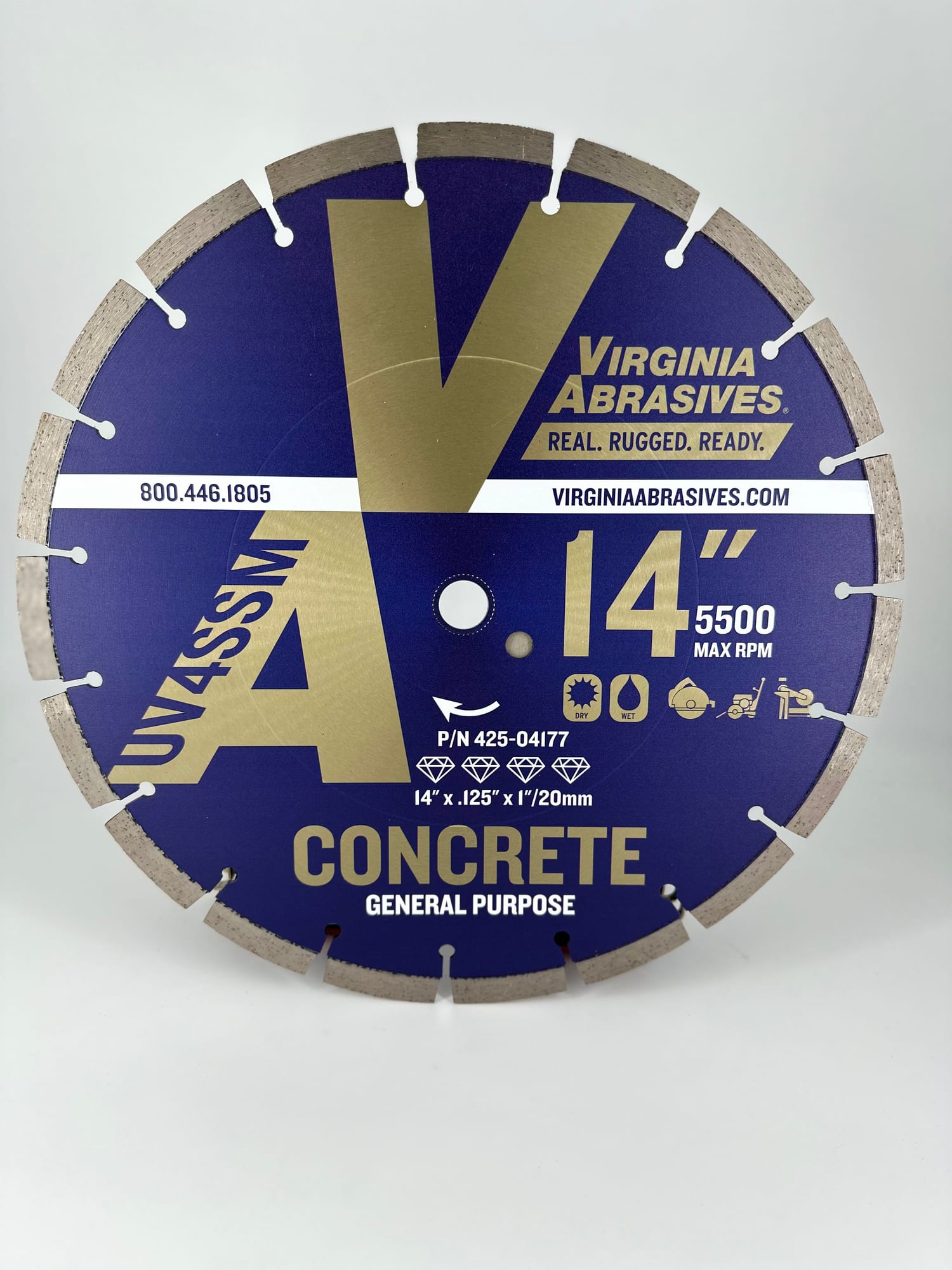
Virginia Abrasives 14-Inch Ultra Value Diamond Blade
Value-tier 14-inch general-purpose segmented diamond blade. Fits Stihl TS 420, Husqvarna K 770/K 970 via the included 20mm bushing.
14″ · 1″ arbor (20mm bushing) · max 5,500 RPM · medium bond · wet-or-dry
$69.99
★ 4.2 (10)

Virginia Abrasives 14-Inch Medium Bond Diamond Blade
VA's True Blue blade, which VA's website marks "Made in America." It is a 14-inch medium-bond blade with 12mm laser-welded segments, rated to 5,500 RPM.
14″ · 1″ arbor (20mm bushing) · max 5,500 RPM · medium bond · wet-or-dry
$74.27
★ 3.5 (2)
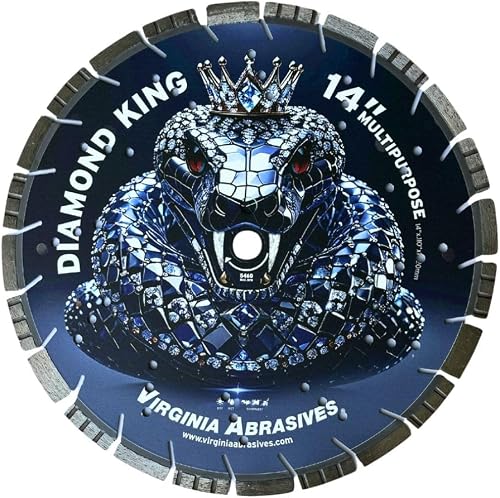
Virginia Abrasives 14-Inch Diamond King Diamond Blade
VA's 14-inch Diamond King, listed for concrete, asphalt and masonry on one blade. 10mm laser-welded turbo segments, cooling holes, undercut protection. No ratings yet.
14″ · 1″ arbor (20mm bushing) · max 5,500 RPM · multi-purpose bond · wet-or-dry
$93.88

Virginia Abrasives 14-Inch Supreme Pro Diamond Blade
VA's Supreme-tier 14-inch blade, its professional line, listed for concrete and asphalt on a single bond. Laser-welded, 10mm segments, no Amazon ratings yet.
14″ · 1″ arbor (20mm bushing) · max 5,500 RPM · multi-purpose bond · wet-or-dry
$104.88
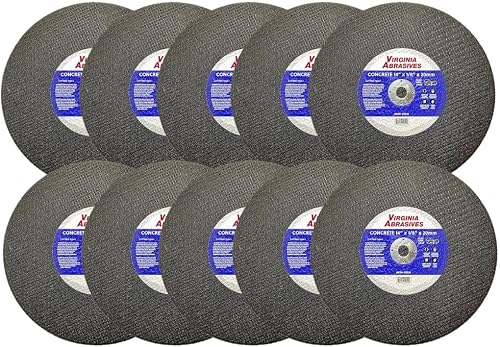
Virginia Abrasives 14-Inch Concrete Cut-Off Wheel (10-Pack)
Type 1 reinforced abrasive wheel for occasional concrete and masonry cuts. 14" x 1/8" x 20mm arbor, 10-pack. Diamond is cheaper per cut on ongoing work.
14″ · 0.7874″ arbor · max RPM · resinoid bond · dry
$119.56
★ 3.6 (4)
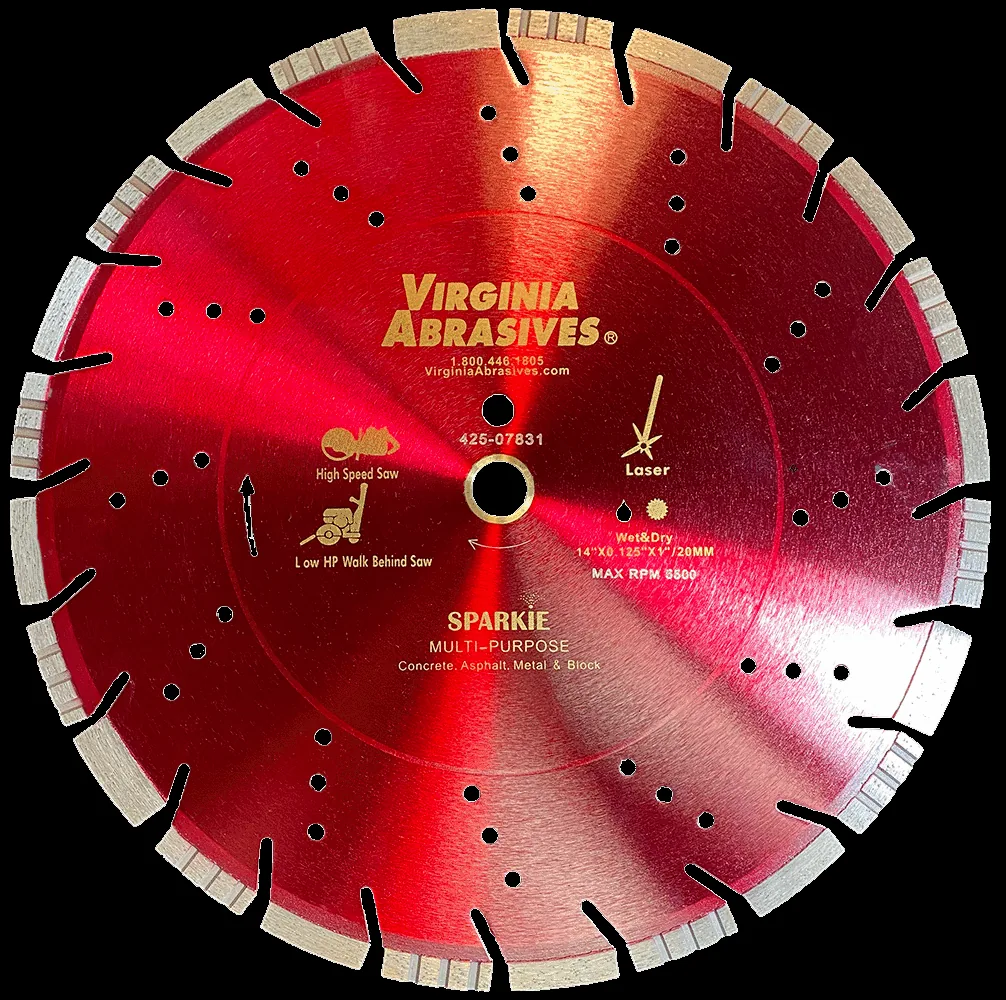
Virginia Abrasives 14-Inch Premium Sparkie Diamond Blade
VA's Premium-tier 14-inch blade, sold as a multi-purpose blade for concrete including reinforced, asphalt, pavers, block and light steel. Laser-welded turbo segments.
14″ · 1″ arbor (20mm bushing) · max 5,500 RPM · multi-purpose bond · wet-or-dry
$174.30
★ 5 (1)
If You're Cutting Asphalt or Green Concrete
Different substrate, different bond. These hard-bond blades fit the TS 420 but are built for soft, abrasive material — not cured slab. If asphalt is a regular part of the work, the asphalt blade guide covers bond choice and undercut protection in depth.

Virginia Abrasives 14-Inch Asphalt Diamond Blade (Undercut Protected)
Hard-bond 14-inch asphalt and green-concrete blade with undercut protection on the core. Built for the abrasive slurry that eats steel cores on soft substrates.
14″ · 1″ arbor (20mm bushing) · max 5,500 RPM · hard bond · wet-or-dry
$102.99
★ 3 (1)
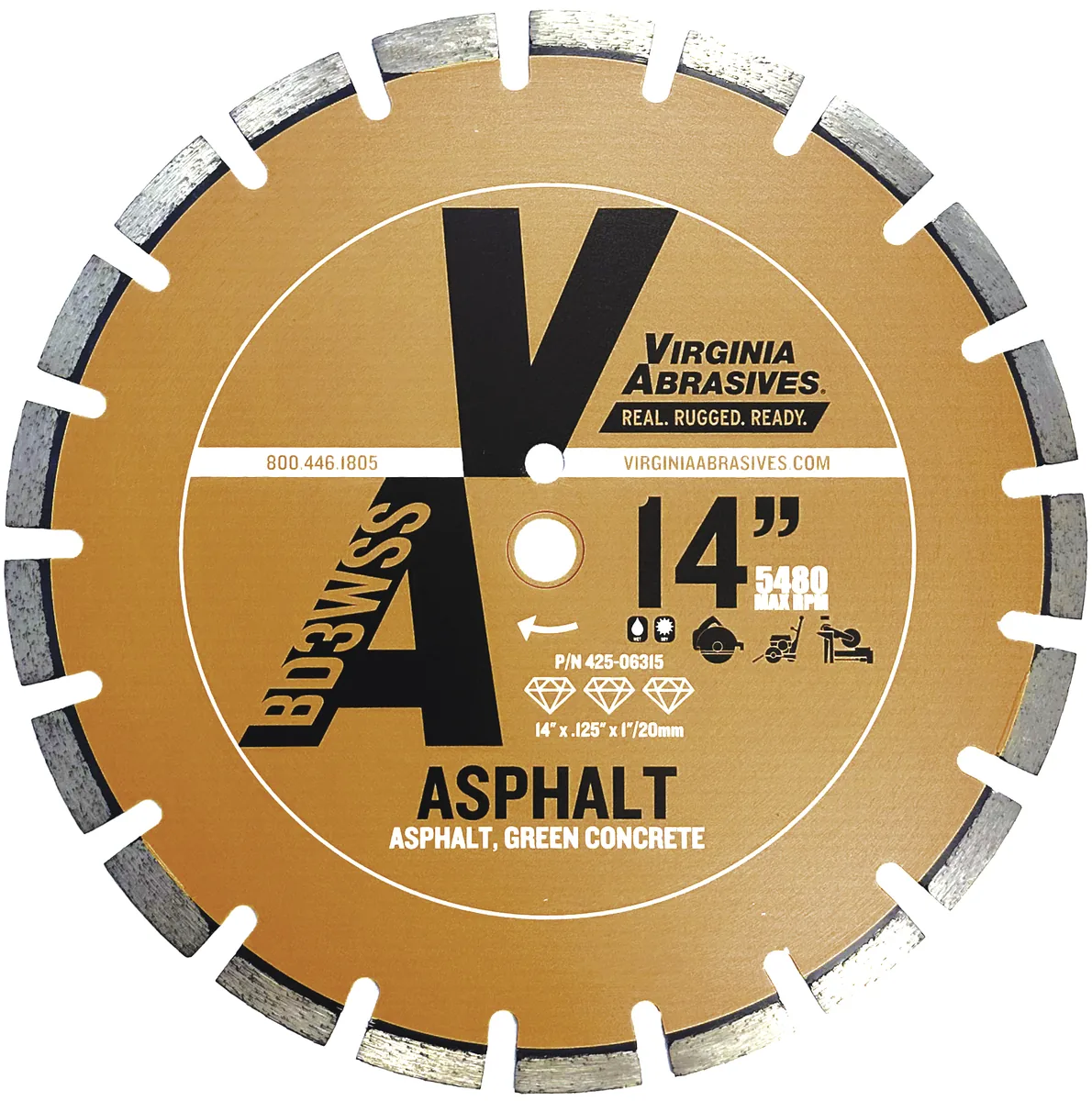
Virginia Abrasives 14-Inch BD Asphalt / Green Concrete Diamond Blade
Hard-bond 14-inch diamond blade engineered for asphalt + green concrete. Alternating drop segments + U-slot gullets clear sticky tar slurry.
14″ · 1″ arbor (20mm bushing) · max 5,500 RPM · hard bond · wet-or-dry
$63.38
★ 5 (1)
Compatibility Gotchas
| Issue | What to Check |
|---|---|
| Arbor mismatch | TS 420 spindle is 20mm. 1" blade arbors need the included bushing seated. |
| RPM over-spec | Blade max RPM must be ≥ 5,350. Standard 14" pro blades are 5,500 — safe. |
| Bond / substrate mismatch | Use hard-bond blade for asphalt or green concrete; medium for cured; soft for hard aggregate or rebar-heavy. |
| Wet plumbing | TS 420 takes Stihl's optional water kit. Required for OSHA silica compliance on most concrete cuts. |
Stihl's Own OEM Diamond Blades for the TS 420
Stihl manufactures its own diamond blade line under part-number families D-G (premium production), D-BA (premium concrete + asphalt), and D-B (concrete-focused, multiple tiers). Sold exclusively through Stihl servicing dealers — no online or big-box channel. Listed here for completeness so you can compare against the aftermarket picks above.
| Blade | Model # | Best For | Price |
|---|---|---|---|
| Stihl D-G80 | 0835 070 8000 | Premium production cutting on cured concrete + reinforced. Stihl's top tier. | $200-260 |
| Stihl D-BA90 | 0835 094 8013 | Premium dual-purpose — cured concrete + asphalt on the same blade. | $180-230 |
| Stihl D-B20 | 0835 090 8054 | Mid-tier "quality" grade for cured concrete on regular contractor work. | $140-180 |
| Stihl D-B10 | 0835 090 8052 | Economy-grade concrete blade for occasional or homeowner-level cutting. | $110-140 |
Stihl OEM trade-off: dealer-warranty support and Stihl-system fit are real benefits — if a blade segment separates within warranty, the dealer handles it. The aftermarket picks cost less per blade (the Ultra Value is $69.99 and the Sparkie $174.30, against about $200-260 for the D-G80 at dealers) and arrive via Amazon Prime, but warranty and service are on you. For fleet crews already on a Stihl service relationship, D-G80 or D-BA90 makes sense; for one-saw contractors paying out of pocket, the VA picks above are usually the better economics.
Buying the TS 420 Itself
The TS 420 itself is dealer-only. Stihl sells exclusively through servicing dealers — no Amazon, no big-box, and any online listing claiming otherwise is gray-market with no warranty. Find your dealer at stihlusa.com. Typical street price runs $1,050-1,200. What you CAN get shipped: the blades — the $70 VA Ultra Value fits the TS 420's 20mm spindle and arrives via Prime.
If dealer access is a problem and you want a comparable saw shipped, the Husqvarna K 770 (~$1,369 on Amazon) is the direct competitor — same 14-inch class, same blade fit.
Operator Hazards & Field Notes
Kickback geometry
Cut with the lower-front quadrant of the blade. Upper-front-quadrant contact drives the saw up and back toward you — the leading cause of cut-off-saw injury. On long or deep cuts, watch for the kerf pinching the blade; a pinched blade kicks hard and without warning. Two hands, stable stance, never overhead.
Cold-start & fuel
The TS 420 is a 2-stroke — ethanol fuel goes stale in storage and can gum the carburetor on an occasional-use saw. Run ethanol-free fuel or stabilizer between jobs. Follow Stihl's start sequence; on a flooded warm restart, hold full throttle and crank rather than re-choking.
Fleet / OEM blades
Stihl sells only through servicing dealers — there's no Stihl online or big-box channel, so plan a dealer trip for OEM parts. Aftermarket diamond blades fit the TS 420's 20mm arbor and ship via Amazon (with the reducer bushing) — usually the faster and cheaper path.
Hand-arm vibration (HAVS) — the hazard nobody plans for
Handheld gas cut-off saws are among the highest-vibration tools on a jobsite, and sustained exposure causes Hand-Arm Vibration Syndrome (HAVS) — permanent nerve and circulation damage that first shows as numb, blanching fingers. The EU Physical Agents Directive sets a daily Exposure Action Value of 2.5 m/s² and an Exposure Limit Value of 5.0 m/s² (A(8) over 8 hours); US OSHA addresses it under the General Duty Clause. The TS 420's anti-vibration system reduces but does not eliminate exposure. Find the declared front/rear-handle vibration value in your STIHL manual, run it through a HAVS calculator, and cap daily trigger time — a high-vibration saw can hit the action value in well under an hour of continuous cutting. A sharp, correctly-bonded blade vibrates far less than a glazed one.
Why Blade Choice Matters on the TS 420
The TS 420's spindle profile and power output determine which blade bond pairs well with which substrate. Wrong bond, wrong tool — even a premium blade can glaze. Work through our Diamond Blade Buying Guide for the bond-substrate matrix and our RPM Guide for max-RPM cross-reference.
Under OSHA Table 1, a handheld power saw cutting concrete needs an integrated water delivery system that continuously feeds water to the blade. Table 1 lists no vacuum option for this saw. The operator also needs an APF 10 respirator indoors, and outdoors once cutting passes four hours in a shift. See our Silica Dust Safety Guide for crew protocol.
Related Saw Landings
- Best Diamond Blades for Stihl TS 500i — the fuel-injected big brother
- Best Diamond Blades for Husqvarna K 970 — the main TS 420 competitor
- Best Diamond Blades for Husqvarna K 770 — smaller K-series saw
- Best Diamond Blades for Milwaukee MX FUEL COS350 — battery alternative
- Best Diamond Blades for Stihl — full Stihl saw lineup
- K 970 vs K 770 vs TS 420 — head-to-head — cross-shopping the big three
Frequently Asked Questions
What size blade does the Stihl TS 420 take? ▼
The TS 420 (also written TS420) takes a 14-inch (350mm) blade. That's the same diameter as the Husqvarna K 770 and K 970, so blades cross-fit between the three with the right arbor / bushing combination.
What diamond blade fits the Stihl TS 420? ▼
Any 14-inch (350mm) diamond blade with a 20mm arbor fits the TS 420 — or a 1-inch arbor blade seated with the included reducer bushing — as long as the blade's max RPM is 5,500 or higher. For cured concrete, the Virginia Abrasives 14-inch Ultra Value is a low-cost fit; for reinforced concrete and rebar, step up to the VA Premium Sparkie. Don't drop down to a 12-inch or up to a 16-inch blade — the TS 420 is built around a 14-inch wheel.
What arbor size do TS 420 blades need? ▼
The TS 420 spindle is 20mm. Most professional 14-inch diamond blades ship with a 1-inch arbor and include a 20mm bushing — both fit. Don't mount a blade without the bushing if the arbor is undersized; the wobble can throw the blade.
What's the max RPM the TS 420 runs at? ▼
The TS 420 runs at 5,350 RPM max spindle speed. Any 14-inch blade rated at 5,500 RPM or higher is safe — that's the standard for professional 14-inch concrete blades. Never run a blade with a max RPM below the saw's spindle speed.
Wet or dry cutting on the TS 420? ▼
The TS 420 is rated for both. Stihl ships a water-attachment kit option. For concrete and masonry work, OSHA Table 1 lists water fed to the blade as the only control for a handheld saw.
What's the best all-around blade for the TS 420? ▼
For occasional cured-concrete work, the Virginia Abrasives 14" Ultra Value (around $70) fits via the included 20mm bushing. For production cutting on reinforced concrete, step up to the VA Premium Sparkie, which VA sells for concrete including reinforced, or the VA Supreme Pro, VA's professional tier.
How does the TS 420 compare to the Husqvarna K 970? ▼
The K 970 has more displacement (93.6cc vs 66.7cc) and more power (6.5 hp vs 4.4 hp), but the TS 420 is lighter (21.5 lb vs 23.4 lb). The TS 420's max spindle speed is 5,350 RPM; the K 970 runs a 14-inch blade at 5,400 RPM (4,700 with a 16-inch), per the manufacturers' manuals. Both take 14" blades on the same 20mm arbor pattern, and any 5,500+ RPM blade is safe on either. Blade picks cross-fit between them.
Matt Lipman is CEO of Capstone Holdings Corp. (NASDAQ: CAPS) and a board member of Virginia Abrasives. He discloses this relationship on every article that recommends a VA product.