Virginia Abrasives 14-Inch BD Asphalt / Green Concrete Diamond Blade
Model: 425-06315

Hard-bond 14-inch diamond blade engineered for asphalt + green concrete. Alternating drop segments + U-slot gullets clear sticky tar slurry.
14″ · 1″ arbor (20mm bushing) · max 5,500 RPM · hard bond · wet-or-dry
★★★★★ 5 (1 ratings on Amazon)
$63.38
Price last checked 2026-09-23 — confirm on Amazon
Buy the 14″ on Amazon →On This Page
Specifications
| Brand | Virginia Abrasives |
|---|---|
| Model # | 425-06315 |
| Diameter | 14" |
| Arbor | 1" (bushings: 20mm) |
| Max RPM | 5,500 |
| Bond | hard |
| Segment Type | segmented |
| Segment Height | 12 mm |
| Wet/Dry | wet-or-dry |
| Application | asphalt, green-concrete |
| Fits saws | Stihl TS 420, Husqvarna K 770, Husqvarna K 970, Husqvarna K 1 PACE, Milwaukee MX FUEL COS350, Hilti DSH 700-X, Makita EK7651H, Stihl TS 500i, Husqvarna K 760 |
Blade life: Planning range, not a manufacturer figure: 200-400 linear feet on asphalt; 150-300 on green concrete. We have not measured it.
✓ Best for
Asphalt cutting (road work, parking lot repair), green concrete saw cutting (early-entry 1-4 hours after pour or conventional 4-12 hours).
✗ Not for
Cured concrete — hard bond glazes and wears prematurely on hard, dense substrate. Use Ultra Value or Premium Sparkie for cured.
Pros
- Hard bond resists premature wear on soft + abrasive substrates (asphalt, green concrete)
- 12mm segments give long working life vs entry-tier hard-bond options
- Alternating drop segment design + U-slot gullets actively flush slurry from the cut
- Dual-purpose: handles both asphalt and green concrete with one blade SKU
Cons
- Wrong choice for cured concrete — hard bond glazes on hard substrates
- Single-purpose blade — if you only cut cured concrete, the Ultra Value covers more use cases
The Virginia Abrasives 14-inch BD Asphalt / Green Concrete blade is the specialty pick for soft, abrasive substrates. Hard bond, 12mm segments, alternating drop segment geometry with U-slot gullets — designed to clear the sticky slurry that defeats standard concrete blades on asphalt and uncured concrete.
Who this blade is for
Road work crews, parking lot repair contractors, and any team cutting early-entry expansion joints or green concrete within 48 hours of pour. The hard bond is the engineering point — soft material wears segments fast, so you need a bond that resists premature wear. Standard concrete blades fail in minutes on asphalt because the medium bond exposes diamonds faster than the soft substrate can wear through them.
If your typical work is cured concrete, this isn’t your blade. The hard bond glazes on hard substrates because the diamonds don’t get exposed fast enough. The right blade for cured concrete is the Ultra Value (entry tier) or Premium Sparkie (pro tier).
Why hard bond on soft substrate
Diamond blade bond selection is counter-intuitive. The rule:
- Hard substrate → soft bond (so diamonds get exposed as the substrate wears the matrix)
- Soft substrate → hard bond (so the matrix doesn’t wear faster than the diamonds themselves)
Asphalt is soft and abrasive — exactly the substrate where you need the matrix to hold its diamonds tight while the substrate wears. The BD blade’s hard bond does that.
Cutting technique
For asphalt: wet cut whenever practical. Water cools the blade and flushes binder slurry. Set the saw to its rated RPM (around 5,350-5,400 on most 14-inch handhelds) and let the blade do the work — don’t force feed. Hot asphalt softens the binder; cold asphalt cuts cleaner.
For green concrete: timing is the variable. Early-entry saws cut 1-4 hours after pour with soft-cut blade geometry that minimizes raveling. Conventional 14-inch saws cut 4-12 hours after pour. Depth: 1/4 of slab thickness for expansion joints. Always wet-cut green concrete to avoid raveling and silica dust generation.
Saw fit
Same standard format as the rest of the VA 14-inch line — 1-inch arbor with 20mm bushing included. Fits every major 14-inch handheld cut-off saw and most 14-inch walk-behind concrete saws.
For saw-specific blade-matching context, see blades for the Husqvarna K 970, blades for the Stihl TS 420, blades for the Husqvarna K 770, and blades for the Milwaukee MX FUEL COS350.
Disclosure
Matt Lipman is CEO of Capstone Holdings Corp. (NASDAQ: CAPS) and a board member of Virginia Abrasives. He discloses this relationship on every page that recommends a VA product. This blade is the right call for asphalt and green concrete work — and the WRONG call for cured concrete, which we say clearly on this page.
Matt.
Frequently Asked Questions
Can I use the BD Asphalt blade on cured concrete? ▼
Not recommended. Hard bond is engineered for soft, abrasive substrates (asphalt, green concrete). On cured concrete, the hard bond doesn't release diamonds fast enough — the blade glazes and stops cutting. Use the Ultra Value or Premium Sparkie for cured concrete work.
What's 'green concrete' and how soon after pour can I cut? ▼
Green concrete is concrete that hasn't reached full cure — typically 1 to 48 hours after pour. Cut too early and the saw rips aggregate out of the slab; cut too late and you're cutting cured material with the wrong blade. Conventional saw window: 4-12 hours after pour. Early-entry saw window: 1-4 hours. Substrate softness drives the hard-bond requirement either way.
Does the BD blade fit my saw? ▼
Yes if you're running a 14-inch cut-off saw — Stihl TS 420, Husqvarna K 770 / K 970, Milwaukee MX FUEL COS350, or Hilti DSH 700-X. Standard 1-inch arbor with included 20mm bushing fits all of them.
Wet or dry cutting on asphalt? ▼
Both rated. Wet cutting is preferred for asphalt — water cools the blade and flushes the tacky tar-binder slurry that otherwise clogs segments. OSHA silica protocol applies to concrete dust, not asphalt — but wet is still better for blade life and cut quality.
How long does this blade last on asphalt? ▼
Our planning range is 200-400 linear feet on standard asphalt cutting (wet, 14-inch saw); it is not a manufacturer figure and we have not measured it. Hot asphalt or oil-rich mixes shorten that range — heat softens the binder, which loads the segments faster. Cold-weather cutting on aged asphalt extends the range.
Alternatives
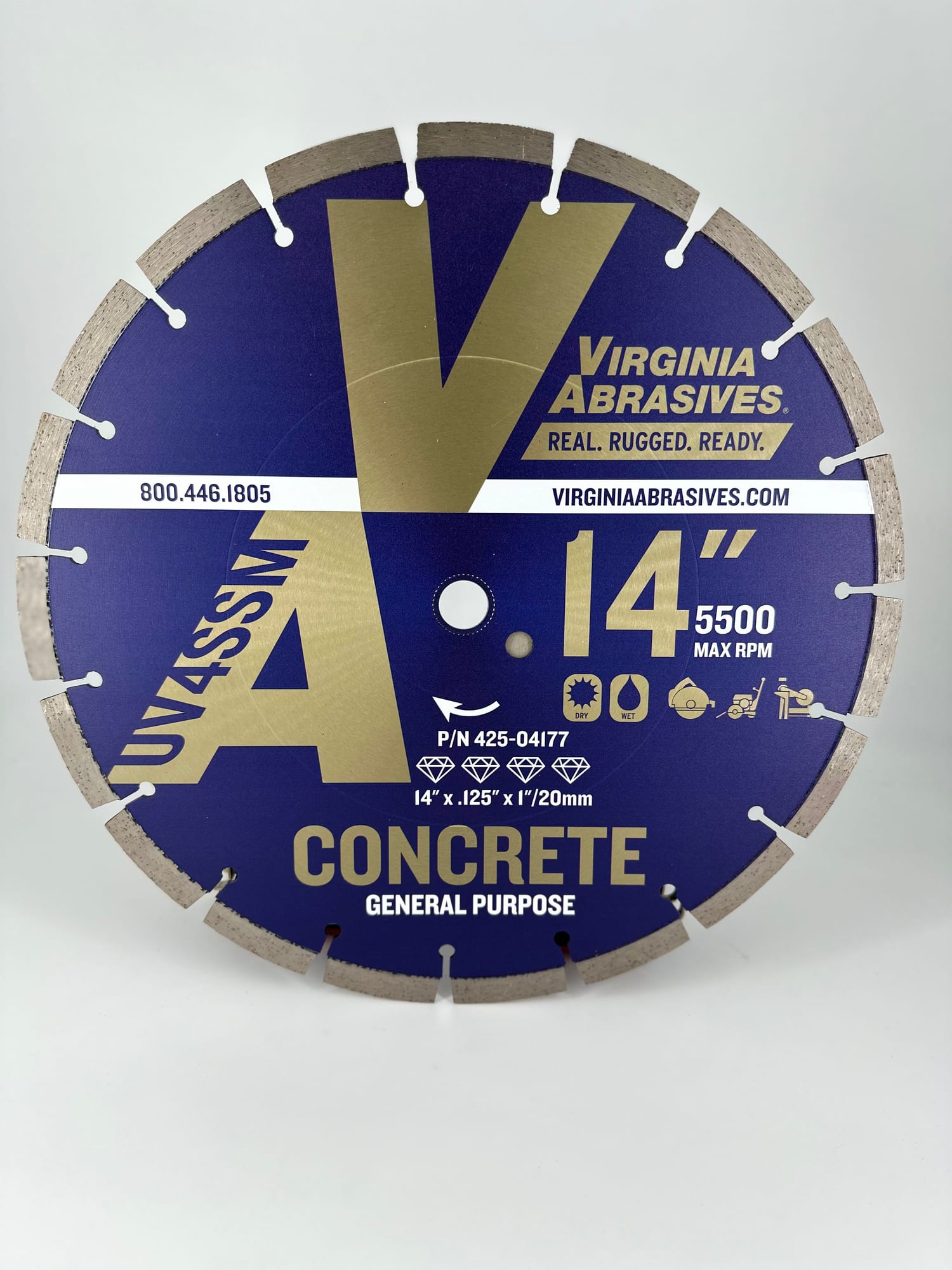
Virginia Abrasives 14-Inch Ultra Value Diamond Blade
Value-tier 14-inch general-purpose segmented diamond blade. Fits Stihl TS 420, Husqvarna K 770/K 970 via the included 20mm bushing.
$69.99
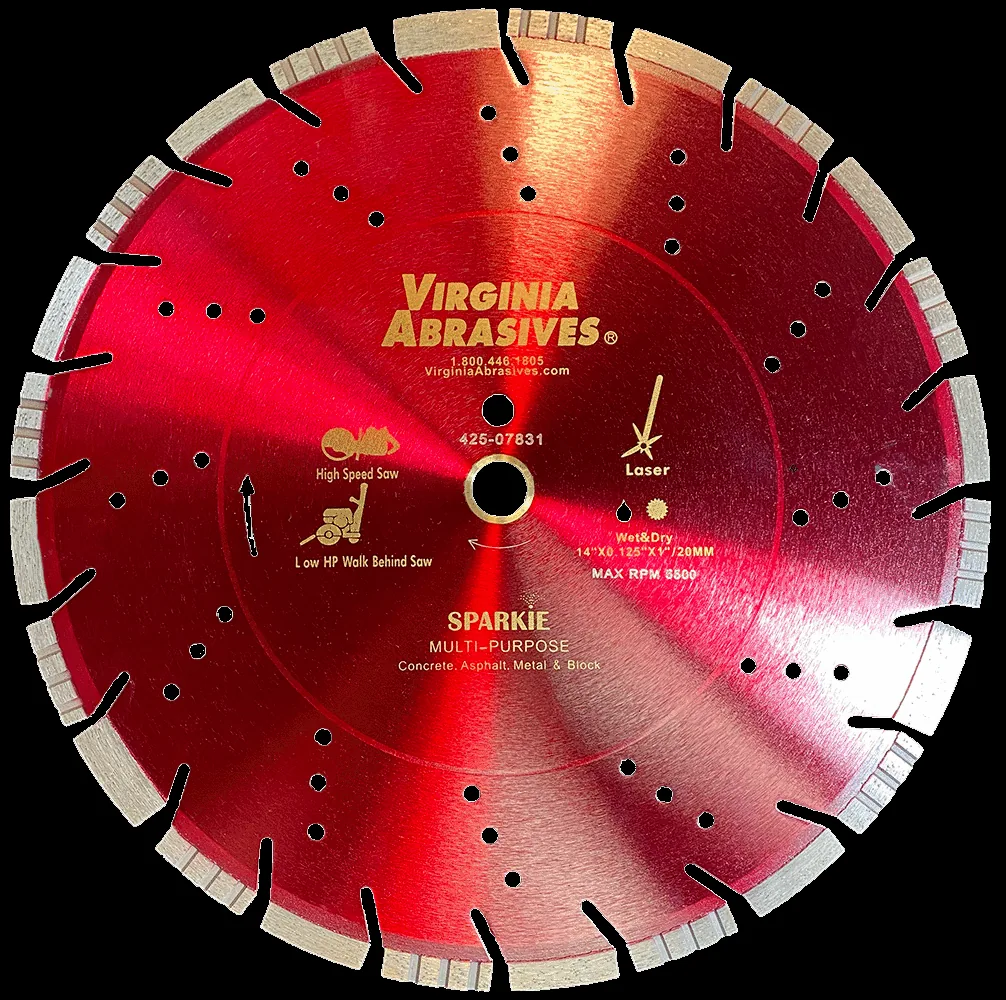
Virginia Abrasives 14-Inch Premium Sparkie Diamond Blade
VA's Premium-tier 14-inch blade, sold as a multi-purpose blade for concrete including reinforced, asphalt, pavers, block and light steel. Laser-welded turbo segments.
$174.30
More picks in our roundup: best diamond blades asphalt