Diamond Blades
Diamond blades cut concrete, asphalt, stone, tile, block, and masonry. The right blade depends on material hardness, cutting depth, saw compatibility, and how many cuts you're making. A mismatched blade overheats, glazes, loses segments, or fails to cut altogether — matching bond hardness to material matters more than any other choice.
Reviewed Diamond Blades — Our SKU Picks
Detailed reviews of the specific diamond blade SKUs we recommend. Each product page covers verified Amazon data, spec table, application matching, and honest cons.
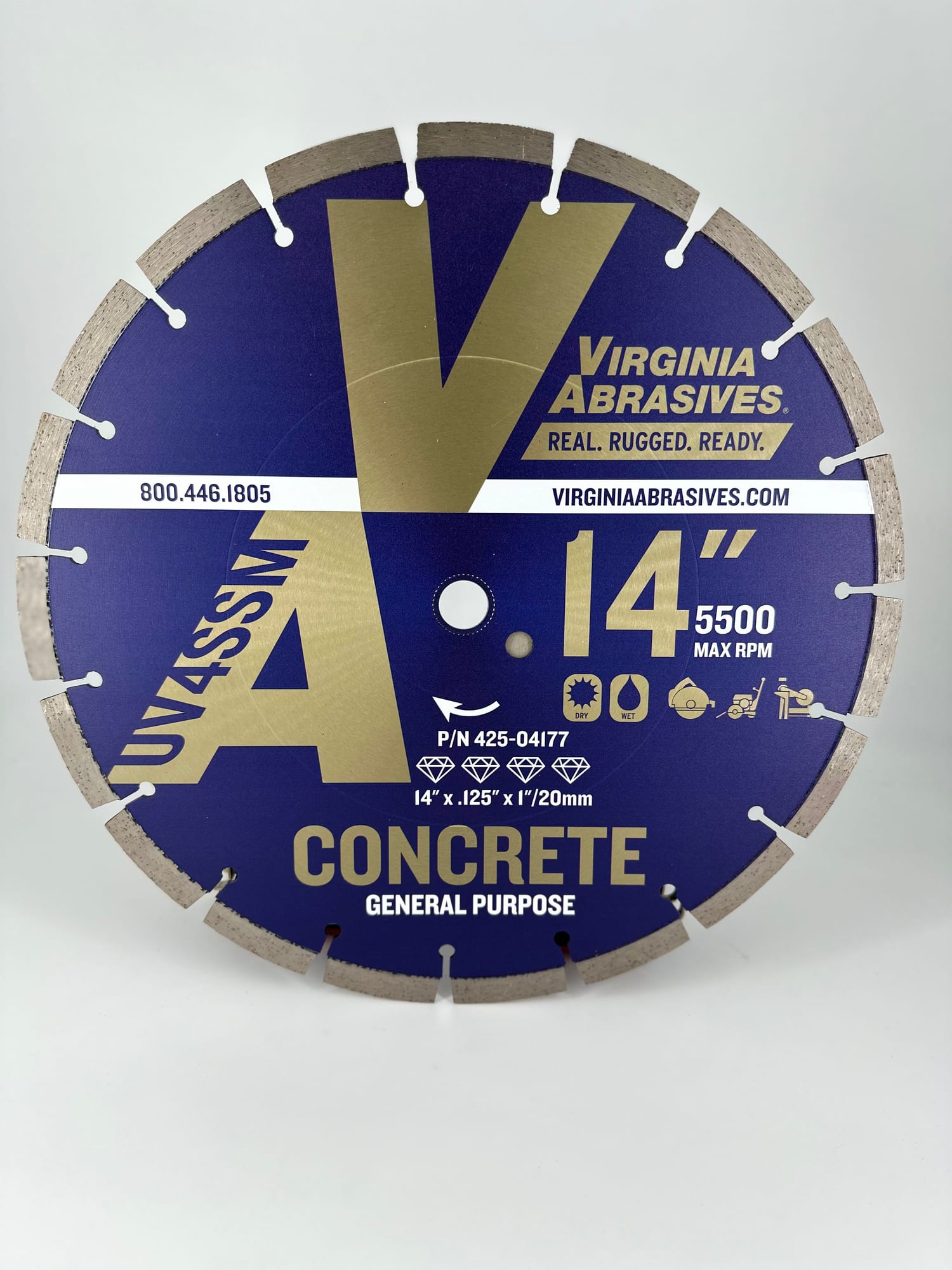
VA 14" Ultra Value Diamond Blade
Entry-tier 14" general-purpose. Fits Stihl TS 420, Husqvarna K 770/K 970. $69.99 · 4.2★
Read the full review →
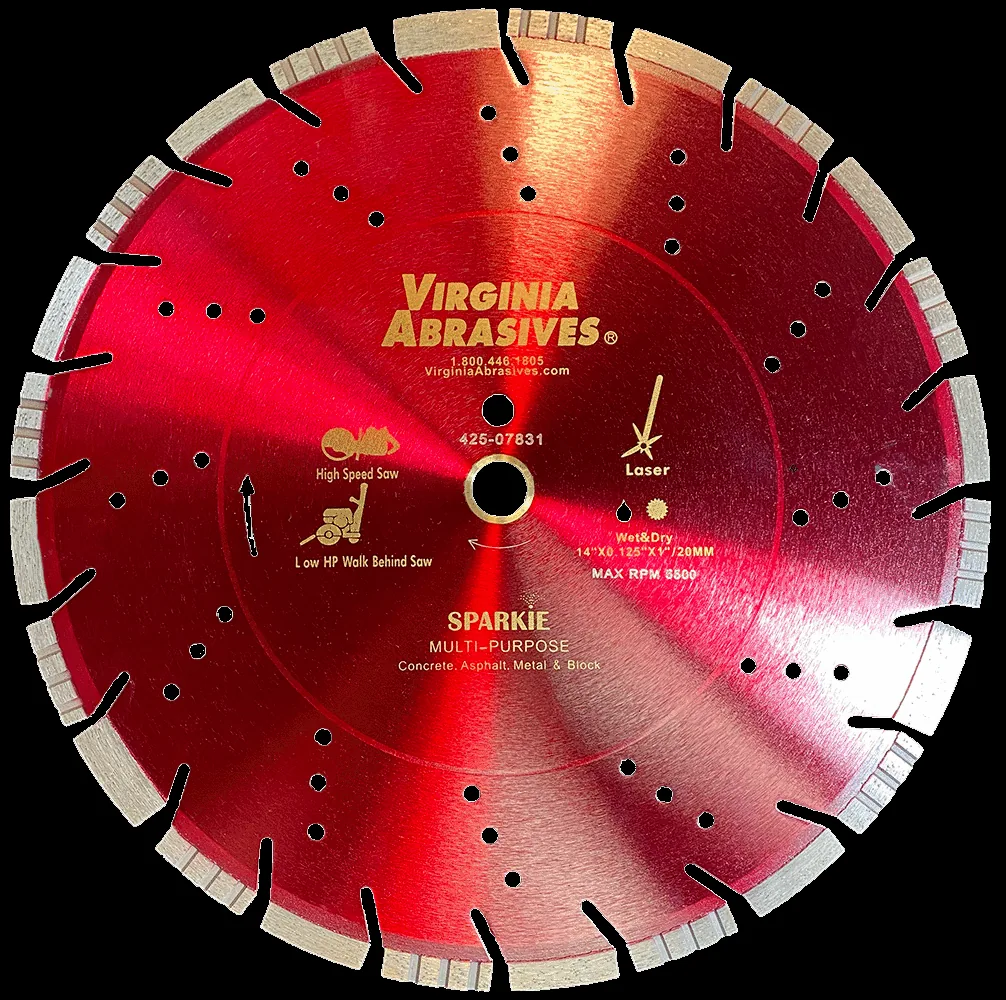
VA 14" Premium Sparkie
Pro-tier 14" with 10mm laser-welded segments. Reinforced concrete + production. $174.30
Read the full review →
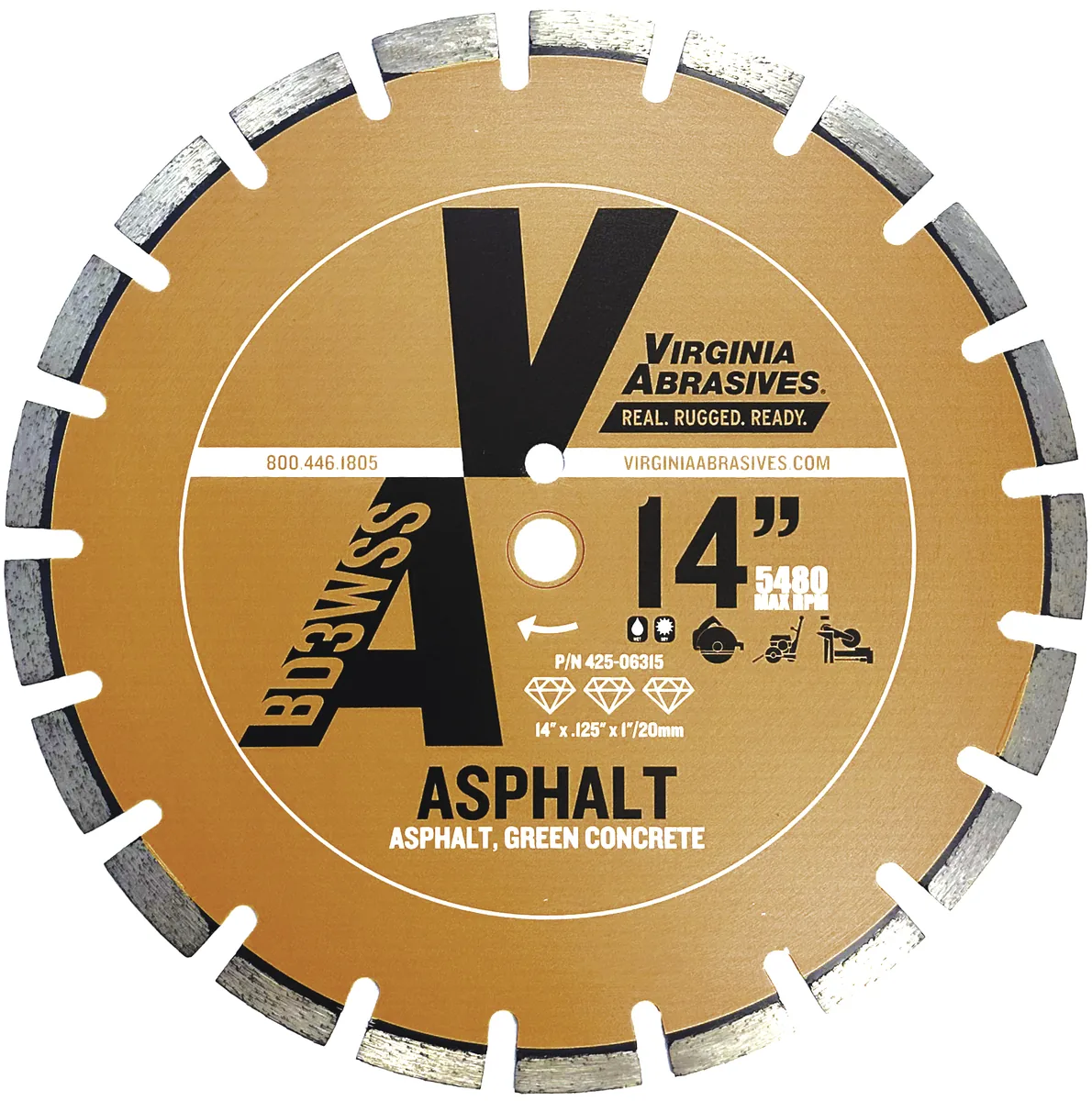
VA 14" BD Asphalt / Green Concrete
Hard-bond specialty blade for asphalt + green concrete. Alternating drop segments. $63.38
Read the full review →

VA 9" Ultra Value Diamond Blade
Entry-tier 9" for cordless cut-off saws + angle grinders. 7/8" arbor. $55.66
Read the full review →
For head-to-head: VA Ultra Value vs Premium Sparkie comparison.
By Saw Model
- Blades for Husqvarna K 970
- Blades for Husqvarna K 770
- Blades for Husqvarna K 760
- Blades for Husqvarna K 1 PACE
- Blades for Stihl TS 420
- Blades for Stihl TS 500i
- Blades for Makita EK7651H
- Blades for Milwaukee MX FUEL COS350
- Blades for Hilti DSH 700-X
- Blades for Hilti DSH 900-X
Start Here (Buying Guides)
- • Best all-round concrete picks (every size) → Best Diamond Blades for Concrete
- • 14-inch blades for cut-off saws → Best 14-Inch Diamond Blades for Concrete
- • Asphalt and green concrete → Best Diamond Blades for Asphalt
- • Complete buying framework → Diamond Blade Buying Guide
- • Decision tree for any job → How to Choose the Right Diamond Blade
By Material
- Cured concrete — segmented blade, medium bond
- Green concrete — hard bond
- Asphalt — hard bond, wide gullets
- Pavers and brick — segmented or turbo
- Block and CMU — general-purpose segmented
- Natural stone — varies by stone hardness
- Porcelain tile — continuous rim, wet
By Saw Brand
- Stihl (TS 420, TS 500i, TS 700)
- Husqvarna (K 770, K 970, K 1 PACE)
- Milwaukee (MX FUEL COS350)
- DeWalt
- Makita
Blade Types
Segmented blades have visible gullets between diamond segments that flush debris and cool the blade. Fastest cutting in concrete, block, and masonry. Not suitable for tile (edge chips).
Turbo blades have a serrated continuous rim. Faster than continuous, smoother than segmented. Good for soft stone, pavers, and materials where chip-free is important.
Continuous rim blades have an unbroken diamond-embedded edge. Slowest cut, smoothest finish, zero chipping. Required for tile, porcelain, glass, and delicate natural stone. Almost always wet-cut.
For the full type comparison, see Segmented vs. Continuous vs. Turbo.
Lifespan, RPM, and Troubleshooting
- Diamond Blade Lifespan — how long blades last by material and technique
- Diamond Blade RPM Guide — max RPM charts per size
- How to Fix a Glazed Diamond Blade — restore a blade that stopped cutting
- Virginia Abrasives Ultra Value Review — our detailed review of the VA mid-tier blade
Frequently Asked Questions
What is a diamond blade and how does it cut?
A diamond blade is a steel core with industrial diamonds embedded in metal-bond segments around the rim. The blade doesn't cut like a traditional saw — it grinds. The diamonds scratch and pulverize the material while the metal bond wears down, continuously exposing fresh diamonds. Matching bond hardness to material is the single most important decision.
Which diamond blade do I need for concrete?
For cured concrete, use a segmented general-purpose blade like the Virginia Abrasives 14" Ultra Value. For green (fresh) concrete, use a hard-bond blade. For reinforced concrete with heavy rebar, use a multi-purpose or combo blade. For full picks, see our Best Diamond Blades for Concrete guide.
What diamond blade size do I need?
Match the blade to the saw. 4.5" and 7" fit angle grinders. 12" and 14" fit handheld cut-off saws (Stihl TS 420, Husqvarna K 770). 18" and 20" fit walk-behind flat saws. Never run a blade larger than your saw is rated for — the guard won't cover it and the RPM mismatch is a safety hazard.
How long does a diamond blade last?
This site plans on roughly 150-250 linear feet wet for a mid-range 14-inch blade on standard 4,000 PSI cured concrete, and less dry. That is a planning range, not a manufacturer figure, and we have not measured it. Premium blades are planned longer. Hard aggregate (granite, trap rock), heavy rebar, and forced feed rates cut blade life, and this site's planning assumption takes 30-50% off for them.
Segmented, turbo, or continuous rim — which one?
Segmented blades have gullets between segments and cut fastest on concrete, block, and masonry. Turbo blades have a serrated continuous rim for faster cuts with less chipping — good for soft stone. Continuous rim blades cut slowest but smoothest with zero chipping — required for tile, porcelain, and glass.
All Diamond Blade Articles
Diamond Blade Lifespan: How Long Should It Last?
How long do diamond blades last? Expected cutting feet by blade type, 5 factors that shorten blade life, and pro techniques to double wear on concrete.
Diamond Blades: The Complete Buying Guide
Complete diamond blade buying guide covering bond types, segment styles, sizes, and material matching. Choose the right blade for any concrete cutting job.
Cutting Rebar With a Diamond Blade: What Actually Happens
Will a diamond blade cut rebar? Yes, and here is what it costs the blade. Bond matching by bar size, one-blade-for-both, and safe technique.
Best Diamond Blades for Asphalt
Best diamond blades for asphalt — hard-bond blades that survive soft, abrasive material. Picks for 14, 16, and 20-inch saws, matched by job.
Best 14-Inch Diamond Blades for Concrete
Best 14-inch diamond blades for concrete cut-off saws — picks, specs, pros/cons, and saw compatibility for Stihl, Husqvarna, Milwaukee, and Hilti.
Best Diamond Blades for Concrete
Best diamond blades for concrete sold on Amazon, with specs and per-foot math, plus what to look for at each size from 4″ grinder blades to 20″ walk-behind.
Best Diamond Blades for DeWalt Saws
Best diamond blades for DeWalt FlexVolt 60V, chop saws, tile saws, and cordless grinders — size and arbor compatibility plus verified picks.
Best Diamond Blades for Block & CMU
Best diamond blades for concrete block and CMU — segmented picks for cutting cinder block, CMU units, and concrete brick at every grinder and saw size.
Best Diamond Blades for Natural Stone
Best diamond blades for granite, marble, limestone, sandstone, and slate. Bond-matching guide, top picks per stone, and wet-cut technique for clean edges.
Best Diamond Blades for Porcelain Tile
Best diamond blades for porcelain tile — continuous-rim wet-cut picks that eliminate chipping, plus technique for chip-free cuts on wet saws and grinders.
Best Diamond Blades for Green Concrete
Best diamond blades for green (fresh) concrete — hard-bond picks for early-entry and conventional joint cutting within 1-48 hours of the pour.
Best Diamond Blades for Husqvarna Cut-Off Saws
Best diamond blades for Husqvarna K 770, K 970, K 1270, and K 1 PACE power cutters — arbor compatibility, saw-matched picks for concrete and asphalt.
Best Diamond Blades for Makita Saws
Best diamond blades for Makita gas cut-off saws, cordless circular saws, and angle grinders — arbor sizes, compatibility, and verified picks.
Best Diamond Blades for Milwaukee Saws
Best diamond blades for the Milwaukee MX FUEL COS350 and M18 FUEL — spindle fit, bond matching by substrate, and top picks for concrete.
Best Diamond Blades for Pavers
Best diamond blades for pavers — concrete, clay, natural stone, and porcelain. Picks for masonry table saws, wet tile saws, and angle grinders.
Best Diamond Blades for Stihl Cut-Off Saws
Best diamond blades for Stihl TS 420, TS 440, TS 500i, TS 700, TS 800, and TSA 300 — saw compatibility, bond matching, picks for concrete and asphalt.
What RPM Should You Run a Diamond Blade? (Speed Guide)
Diamond blade RPM guide with max-speed chart by blade size, saw type, and bond. Running over-speed is the #1 cause of blade failure and safety incidents.
How to Choose the Right Diamond Blade for Any Job
How to choose a diamond blade — match bond hardness, segment type, and blade size to your material, saw, and cutting conditions.
How to Fix a Glazed Diamond Blade
How to fix a glazed diamond blade that stopped cutting — dressing techniques, causes of glazing, and when to replace versus repair.
Segmented vs Continuous vs Turbo Diamond Blades
Segmented vs continuous vs turbo diamond blades — when to use each rim type, cut quality differences, and material matching guide.
Virginia Abrasives Ultra Value Diamond Blade Review
Virginia Abrasives Ultra Value 14-inch diamond blade review — real-world performance, blade life, and value vs premium and budget alternatives.
Wet vs Dry Cutting Concrete: Which Is Better?
Wet vs dry cutting concrete — blade life, dust control, OSHA silica compliance, and the specific jobs where each method wins for pro contractors.