Best Diamond Blades for Natural Stone
Matt Lipman is CEO of Capstone Holdings Corp. (NASDAQ: CAPS) and a board member of Virginia Abrasives. He discloses this relationship for full transparency in our reviews.
⚡ Top Picks at a Glance
| Pick | Product | Best For | Rating | Price | Buy |
|---|---|---|---|---|---|
| Editor's Pick |  | Limestone, sandstone, soft-stone work on 14" wet saws or cut-off saws. | ★ 4.2 (10) | $69.99 | Amazon → |
| Best Specialty | 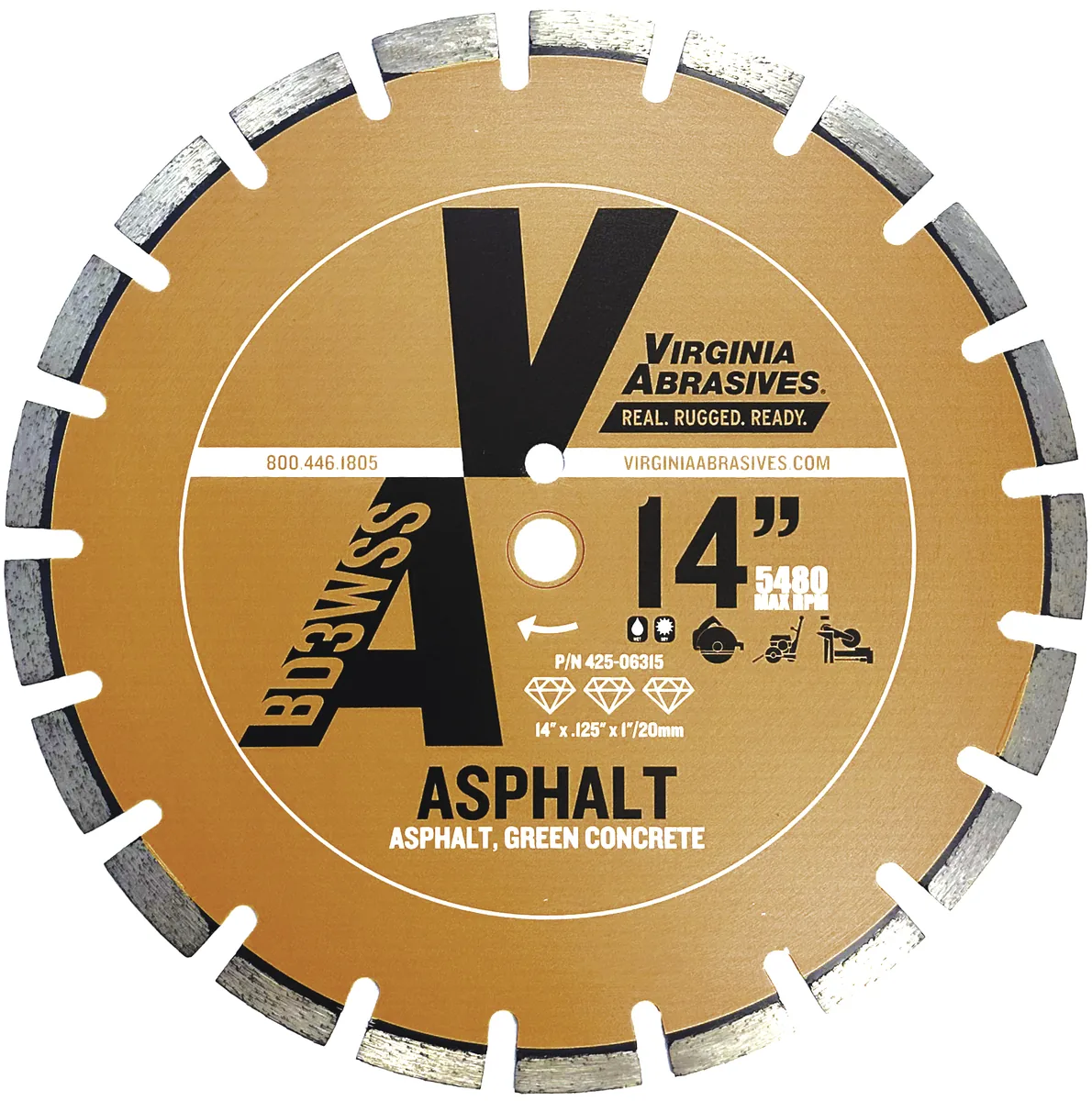 | Softer abrasive stones (sandstone) — hard bond keeps segments exposed. | — | $63.38 | Amazon → |
Virginia Abrasives
VA 14" Ultra Value Diamond BladeLimestone, sandstone, soft-stone work on 14" wet saws or cut-off saws.
Read our review →★ 4.2 (10)
$69.99
Buy on Amazon → Virginia Abrasives
VA 14" BD Asphalt / Green ConcreteSofter abrasive stones (sandstone) — hard bond keeps segments exposed.
Read our review →$63.38
Buy on Amazon →Verified Amazon listings. Prices update from Amazon at scrape time. We earn a small commission on qualifying purchases — see our disclosure.
Table of Contents
- The Short Answer
- Top Picks at a Glance
- How We Picked
- Bond Matching for Natural Stone
- Best Diamond Blades by Stone Type
- Granite: Soft-Bond Continuous-Rim Wet Blades
- Marble: Medium-Soft-Bond Continuous-Rim Blades
- Slate and Travertine: Turbo-Rim Medium-Bond Blades
- Limestone and Sandstone: Hard-Bond Segmented Blades
- Tools for Natural Stone
- Wet Tile Saw (Under 24″ Tile or Small Slab)
- Handheld Wet-Cut Saw (Field Work on Slabs)
- Bridge Saw (Production Slab Work)
- Angle Grinder (Rough Cuts Only, Not Finish Work)
- Wet Cutting Technique for Natural Stone
- Common Problems and Fixes
- Edges Chipping or Spalling
- Blade Glazed on Granite
- Stone Discoloration at Cut Edge
- Blade Burns Out Fast on Sandstone
- Recommended Blades for Softer Natural Stone
The best diamond blades for natural stone match bond hardness to stone hardness — in reverse. Granite (very hard, non-abrasive) needs a soft bond; sandstone (soft, abrasive) needs a hard bond. Use the wrong blade and granite glazes the segments in minutes or sandstone burns through a premium blade in a single cut. This guide covers picks per stone type with specs, pros/cons, and the cutting technique that produces clean edges.
The Short Answer
For most stone work:
- Granite (countertops, stair treads, monuments) — MK Diamond MK-215GL wet-cut continuous-rim blade, 10″ ($62.01). Soft bond, high diamond concentration.
- Marble (tile, trim, finish work) — MK Diamond MK-215 continuous-rim wet blade, 10″ ($48.42).
- Limestone and sandstone (pavers, wall stone, flagstone) — segmented turbo blade with hard bond. VA’s general-purpose concrete blades work here.
- Slate (roofing tile, flagging) — turbo-rim blade. Score the face first, then cut through — slate chips along cleavage planes without a score pass.
- Mixed stone fabrication — MK’s 215 series covers granite (the 215GL) and marble (the 215) in several diameters.
Top Picks at a Glance
| Stone Type | Hardness | Best Blade | Bond | Rim | Typical Price |
|---|---|---|---|---|---|
| Granite | Very hard | MK Diamond MK-215GL | Soft | Continuous | $49-140 by diameter |
| Marble | Medium-hard | MK Diamond MK-215 | Medium-soft | Continuous | $20-120 by diameter |
| Slate | Medium | Turbo-rim blade rated for slate | Medium | Turbo | — |
| Limestone | Medium-soft | VA 14″ Ultra Value | Medium | Segmented | $69.99 |
| Sandstone | Soft, abrasive | VA 14″ BD Green/Asphalt | Hard | Segmented | $63.38 |
How We Picked
Natural stone cutting is specialty work, and no single blade handles all stone types well. We ranked on what can be checked without running the blades: bond hardness against the stone, rim type (continuous for chip-free edges, segmented for speed), wet or dry rating, fit, price, and availability. We have not run these ourselves and publish no measured figure for cut quality or blade life on stone. Where Virginia Abrasives makes a blade rated for the stone, we include it; for hard stone, specialty makers such as MK Diamond and Husqvarna sell dedicated blades.
Bond Matching for Natural Stone
The fundamental rule: hard stone needs soft bond, soft stone needs hard bond. Same principle as all diamond-blade selection but with a wider hardness range than concrete:
| Stone | Mohs Hardness | Bond | Rim Type | Wet/Dry |
|---|---|---|---|---|
| Granite | 6-7 | Very soft | Continuous | Wet only |
| Quartzite | 7 | Very soft | Continuous | Wet only |
| Marble | 3-5 | Medium-soft | Continuous | Wet only |
| Travertine | 3-4 | Medium | Turbo or continuous | Wet |
| Slate | 3-5 | Medium | Turbo | Wet or dry |
| Limestone | 3-4 | Medium-hard | Segmented or turbo | Wet or dry |
| Sandstone | 6-7 (but abrasive) | Hard | Segmented | Dry OK, wet extends life |
For the science behind bond hardness, see our Diamond Blade Buying Guide.
Best Diamond Blades by Stone Type
Granite: Soft-Bond Continuous-Rim Wet Blades
Granite is the hardest common natural stone and the blade choice that causes the most contractor frustration. The wrong bond glazes. The wrong rim type chips the edges. Every granite cut must be wet.
Top picks:
- MK Diamond MK-215GL — soft-bond continuous rim, 7″ to 14″ on Amazon; the 10″ was $62.01 with 3.6 stars on 63 ratings when we checked on September 22, 2026
Specs to match for granite:
- Continuous rim (not segmented — segments chip granite)
- Soft bond (aggressive diamond exposure)
- High diamond concentration (for life on extremely hard stone)
- Wet-cut only (mandatory — dry cutting granite burns the stone and the blade)
- 10″ or 14″ diameter for countertop slab work
Pros: Clean chip-free edges. Long blade life on granite when used correctly. Essential for any visible granite cut.
Cons: Premium pricing ($80-200 per blade). Useless on softer stone — the soft bond wears instantly on limestone or sandstone. Slow cutting compared to segmented blades.
Marble: Medium-Soft-Bond Continuous-Rim Blades
Marble is softer than granite but still requires a continuous rim to prevent edge chipping on visible work. A medium-soft bond handles marble’s hardness range without wearing too fast.
Top picks:
- MK Diamond MK-215 — MK’s continuous-rim marble and tile blade, 6″ to 14″ on Amazon
Specs: Continuous rim, medium-soft bond, wet-cut, 7″-10″ for tile work, 10″-14″ for slab work.
Pros: Clean edges on marble tile, trim, and fabrication. Longer life than granite-specific blades on marble-specific work.
Cons: Not optimized for granite — use a granite-specific blade for granite work. Marble blades glaze on harder stone.
Slate and Travertine: Turbo-Rim Medium-Bond Blades
Slate has natural cleavage planes that chip if cut without a score pass. A turbo rim (serrated continuous edge) produces cleaner cuts than segmented on slate without the slow speed of pure continuous rim. Travertine (limestone-based) behaves similarly.
Top picks:
- We have no Amazon pick for slate we can verify yet. Look for a turbo-rim blade rated for slate on the listing.
Technique: score the visible face with a light pass, then cut through from either side. Skipping the score pass chips slate along cleavage planes.
Pros: Good balance of speed and edge quality on slate. Handles travertine, limestone, and soft sandstone adequately.
Cons: Not optimized for any single stone — specialty blades produce better results on their target stone. Segmented blades cut faster on pure limestone.
Limestone and Sandstone: Hard-Bond Segmented Blades
These softer, more abrasive stones wear bonds fast. Use a general-purpose segmented concrete blade with a harder bond — the same blade that handles cured concrete handles limestone. For sandstone (extremely abrasive), step up to an asphalt-rated blade.
Top picks:
- Virginia Abrasives 14″ Ultra Value — a medium-bond blade, so treat it as a compromise pick here rather than a true hard-bond stone blade. Segmented, handles limestone and concrete block equally well
- VA 14″ BD Asphalt / Green Concrete — hard bond specifically for abrasive materials like sandstone
Virginia Abrasives 14″ Ultra Value Diamond Blade
Medium bond segmented blade. Handles limestone, travertine, and soft sandstone as well as cured concrete. 14″ × 1″ arbor, wet or dry, 5,500 max RPM.
★★★★☆ 4.2 (10 ratings on Amazon)
$69.99
Buy on Amazon →Pros: Good value for mixed masonry work. Segmented rim cuts fast on softer stone. Readily available on Amazon Prime.
Cons: Not suitable for granite, marble, or any stone where chip-free edges matter. Segmented rim leaves rougher cut faces.
Tools for Natural Stone
Wet Tile Saw (Under 24″ Tile or Small Slab)
The shop standard for tile-format stone work. 7″ or 10″ blade, integrated water reservoir, linear guide. Good for kitchen backsplashes, bathroom tile, and small countertop cutouts. See Best Diamond Blades for Porcelain Tile for porcelain-specific picks that also work on soft stone.
Handheld Wet-Cut Saw (Field Work on Slabs)
A handheld cut-off saw with water attachment, typically 10″ or 14″ blade. Used for on-site countertop cutouts, stair tread fitting, and monument work. Requires GFCI power and attention to electrical safety around water.
Bridge Saw (Production Slab Work)
The shop standard for granite and marble fabrication. Overhead bridge-mounted saw with fully automated water delivery and precision travel. 14″ to 20″ blade. Only economical for production fabrication shops; most contractors rent bridge saw time at a local fabricator.
Angle Grinder (Rough Cuts Only, Not Finish Work)
For rough demolition cuts on stone that will be hidden — behind tile, underground, or in structural positions. Always dry-cut with angle grinders. Never use an angle grinder on visible granite or marble — heat damages the stone and the blade chips the edges.
Wet Cutting Technique for Natural Stone
- Score the visible face first on slate, marble, and granite. A light pass (1/16″ deep) on the finished side prevents chip-out on break-through.
- Maintain continuous water flow at the blade-stone contact point. Insufficient water causes overheating, blade warping, and edge chipping.
- Let the blade do the work. Feed rate matters more than pressure. Forcing the cut generates heat that ruins the stone surface.
- Back-cut if possible — cut from the underside toward the finished face when the saw geometry allows it.
- Match blade RPM to the saw and blade spec. Under-speed causes chatter; over-speed risks blade failure.
Common Problems and Fixes
Edges Chipping or Spalling
Wrong rim type. Granite and marble require continuous rim, not segmented. If already using continuous, the blade is glazed — dress it on abrasive material or replace. On slate, add a score pass on the visible face before through-cutting.
Blade Glazed on Granite
Bond too hard for granite’s hardness. Step up to a softer-bond blade such as the MK-215GL. Glazing can be temporarily recovered by dressing on sandstone or a dedicated dressing stone, but if the blade glazes repeatedly, the blade is wrong for the stone.
Stone Discoloration at Cut Edge
Heat damage from dry cutting or insufficient water flow. Marble and granite show this fastest — tan or brown discoloration within a few millimeters of the cut. Fix: increase water flow, reduce feed rate, or switch to a blade with better heat dissipation.
Blade Burns Out Fast on Sandstone
Sandstone is extremely abrasive and wears a general-purpose bond fast. Use a hard-bond blade rated for asphalt or green concrete — the VA BD line handles abrasive material without premature wear.
Recommended Blades for Softer Natural Stone
| Blade | Best For | Link |
|---|---|---|
| VA 14″ Ultra Value | Limestone, travertine, soft sandstone, mixed masonry | Check price on Amazon |
| VA 14″ BD Asphalt / Green Concrete | Abrasive sandstone, soft aggregate | Check price on Amazon |
| MK Diamond MK-215GL | Granite, 10″ wet saws | Check price on Amazon |
| MK Diamond MK-215 | Marble, 10″ wet saws | Check price on Amazon |
Browse the full Virginia Abrasives lineup on Amazon →
For polishing after cutting, see Best Polishing Pads for Granite. For the full buying framework, see Diamond Blade Buying Guide. For the rim-type decision, see Segmented vs. Continuous vs. Turbo.
Frequently Asked Questions
What diamond blade do I need for granite? ▼
Granite is extremely hard and non-abrasive. Use a soft-bond continuous-rim blade with high diamond concentration; the MK Diamond MK-215GL is one sold on Amazon. Always cut wet. Dry cutting granite generates heat that damages both the blade and the stone.
Can I use a concrete blade on natural stone? ▼
Not for granite, marble, or slate — concrete blades have a bond too hard for these and the segmented rim chips the edges. For softer, abrasive stone like limestone or sandstone, a general-purpose concrete blade can work because the bond-hardness match is similar. Always match bond to stone hardness in reverse.
What's the difference between cutting granite and marble? ▼
Granite requires a softer bond and slower feed rate, because it is harder than marble (about 6 to 7 on the Mohs scale, against about 3 to 4). Marble can use a medium-soft bond and tolerates faster cutting. Both need a continuous-rim wet-cut blade for chip-free edges. Marble also shows heat discoloration faster than granite, so water flow matters more.
Should I cut natural stone wet or dry? ▼
Wet for granite, marble, slate, and any visible finish work. Dry cutting works on limestone or sandstone for short cuts or rough demolition, but on a crew job OSHA Table 1 lists water fed to the blade as the only control for saw cutting. Never cut granite or marble dry on visible edges — the heat causes discoloration and micro-chipping.
What size blade do I need for stone countertop work? ▼
For tile-format stone (under 24 inches), use a 7" or 10" wet tile saw. For full slabs, use a 14" handheld wet-cut saw or a bridge saw. The blade diameter must exceed the slab thickness by at least 2x for safe cutting — a 14" blade handles slabs up to 4-5" thick safely.
Can I polish natural stone after cutting? ▼
Yes. After a clean wet cut, start with 50-grit metal-bond polishing pads and progress through 100, 200, 400, 800, 1500, and 3000 grit for mirror finish. See our Best Polishing Pads for Granite guide for the full progression.
Related Guides
- Best Diamond Blades for Porcelain Tile— Best diamond blades for porcelain tile — continuous-rim wet-cut picks that elimi…
- Best Diamond Blades for Pavers— Best diamond blades for pavers — concrete, clay, natural stone, and porcelain. P…
- Best Diamond Polishing Pads for Granite— Best diamond polishing pads for granite countertops and floors — soft-bond wet p…
- Diamond Blades: The Complete Buying Guide— Complete diamond blade buying guide covering bond types, segment styles, sizes, …
- Segmented vs Continuous vs Turbo Diamond Blades— Segmented vs continuous vs turbo diamond blades — when to use each rim type, cut…
- Wet vs Dry Cutting Concrete: Which Is Better?— Wet vs dry cutting concrete — blade life, dust control, OSHA silica compliance, …
Shop Virginia Abrasives on Amazon
Diamond blades, cut-off wheels, and grinding tools, sold on Amazon.
Browse Products →