Best Diamond Blades for Green Concrete
Matt Lipman is CEO of Capstone Holdings Corp. (NASDAQ: CAPS) and a board member of Virginia Abrasives. He discloses this relationship for full transparency in our reviews.
⚡ Top Picks at a Glance
| Pick | Product | Best For | Rating | Price | Buy |
|---|---|---|---|---|---|
| Editor's Pick | 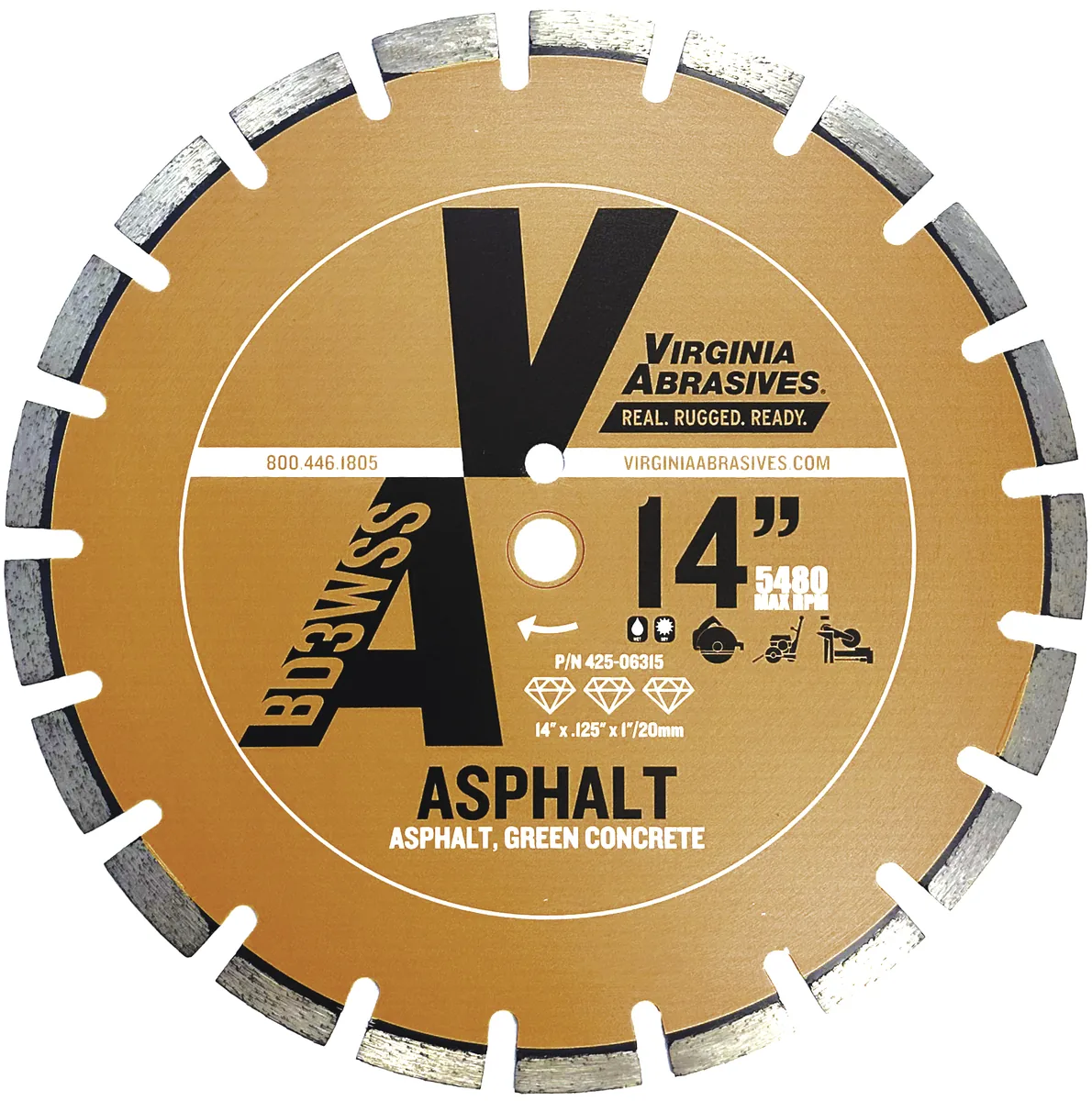 | Green concrete + asphalt — hard bond, wide gullets clear slurry. | — | $63.38 | Amazon → |
Virginia Abrasives
VA 14" BD Asphalt / Green Concrete BladeGreen concrete + asphalt — hard bond, wide gullets clear slurry.
Read our review →$63.38
Buy on Amazon →Verified Amazon listings. Prices update from Amazon at scrape time. We earn a small commission on qualifying purchases — see our disclosure.

Table of Contents
- The Short Answer
- Top Picks at a Glance
- How We Picked
- Why Green Concrete Needs Different Blades
- Best Blades by Cutting Method
- Conventional Walk-Behind and Handheld (4-24 Hours)
- Early-Entry (1-4 Hours)
- Handheld Patch and Repair
- When to Cut Green Concrete: The Timing Window
- Joint Depth Rules
- Crack-Control Joint Depth
- Why the 1/4 Rule Works
- Early-Entry Exception
- Green Concrete vs. Cured Concrete: When to Switch Blades
- Common Problems and Fixes
- Joints Ravel or Crumble at Edges
- Blade Glazes on Green Concrete
- Random Cracks Appear Before Joints Are Cut
- Green-Concrete Slurry Stains the Finished Surface
- Blade Wears Faster Than Expected
- Recommended Green Concrete Blades
- Related Material Guides
The best diamond blades for green concrete use a hard bond that resists the abrasive wear of freshly poured concrete. Green concrete is soft and abrasive — the same bond logic as asphalt applies, and the same VA BD Asphalt / Green Concrete blade handles both. Using a mid-bond cured-concrete blade on green work wears it out 2-3× faster than necessary. This guide covers the picks per cutting method (early-entry, walk-behind, handheld), the critical timing window, and the joint-depth rules that prevent random cracking.
The Short Answer
For most contractors cutting green concrete:
- Best overall — Virginia Abrasives 14″ BD Asphalt / Green Concrete (about $63). Hard bond, wide gullets, dual-purpose for green concrete and asphalt. Fits every 14″ walk-behind or handheld cut-off saw.
- Best for 14″ handheld on fresh slabs — VA 14″ BD (same pick). The hard bond resists the wear that soft, abrasive fresh concrete puts on a standard cured-concrete blade.
- Best step up — VA 14″ Asphalt blade with undercut protection ($102.99). VA’s Ultra Value asphalt and green-concrete blade, with a hard bond and a protected core, sold for high-speed and walk-behind saws.
Early-entry saws, such as Husqvarna’s Soff-Cut, take the saw maker’s own blades through its dealers, so we have no Amazon pick for them. The early-entry section below explains the method.
Top Picks at a Glance
| Tier | Blade | Cutting Method | Best For | Typical Price |
|---|---|---|---|---|
| Best Overall | VA 14″ BD Asphalt/Green | Walk-behind or handheld | Conventional joint cutting (4-24 hr) | $63.38 |
| Step Up | VA 14″ Asphalt, undercut protected | Walk-behind or handheld | Deeper cuts, protected core | $102.99 |
How We Picked
Every blade here is rated for green concrete or asphalt (the bond requirements are nearly identical). We ranked on what can be checked without running the blades: a hard bond rated for green concrete, fit for the saw types used for joint cutting (walk-behind, handheld, early-entry), price, and availability. We publish no measured blade life. The Virginia Abrasives BD line is our top pick because it is the one hard-bond blade in this group that is rated for both green concrete and asphalt and is buyable on Amazon today; we have not run it ourselves and publish no performance figure for it.
Why Green Concrete Needs Different Blades
Green concrete (typically less than 48 hours old) is soft but abrasive. The soft matrix hasn’t fully developed its strength; the aggregate chips and unbonded cement particles are loose. That combination wears standard mid-bond cured-concrete blades fast — 2-3× the wear rate of the same blade cutting fully cured concrete.
The fix: a hard-bond blade. The hard bond resists the abrasive wear of loose particles, extending blade life on fresh concrete. The same principle applies to asphalt (also soft and abrasive), which is why the same blade handles both applications.
The common confusion: some guides recommend “soft-bond blades for soft material.” That logic works for hard, non-abrasive materials like granite — where the bond needs to erode fast enough to expose new diamonds. It doesn’t work for soft but abrasive materials like green concrete, where the wear isn’t about hardness but about the volume of loose particles sanding the bond. Green concrete is closer to cutting sandpaper than cutting granite.
For the full bond-matching science, see Diamond Blade Buying Guide.
Best Blades by Cutting Method
Conventional Walk-Behind and Handheld (4-24 Hours)
The standard approach for crack-control joints on residential and commercial flatwork. Cut 4-24 hours after the pour, depending on temperature, mix design, and jobsite conditions.
Virginia Abrasives 14″ BD Asphalt / Green Concrete Blade
14″ hard-bond segmented blade with wide gullets for gummy green-concrete debris. 1″ arbor with 20mm bushing. Dual-purpose for asphalt and green concrete.
Typical price: about $63. Check current price on Amazon →
Specs: 14″ × .125″ × 1″/20mm, hard bond, segmented rim with wide gullets, wet or dry, 5,500 max RPM.
Pros: Hard bond delivers long life on soft-abrasive material. Wide gullets clear wet slurry without loading. Dual-purpose for asphalt and green concrete — one blade for crews doing both.
Cons: Hard bond glazes on cured concrete — don’t use this blade on cured slabs. Not optimized for deep structural cuts.
Compatible saws: every major 14-inch handheld cut-off saw (Stihl TS 420/500i/700, Husqvarna K 770/970, Milwaukee MX FUEL COS350, Makita EK7651H) and 14-inch walk-behind flat saws.
Early-Entry (1-4 Hours)
For dedicated crack-control joint cutting that begins as soon as 1-4 hours after placement. This requires a specialized saw system, such as Husqvarna’s Soff-Cut. The Soff-Cut saw uses proprietary blades designed for ultra-fresh concrete with shallow (1-1.25 inch) cuts.
Why early-entry wins on some jobs:
- Crack-control joints can be cut before shrinkage stress develops
- Crews can joint-cut and clean up on the same day as the pour
- No overnight waiting for concrete to harden
Tradeoffs:
- Specialized saw, a significant capital cost
- Proprietary blades (Soff-Cut blades only work on Soff-Cut saws)
- Shallow cuts may not meet spec on some commercial projects
Blade options: early-entry saws take the saw maker’s own blades, sold through its dealers. We have no Amazon pick for them.
Handheld Patch and Repair
For small fresh-concrete repairs, utility cuts through fresh slabs, or crack repair on still-curing concrete. Same VA BD blade works in handheld saws.
For smaller 9-inch cordless cut-off saws (Milwaukee M18, Husqvarna K 535i — the Milwaukee MX FUEL COS350 is the 14-inch platform), use a 9-inch blade rated for green concrete or asphalt. We found no 9-inch Virginia Abrasives green-concrete blade on Amazon.
When to Cut Green Concrete: The Timing Window
Timing is the most critical variable in green-concrete joint cutting. Cut too early and you ravel the joint edges (crumbly, poor appearance). Cut too late and random cracking may have already initiated.
| Method | Timing Window | Concrete State | Cutting Depth |
|---|---|---|---|
| Soff-Cut early-entry | 1-4 hours | Still soft, pliable | 1 to 1.25 inches |
| Walk-behind conventional | 4-12 hours | Firm but wet | 1/4 of slab depth |
| Walk-behind conventional (warm) | 4-8 hours | Curing faster in heat | 1/4 of slab depth |
| Walk-behind conventional (cold) | 12-24 hours | Slower cure | 1/4 of slab depth |
| Handheld cut-off | 8-24 hours | Solid enough for handheld | 1/4 of slab depth |
Temperature rule of thumb: cold concrete (under 60°F) cures slower — wait longer. Hot concrete (above 85°F) cures faster — cut sooner. Mix design (PSI rating, admixtures, water-cement ratio) also affects timing.
Warning signs:
- Joint raveling (crumbly edges): cutting too soon. Wait 1-2 hours and re-test.
- Random cracking appearing: cut immediately wherever cracks haven’t formed.
- Blade bogging down: concrete harder than expected — switch to cured-concrete blade if past 24 hours.
For detailed joint-cutting technique including spacing and depth rules, see How to Cut Expansion Joints in Concrete.
Joint Depth Rules
Getting the joint depth right matters as much as the timing.
Crack-Control Joint Depth
Standard rule: cut to 1/4 of the slab depth.
- 4-inch slab → 1-inch joint
- 6-inch slab → 1.5-inch joint
- 8-inch slab → 2-inch joint
Why the 1/4 Rule Works
The 1/4-depth cut creates a controlled weakness in the slab. When shrinkage stress builds (concrete cures and loses water volume), the crack initiates along the joint line — where you want it — instead of randomly across the slab.
Cut too shallow (less than 1/4 depth) and cracks appear somewhere else. Cut too deep (more than 1/3 depth) and you weaken the structural capacity.
Early-Entry Exception
Soff-Cut early-entry blades cut 1 to 1.25 inches regardless of slab depth. This works because shrinkage stress hasn’t fully developed yet — the shallow cut still directs the eventual crack to the joint line. The key is cutting before stress develops, not matching full conventional depth.
Green Concrete vs. Cured Concrete: When to Switch Blades
The transition from “green” to “cured” is gradual, not sudden. General guidelines:
| Age | State | Recommended Blade |
|---|---|---|
| 0-4 hours | Very fresh | Soff-Cut early-entry only |
| 4-24 hours | Green but firm | VA 14″ BD or similar hard-bond |
| 24-48 hours | Partial cure | VA BD still works; some crews switch to cured blade |
| 48-72 hours | Near-cured | Cured concrete blade (VA Ultra Value) |
| 72+ hours | Cured | Cured concrete blade |
Rule of thumb when unsure: try cutting with the green-concrete blade first. If it cuts well and wears normally, keep using it. If it starts wearing fast, the concrete has cured enough — switch to a cured blade.
For cured concrete picks, see Best Diamond Blades for Concrete.
Common Problems and Fixes
Joints Ravel or Crumble at Edges
Cutting too early. The concrete hasn’t developed enough strength to support clean edges. Wait 1-2 hours and re-test. Temperature and mix design affect timing — don’t use a fixed schedule across jobs.
Blade Glazes on Green Concrete
Bond too hard for the concrete’s current state. Usually means the concrete has cured more than expected — switch to a cured-concrete blade. Or the mix has unusually low aggregate content, which reduces abrasiveness.
Random Cracks Appear Before Joints Are Cut
Past the timing window. Cut the remaining joints immediately to prevent further random cracking. Review your crew’s scheduling for future pours — joints must be cut within the window.
Green-Concrete Slurry Stains the Finished Surface
Uncleaned wet-cut slurry. Clean the surface immediately after cutting with a pressure washer or stiff brush. Dry slurry can permanently discolor some decorative concrete surfaces.
Blade Wears Faster Than Expected
Mix design harder than assumed (more aggregate, lower water content) or concrete has cured faster than expected. Switch to a harder-bond blade rated for green concrete.
Recommended Green Concrete Blades
| Blade | Cutting Method | Best For | Link |
|---|---|---|---|
| VA 14″ BD Asphalt/Green | Walk-behind, handheld | Conventional joint cutting | Amazon |
| VA 14″ Asphalt, undercut protected | Walk-behind, handheld | Deeper cuts, protected core | Amazon |
Browse the full Virginia Abrasives lineup on Amazon →
Related Material Guides
Green concrete shares bond requirements with asphalt. Cured concrete is a different decision:
- Best Diamond Blades for Asphalt — same bond logic, similar blade picks
- Best Diamond Blades for Concrete — cured concrete (after 48-72 hours)
- How to Cut Expansion Joints in Concrete — joint-cutting technique and spacing rules
- Diamond Blade Lifespan Guide — expected life per material
For the full blade-selection framework, see Diamond Blade Buying Guide.
Frequently Asked Questions
When can I cut green concrete? ▼
Timing depends on mix design, temperature, and humidity. Early-entry saws (Soff-Cut) begin cutting at 1-4 hours. Conventional walk-behind and handheld saws start at 4-24 hours. Past 24 hours in warm weather, random cracking may have already initiated — cut the remaining joints immediately to prevent further cracking.
Can I use a regular concrete blade on green concrete? ▼
You can, but blade life suffers dramatically. Green concrete is soft and abrasive — it wears a standard mid-bond cured-concrete blade faster than cured concrete does. Use a hard-bond green-concrete or asphalt-rated blade instead. Both materials share the same bond requirement.
What's the difference between green concrete and asphalt blades? ▼
They're often the same blade. Green concrete and asphalt are both soft and abrasive, requiring hard-bond blades with wide gullets to clear debris. The Virginia Abrasives BD Asphalt / Green Concrete blade is specifically designed for both applications.
How deep should I cut green-concrete joints? ▼
For crack-control joints, cut to 1/4 of the slab depth — a 4-inch slab gets a 1-inch joint. For early-entry systems, shallower cuts (1 to 1.25 inches regardless of slab depth) work because shrinkage stress hasn't fully developed. Cut depths beyond 1/3 of slab depth risk creating weak points.
Should I cut green concrete wet or dry? ▼
Wet, under OSHA Table 1, which lists water fed to the blade as the only control for handheld and walk-behind saws. Water also suppresses the dust, but green concrete slurry can stain the finished surface if not cleaned up promptly. Dry cutting is faster to set up, and a dry saw cut takes the employer out of Table 1 and into an exposure assessment.
Why is my green concrete blade glazing? ▼
Bond too hard for the concrete's current hardness. Counter-intuitively, this means the concrete has cured more than expected — the blade's hard bond isn't wearing because the material isn't abrasive enough. Switch to a cured-concrete blade (medium bond) or wait longer between pours and cuts if this happens repeatedly.
How many linear feet will a green concrete blade cut? ▼
Our planning range for a 14-inch VA BD Asphalt / Green Concrete blade is 150-300 linear feet on green concrete; it is not a manufacturer figure and we have not measured it. Deeper conventional cuts shorten that to 150-250 linear feet. Wet cutting extends life 30-50% over dry. Hard aggregate in the mix (granite, trap rock) cuts life 20-30%.
Related Guides
- Best Diamond Blades for Asphalt— Best diamond blades for asphalt — hard-bond blades that survive soft, abrasive m…
- Best Diamond Blades for Concrete— Best diamond blades for concrete sold on Amazon, with specs and per-foot math, p…
- Diamond Blades: The Complete Buying Guide— Complete diamond blade buying guide covering bond types, segment styles, sizes, …
- Diamond Blade Lifespan: How Long Should It Last?— How long do diamond blades last? Expected cutting feet by blade type, 5 factors …
- How to Cut Expansion Joints in Concrete— How to cut expansion joints in concrete — timing windows, depth rules, spacing g…
Shop Virginia Abrasives on Amazon
Diamond blades, cut-off wheels, and grinding tools, sold on Amazon.
Browse Products →