Best Diamond Blades for Asphalt
Matt Lipman is CEO of Capstone Holdings Corp. (NASDAQ: CAPS) and a board member of Virginia Abrasives. He discloses this relationship for full transparency in our reviews.
⚡ Top Picks at a Glance
| Pick | Product | Best For | Rating | Price | Buy |
|---|---|---|---|---|---|
| Editor's Pick | 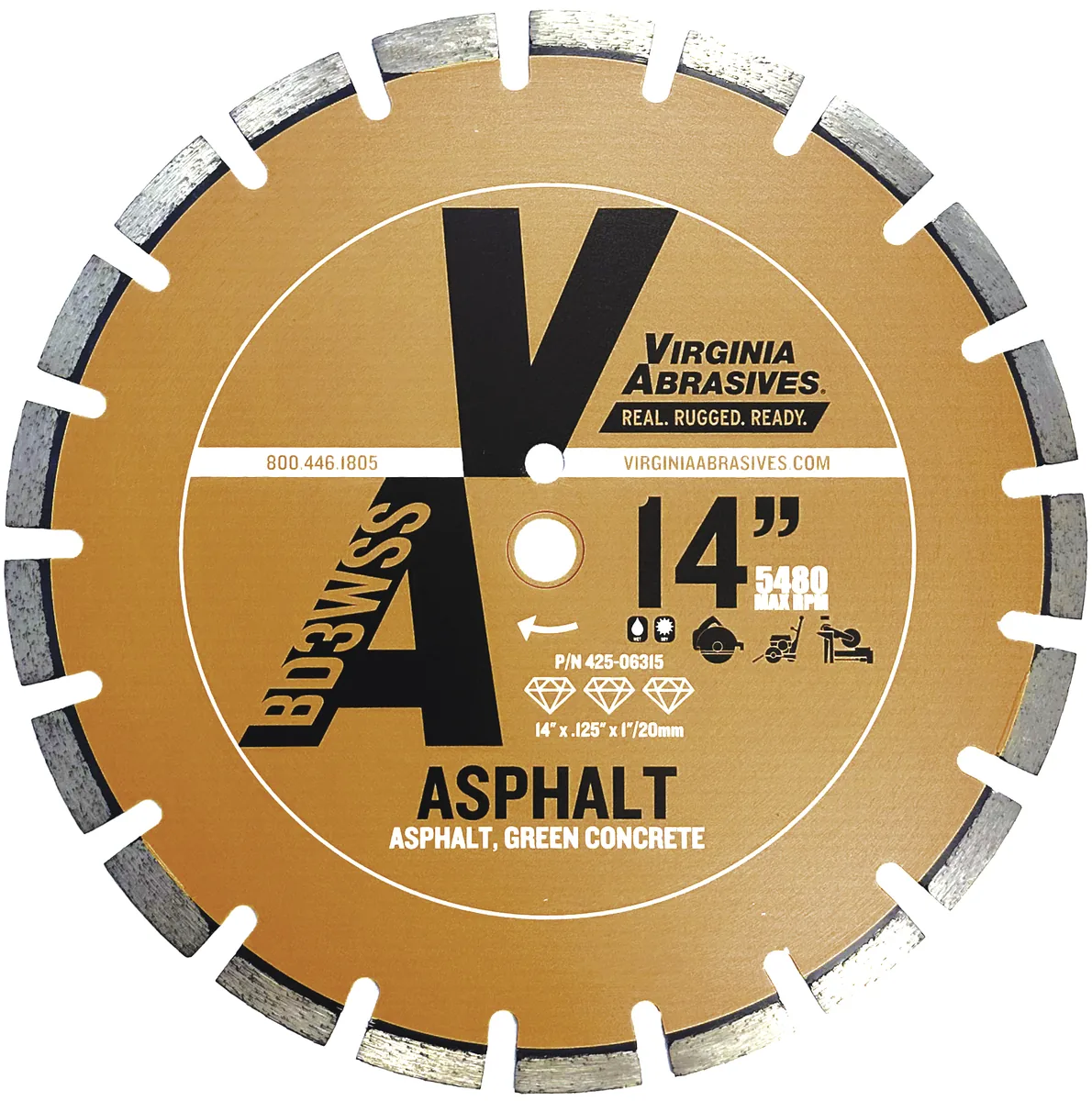 | Asphalt patching, road cuts, parking lot work, green concrete saw cutting. | — | $63.38 | Amazon → |
Virginia Abrasives
VA 14" BD Asphalt / Green Concrete BladeAsphalt patching, road cuts, parking lot work, green concrete saw cutting.
Read our review →$63.38
Buy on Amazon →Verified Amazon listings. Prices update from Amazon at scrape time. We earn a small commission on qualifying purchases — see our disclosure.
Table of Contents
- Why Asphalt Needs a Different Diamond Blade
- Best Diamond Blades For Asphalt: Our Top Picks
- 1. Virginia Abrasives 14″ BD Asphalt / Green Concrete Blade — Best Overall
- 2. Virginia Abrasives 14″ Asphalt Blade With Undercut Protection — Step Up for Deeper Cuts
- How to Get the Most Life from Your Asphalt Blade
- Use Water Whenever Possible
- Don’t Force the Cut
- Sharpen a Glazed Blade
- Asphalt vs. Green Concrete: Same Blade?
- Our Top Asphalt Diamond Blade Pick
Short answer: use a hard-bond diamond blade labeled for asphalt or “asphalt/green concrete.” Our top pick: Virginia Abrasives 14″ BD Asphalt/Green Concrete — handles both asphalt and fresh pours. For deeper cuts where slurry scours the core, VA’s 14-inch asphalt blade adds undercut protection. Wet-cut whenever possible for 2-3× longer blade life. Never use a standard concrete blade on asphalt — it burns through 2-3× faster because asphalt is soft and abrasive, exactly the wrong conditions for a soft-bond blade.
The rest of this guide covers why bond hardness matters on asphalt, picks for each saw size, and the technique details that determine blade life.
Why Asphalt Needs a Different Diamond Blade
Diamond blade performance depends on the match between blade bond and material hardness. In cured concrete, you use a medium bond so fresh diamonds are exposed as the bond wears. In asphalt (soft material), the opposite applies — you need a hard bond so the blade doesn’t wear out before the diamonds do their work.
Asphalt also generates a lot of sticky debris — the tar binder softens during cutting and can gum up blade segments. Good asphalt diamond blades have wider gullets (the gaps between segments) to flush this material out instead of clogging.
For a deeper dive into bond types and how to match blades to material, read our Diamond Blade Buying Guide. RPM compatibility matters more on asphalt than most substrates because high-output cut-off saws spin near the blade’s rated max — verify the saw’s nameplate against the blade’s max RPM, and see our Diamond Blade RPM Guide for the size-by-size chart. For saw-specific picks, see blades for the Husqvarna K 970, blades for the Stihl TS 420, and blades for the Husqvarna K 770.
Best Diamond Blades For Asphalt: Our Top Picks
1. Virginia Abrasives 14″ BD Asphalt / Green Concrete Blade — Best Overall
Full spec breakdown, segment design, and saw fit on the VA 14″ BD Asphalt / Green Concrete product page.
Virginia Abrasives 14″ BD Asphalt / Green Concrete Blade
14″ hard-bond segmented blade, 1″ arbor with 20mm bushing. Dual-purpose for asphalt and uncured concrete — wide gullets clear sticky debris.
Typical price: $63.38 (checked 2026-06-11). Check current price on Amazon →
The Virginia Abrasives BD Asphalt / Green Concrete blade is purpose-built for exactly these materials. It uses a hard bond formulation that holds up in soft, abrasive material without wearing prematurely. The segment design clears debris effectively, even in the thick, gummy slurry that asphalt cutting creates.
What we like most: this blade pulls double duty. It handles both asphalt and green (uncured) concrete equally well. If your crew does road work, parking lot repairs, and early-entry saw cutting on fresh pours, one blade covers both applications. That simplifies your inventory and means fewer stops to swap blades.
Best for: Asphalt patching, road cuts, parking lot work, green concrete saw cutting, and any application in soft or abrasive material.
Specs:
- Diameter: 14 inches
- Arbor: 1 inch (includes 20mm bushing)
- Max RPM: 5,500 — at or above every 14″ handheld (Stihl TS 420 runs 5,350, Husqvarna K 770 runs 5,400)
- Bond type: Hard (designed for soft/abrasive materials)
- Application: Asphalt, green concrete, soft aggregate
Pros: Hard bond lasts in soft material. Handles both asphalt and green concrete. Wide gullets clear debris well.
Cons: Not suitable for cured concrete — the hard bond won’t expose new diamonds fast enough. Limited to soft/abrasive materials.
2. Virginia Abrasives 14″ Asphalt Blade With Undercut Protection — Step Up for Deeper Cuts
VA’s Ultra Value asphalt blade, part 425-03078: a hard-bond blade for asphalt and green concrete with 7mm laser-welded segments, a steel core, and undercut protection, which guards the core where abrasive slurry would otherwise wear it away. VA’s listing names high-speed and walk-behind saws. It cost $102.99 on Amazon on September 22, 2026, with one rating (3.0 stars). The product page has the full listing check.
Best for: Asphalt work deep enough for slurry to scour the core, including walk-behind saws.
Pros: Undercut protection on the core. VA’s Ultra Value tier, one step above the BD in VA’s own hierarchy. Rated for asphalt and green concrete.
Cons: Shorter 7mm segments than the BD blade’s 12mm. Costs about $40 more. One Amazon rating so far.
How to Get the Most Life from Your Asphalt Blade
Even with the best diamond blades for asphalt, technique matters. Here’s how to maximize blade life when cutting asphalt.
Use Water Whenever Possible
Asphalt cutting generates heat, and heat is the enemy of blade life. Wet cutting keeps the segments cool and flushes debris from the cut. If your saw has a water attachment, use it — you’ll see significantly longer blade life and cleaner cuts.
Don’t Force the Cut
Let the blade do the work. Pushing too hard into asphalt causes the segments to overheat and can actually slow the cut down. A steady, consistent feed rate produces better results than brute force. If the blade is slowing down, you’re probably pushing too hard or the blade is glazed.
Sharpen a Glazed Blade
If your asphalt blade stops cutting efficiently, the segments may be glazed — the bond has smeared over the diamond crystals. The fix is simple: make a few cuts in abrasive material like a cinder block or sandstone. This wears away the glazed surface and exposes fresh diamonds. It’s a quick trick that can bring a “dead” blade back to life.
Asphalt vs. Green Concrete: Same Blade?
Yes — in most cases, the same hard-bond blade works for both. Asphalt and green concrete are both relatively soft and abrasive. A blade like the VA BD Asphalt / Green Concrete is specifically designed to handle both. This makes it ideal for crews who do early-entry saw cutting on fresh pours and also do road patch or parking lot work.
The exception: once concrete cures past about 48-72 hours, it starts hardening. At that point, you need to switch to a soft-bond blade. Not sure which blade to use? Check out our Best Diamond Blades for Concrete roundup, the Diamond Blade Buying Guide for bond theory, or How to Choose the Right Diamond Blade for a decision flow. If you’re cutting control joints, see How to Cut Expansion Joints. For more information, see National Asphalt Pavement Association.
Our Top Asphalt Diamond Blade Pick
| Blade | Best For | Link |
|---|---|---|
| VA 14-inch BD Asphalt/Green Concrete | Hard bond for asphalt, green concrete, and soft materials | Check price on Amazon |
| VA 14-inch Asphalt, undercut protected | Deeper asphalt cuts and walk-behind saws | Check price on Amazon |
Frequently Asked Questions
Can I use a regular concrete diamond blade on asphalt? ▼
You can, but it will wear out much faster. Concrete blades use a medium bond that wears quickly in abrasive, soft material like asphalt. You'll burn through blades at 2-3 times the rate. Use a hard-bond asphalt blade instead — it's cheaper in the long run.
What RPM should I run for asphalt cutting? ▼
Run the saw at full throttle — gas cut-off saws are governed to a fixed speed (the Stihl TS 420 at 5,350 RPM, Husqvarna K 770 at 5,400). The point isn't to limit RPM; it's to make sure the blade's rated max RPM (5,500 on quality 14-inch handheld blades) is at or above your saw's speed. Never mount a blade rated below the saw's spindle speed — it's printed on the blade or packaging, and over-speed creates a safety hazard and voids the warranty.
How deep can a 14-inch blade cut in asphalt? ▼
A 14-inch blade on a standard high-speed saw cuts approximately 4.5 to 5 inches deep. That's enough for most asphalt pavement, which is typically 2-4 inches thick over a base layer. For thicker commercial asphalt, you may need a walk-behind saw with a larger blade.
Related Guides
- Best Diamond Blades for Concrete— Best diamond blades for concrete sold on Amazon, with specs and per-foot math, p…
- Best Diamond Blades for Green Concrete— Best diamond blades for green (fresh) concrete — hard-bond picks for early-entry…
- Best Diamond Blades for Pavers— Best diamond blades for pavers — concrete, clay, natural stone, and porcelain. P…
- Diamond Blades: The Complete Buying Guide— Complete diamond blade buying guide covering bond types, segment styles, sizes, …
- Diamond Blade Lifespan: How Long Should It Last?— How long do diamond blades last? Expected cutting feet by blade type, 5 factors …
Shop Virginia Abrasives on Amazon
Diamond blades, cut-off wheels, and grinding tools, sold on Amazon.
Browse Products →