Best Diamond Blades for Concrete
Matt Lipman is CEO of Capstone Holdings Corp. (NASDAQ: CAPS) and a board member of Virginia Abrasives. He discloses this relationship for full transparency in our reviews.
⚡ Top Picks at a Glance
| Pick | Product | Best For | Rating | Price | Buy |
|---|---|---|---|---|---|
| Editor's Pick |  | Occasional cured concrete + block. Fits Stihl TS 420, Husqvarna K 770/K 970. | ★ 4.2 (10) | $69.99 | Amazon → |
| Better | 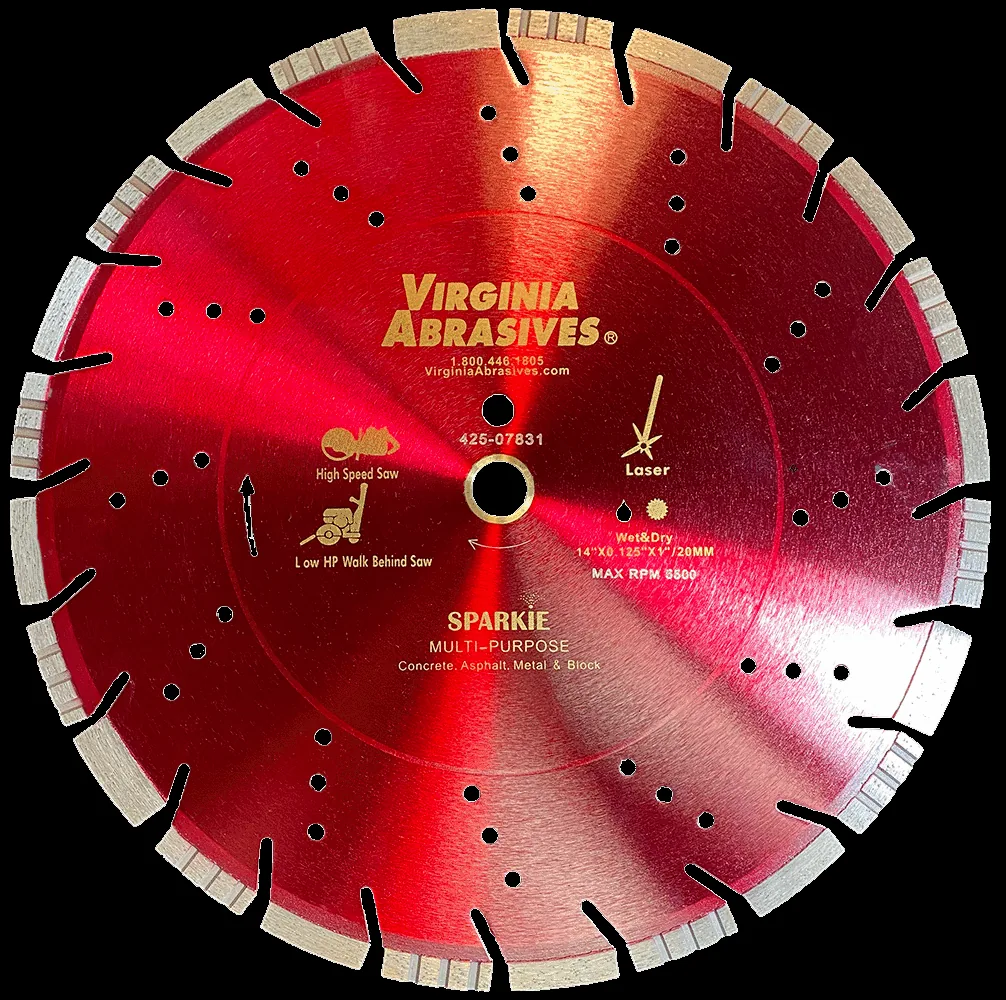 | VA's premium multi-purpose blade: concrete including reinforced, asphalt, pavers and block, per VA. | — | $174.30 | Amazon → |
| Best for Production |  Virginia Abrasives VA 14" Supreme Pro | VA's professional tier, rated for concrete and asphalt. No Amazon ratings yet. | — | $104.88 | Amazon → |
| Best Value |  | Cordless 9" cut-off saws (Husqvarna K 535i) + 9" angle grinders. | — | $55.66 | Amazon → |
Virginia Abrasives
Virginia Abrasives 14" Ultra Value Diamond BladeOccasional cured concrete + block. Fits Stihl TS 420, Husqvarna K 770/K 970.
Read our review →★ 4.2 (10)
$69.99
Buy on Amazon → Virginia Abrasives
VA 14" Premium SparkieVA's premium multi-purpose blade: concrete including reinforced, asphalt, pavers and block, per VA.
Read our review →$174.30
Buy on Amazon → Virginia Abrasives
VA 14" Supreme Pro
VA's professional tier, rated for concrete and asphalt. No Amazon ratings yet.
$104.88
Buy on Amazon → Virginia Abrasives
VA 9" Ultra ValueCordless 9" cut-off saws (Husqvarna K 535i) + 9" angle grinders.
Read our review →$55.66
Buy on Amazon →Verified Amazon listings. Prices update from Amazon at scrape time. We earn a small commission on qualifying purchases — see our disclosure.
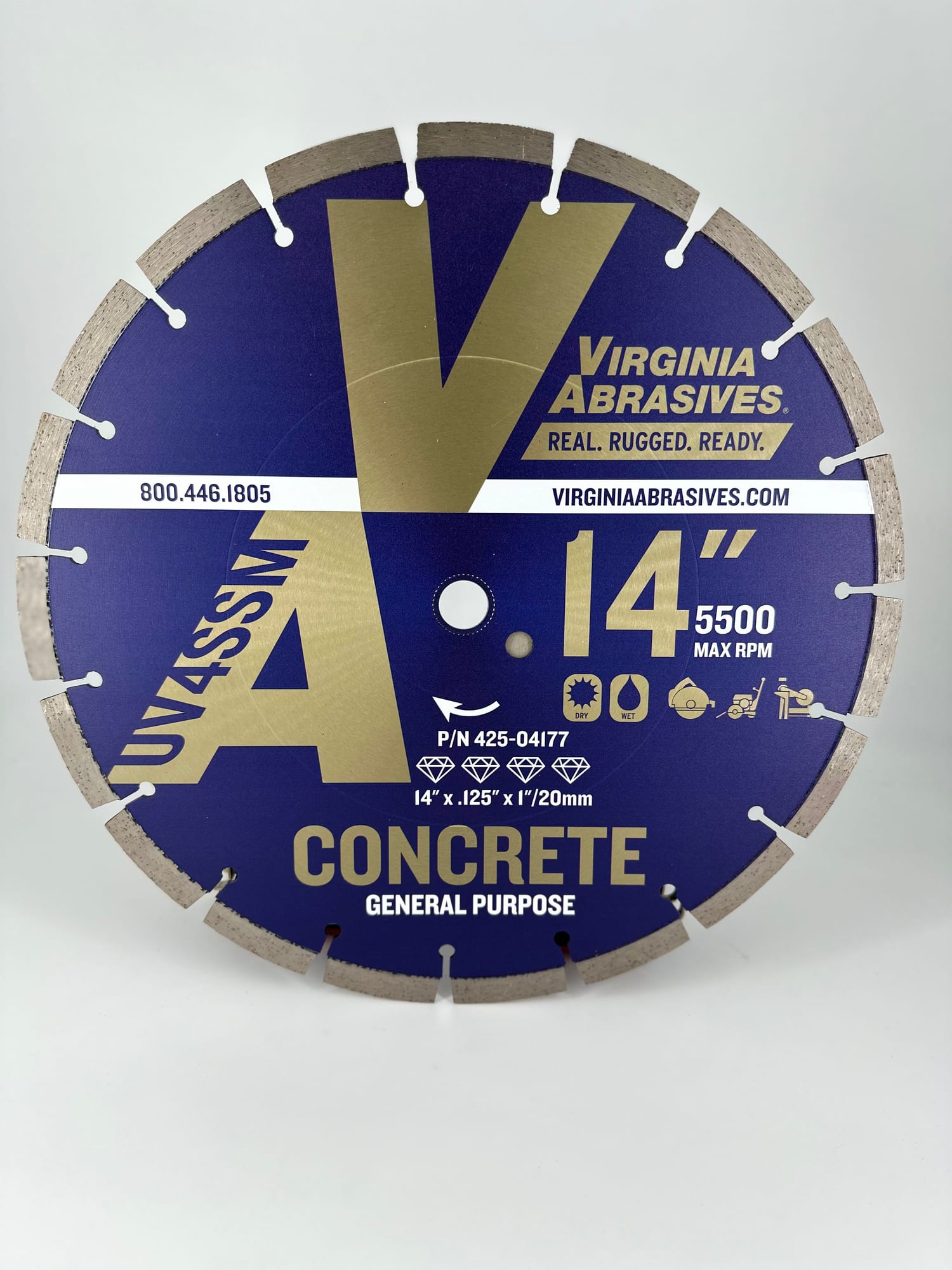
Table of Contents
- The Short Answer
- Top Picks at a Glance
- How We Picked
- Where the Life Numbers Come From
- Quick Decision: Which Blade Do You Need?
- Best 4″ and 4.5″ Diamond Blades for Concrete (Angle Grinders)
- Best 7″ Diamond Blades for Concrete (Large Angle Grinders)
- Best 14″ Diamond Blades for Concrete (Handheld Cut-Off Saws)
- Best Value: Virginia Abrasives 14″ Ultra Value
- Best for Reinforced Concrete: Virginia Abrasives 14″ Premium Sparkie
- Best for Production: Virginia Abrasives 14″ Supreme Pro
- Best 16″ Diamond Blades for Concrete
- Best 18″ and 20″ Diamond Blades for Concrete (Walk-Behind Saws)
- Reinforced Concrete: Do You Need a Different Blade?
- What Makes a Reinforced-Concrete Blade Different
- Our Pick for Reinforced Concrete
- Matching Blade Bond to Concrete Hardness
- Hard Concrete (6,000+ PSI)
- Standard Concrete (3,000-5,000 PSI)
- Green Concrete (Under 48 Hours)
- Hard Aggregate (Granite, Trap Rock)
- Wet Cutting vs. Dry Cutting Concrete
- When to Cut Wet
- When to Cut Dry
- OSHA Silica Compliance
- How to Get the Most Life from Your Concrete Blade
- Match RPM to the Blade
- Don’t Force the Cut
- Keep the Blade Cool
- Dress a Glazed Blade Immediately
- Common Problems and Fixes
- Blade Is Cutting Slow or Not at All
- Blade Is Wobbling
- Segments Are Breaking Off
- Blade Is Tracking Off Line
- Cost Considerations: Cheap vs. Expensive Blades
- Virginia Abrasives Blades for Concrete
The best diamond blades for concrete match bond hardness to the material, segment design to the saw, and cost-per-foot to the workload. Choose wrong and the blade overheats, glazes over, loses segments, or cracks your material. This guide ranks the blades we can recommend on Amazon, with specs, planning ranges and the per-foot math, and it covers what to look for at the sizes where we have no Amazon pick yet.
The Short Answer
For most contractors cutting cured concrete on a handheld cut-off saw:
- Best overall value: Virginia Abrasives 14″ Ultra Value ($69.99). VA’s “better” tier, and cheaper per foot than the Sparkie on this site’s planning ranges.
- Best for reinforced concrete: VA 14″ Premium Sparkie ($174.30). VA’s premium multi-purpose blade, sold for concrete including reinforced, asphalt, pavers, block and steel up to 5/8 inch.
- Best for production crews: VA 14″ Supreme Pro ($104.88). VA’s top tier, which VA describes as “specifically engineered for long life in a professional use setting,” rated for concrete and asphalt.
- Best small blade: VA 9″ Ultra Value ($55.66). For 9-inch cordless cut-off saws and 9-inch grinders.
Every pick on this page is sold on Amazon. For a specialty material, jump to Best Diamond Blades for Asphalt, Green Concrete, or Natural Stone. For the foundation on bond types and material matching, start with our Diamond Blade Buying Guide.
Top Picks at a Glance
| Tier | Blade | Size | Price | Best For | Link |
|---|---|---|---|---|---|
| Best Value Overall | VA 14″ Ultra Value | 14″ | $69.99 | Cured concrete and block | Check price |
| Best for Reinforced | VA 14″ Premium Sparkie | 14″ | $174.30 | Concrete with rebar, mixed materials | Check price |
| Best for Production | VA 14″ Supreme Pro | 14″ | $104.88 | Production cutting, concrete and asphalt | Check price |
| Best Small Blade | VA 9″ Ultra Value | 9″ | $55.66 | Cordless cut-off saws, 9″ grinders | Check price |
Amazon prices for the 14″ blades re-verified September 22, 2026; the 9″ price is from August 2026.
Virginia Abrasives 14″ Ultra Value Concrete Diamond Blade
14″ × .125″ × 1″/20mm, 12mm segments, wet or dry, 5,500 max RPM. Fits every major cut-off saw.
★★★★☆ 4.2 (10 ratings on Amazon)
$69.99
Buy on Amazon →Browse the full Virginia Abrasives lineup on Amazon →
For the SKU-level review of the VA Ultra Value with verified Amazon specs, see the dedicated VA 14-inch Ultra Value product page. For saw-specific picks: blades for the Husqvarna K 970, blades for the Stihl TS 420, or blades for the Husqvarna K 770.
How We Picked
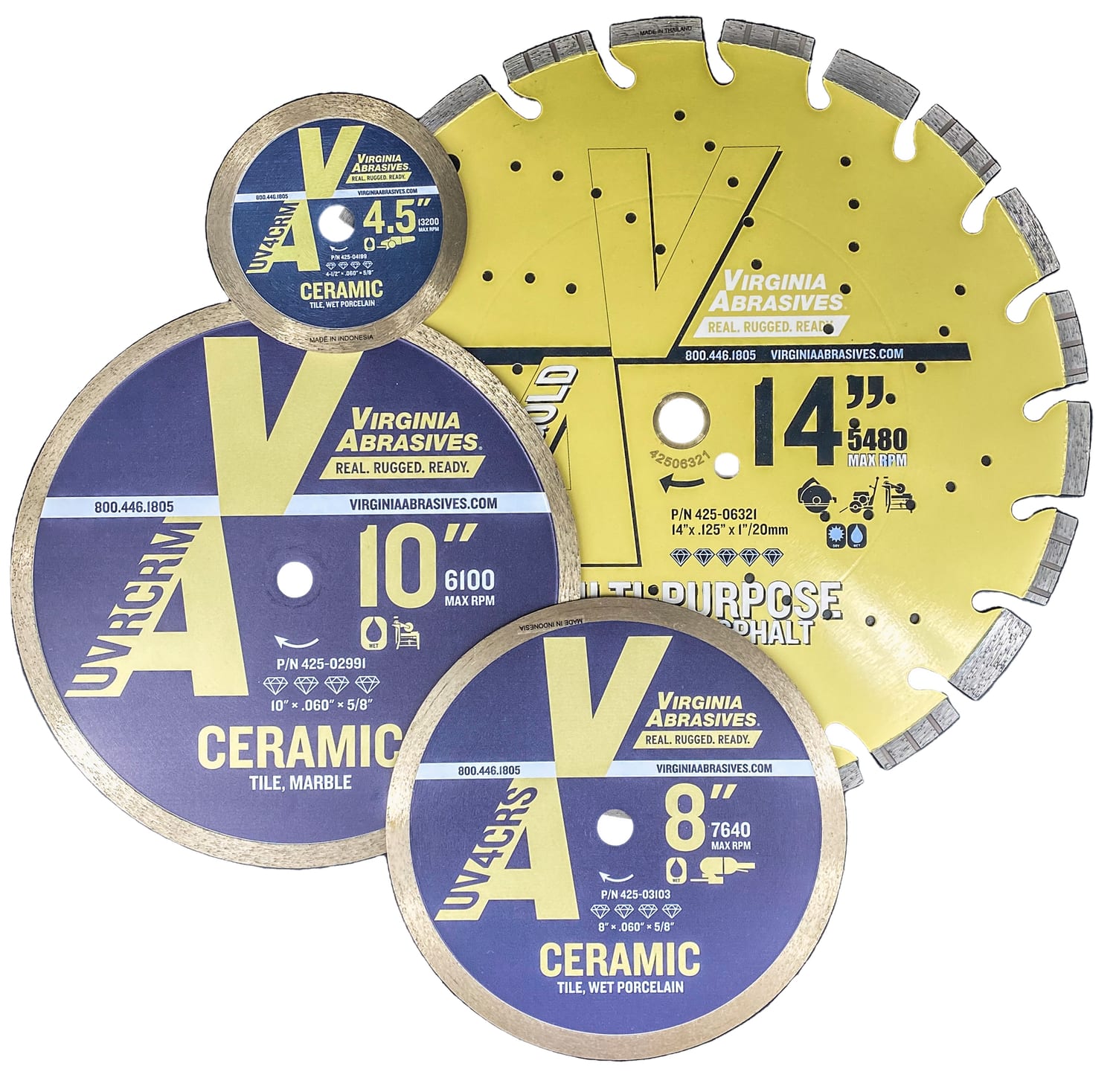
Every blade here is a segmented diamond blade for wet or dry concrete cutting, and every pick is sold on Amazon. We focused on general-purpose blades that handle cured concrete, lightly reinforced concrete, and block without a specialty bond. Virginia Abrasives sorts its blades into four levels, in its own words:
- Good (Basic Diamond): “good diamond quality with basic diamond concentration.”
- Better (Ultra Value): “better diamond quality with moderate diamond concentration.”
- Best (Premium, which includes the Sparkie): “best diamond quality with higher diamond concentration.”
- Professional (Supreme): “specifically engineered for long life in a professional use setting.”
Notes on each blade come from VA’s product pages and the Amazon listings. We have no measured figure of our own and publish none.
Where the Life Numbers Come From
We have no field logs of our own. Every blade-life figure on this site is a planning range we use for arithmetic, not a manufacturer specification and not a measurement, and the table below says which is which. Comparative life claims rest on VA’s tier descriptions and these planning ranges, not on cuts we counted.
| Blade | Linear feet | Conditions | Source |
|---|---|---|---|
| VA 14″ Ultra Value | 150-250 LF wet | 4,000 PSI cured concrete | Planning range; not a manufacturer figure; not measured by us |
| VA 14″ Premium Sparkie | 300-450 LF wet | Planning range | Not a manufacturer figure; not measured by us |
| VA 14″ Supreme Pro | No figure | — | VA publishes none and we have not measured it |
| VA 14″ BD Asphalt/Green | 200-400 asphalt; 150-300 green | Planning range | Not a manufacturer figure; not measured by us |
| VA 9″ Ultra Value | 80-150 LF wet | Planning range | Not a manufacturer figure; not measured by us |
What “150-250 LF wet” means in practice. That is the planning range this site uses for the Ultra Value on 4,000 PSI cured concrete, cut wet; it is not a manufacturer specification and we have not measured it. Harder aggregate (granite, trap rock) pushes a blade toward the bottom of its range or below it, heavy rebar takes 30-50 percent off the range regardless of blade, and dry cutting shortens it; we publish no dry figure.
If you have logged cuts on any blade here, send them. We would rather publish a contractor’s measured number, with credit, than an estimate. Until then, the comparative life claims in this guide are editorial estimates and should be treated as such.
Quick Decision: Which Blade Do You Need?
Before the size-by-size breakdown, here’s the fast path to the right blade:
- Cutting cured concrete slab or block on a handheld saw → the VA 14″ Ultra Value for most work, the VA Premium Sparkie when rebar or mixed materials are routine, or the VA Supreme Pro for production crews who also cut asphalt.
- Cutting green concrete under 48 hours old → VA BD Asphalt / Green Concrete, a hard-bond blade. A standard concrete blade wears fast on soft, abrasive green concrete.
- Cutting heavy rebar (#6+) → a “combo” or “multi-purpose” blade rated for reinforced concrete. The VA Premium Sparkie lists rebar among its uses, but #6+ bar calls for a dedicated combo blade.
- Cutting with an angle grinder → 4.5″ or 7″ segmented blade. A standard electric grinder must stay dry; on a crew job, OSHA treats a grinder fitted with a cutting blade as a handheld power saw that needs water. Never use a grinder-sized blade on a cut-off saw.
- Cutting on a walk-behind saw → 18″ or 20″ segmented blade, always wet.
- Still unsure → Work through How to Choose the Right Diamond Blade — the decision tree handles edge cases.
Best 4″ and 4.5″ Diamond Blades for Concrete (Angle Grinders)
Small-diameter blades handle scoring, trimming, paver cutting, and light demolition on a 4.5″ angle grinder. A 4.5″ blade cuts only about 1-1/4″ deep, so anything thicker needs a pass from each side or a larger saw.
Virginia Abrasives does not sell a 4.5-inch blade on Amazon, and the premium blades we would otherwise name at this size are sold through dealers. Our angle grinder cutting guide links a verified third-party 4.5-inch blade and covers the dust rules that apply to grinder cutting. What to look for: a segmented rim for concrete, a 7/8-inch arbor, and a max RPM rating at or above the no-load speed on your grinder’s nameplate.
Best 7″ Diamond Blades for Concrete (Large Angle Grinders)
Mechanical and plumbing contractors use 7″ blades for wall penetrations. Masons use them for CMU. A 7″ blade cuts about 2-1/4″ deep, enough for single-wythe block or a 2″ concrete topping.
Virginia Abrasives does not sell a 7-inch blade on Amazon either; the angle grinder guide links a verified third-party 7-inch blade. Look for a segmented rim, a 7/8-inch arbor with a 5/8-inch bushing if your grinder needs it, and a max RPM rating at or above your grinder’s nameplate speed.
For 9-inch grinders and 9-inch cordless cut-off saws, the VA 9″ Ultra Value is the Amazon-available pick.
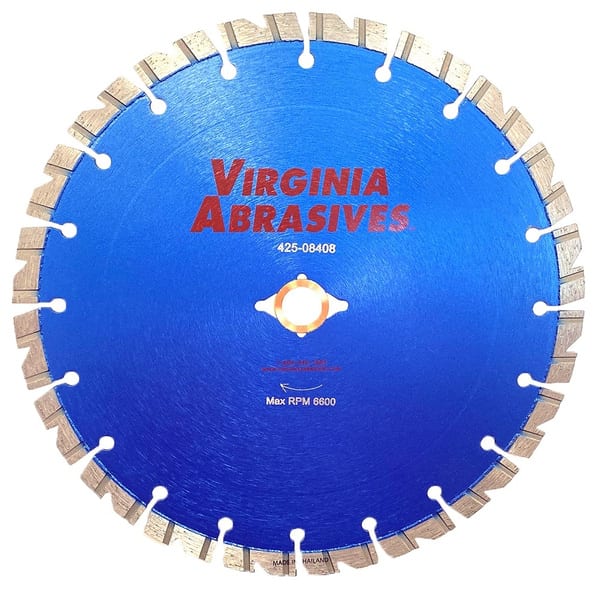
Virginia Abrasives 9″ Ultra Value Diamond Blade
9″ segmented blade for cordless cut-off saws and 9″ angle grinders, from the same Ultra Value line as the 14″.
Typical price: $55.66. Check current price on Amazon →
Best 14″ Diamond Blades for Concrete (Handheld Cut-Off Saws)
Every major handheld cut-off saw is built around the 14″ blade — Stihl TS 420, Husqvarna K 770, Husqvarna K 970, Hilti DSH 700-X, Milwaukee MX FUEL COS350, and Makita EK7651H. A 14″ blade cuts 4.5-5″ deep — enough for most residential and commercial slabs in a single pass. (Twelve-inch blades cover the same saws with ~4″ of depth but are less common in the pro segment.) For brand-specific picks, see Stihl, Husqvarna, DeWalt, Milwaukee, and Makita. For a focused 14″ treatment, see Best 14-Inch Diamond Blades for Concrete.
Best Value: Virginia Abrasives 14″ Ultra Value
The workhorse of VA’s diamond blade line and VA’s “better” tier. Segmented design, standard 1″ arbor (20mm bushing included). Cuts cured concrete and block. We treat this blade as the price/performance reference point for every other 14″ review. This site plans on 150-250 linear feet wet on cured concrete for it (our planning range, not a manufacturer figure).
Specs: 14″ diameter, 1″ arbor (20mm bushing), 12mm segments, segmented rim, wet or dry, 5,500 max RPM.
Pros: Cheaper per foot than the Sparkie on this site’s planning ranges. Fits every major saw brand. Handles block, cured concrete, and light rebar. Amazon Prime shipping. 4.2 stars on 10 Amazon ratings.
Cons: Sold for general-purpose concrete, not asphalt or green concrete, which call for a hard bond. For daily production or steady rebar, step up to the Sparkie or the Supreme Pro.
Best for Reinforced Concrete: Virginia Abrasives 14″ Premium Sparkie
VA’s Premium tier, which VA describes as “best diamond quality with higher diamond concentration.” VA sells the Sparkie as a multi-purpose blade for concrete including reinforced, asphalt, asphalt over concrete, pavers, block, and steel up to 5/8 inch, with 10mm laser-welded turbo segments and drop segments that protect the core from undercutting.
Pros: The Amazon-available pick for concrete with rebar, on VA’s stated uses. Covers mixed materials with one blade. This site’s planning range is 300-450 feet wet, about twice the Ultra Value’s; that is a planning estimate, not a measurement.
Cons: At $174.30 it costs more per foot than the Ultra Value on bare concrete ($0.46 against $0.35 at the middle of each planning range). One Amazon rating so far.
Virginia Abrasives 14″ Premium Sparkie Diamond Blade
14″ × 1″ arbor with 20mm bushing. VA's premium multi-purpose blade for concrete including reinforced, asphalt, pavers, block and light steel.
Typical price: $174.30. Check current price on Amazon →
Best for Production: Virginia Abrasives 14″ Supreme Pro
VA’s top tier. VA ranks its Supreme line above Premium and describes it as “specifically engineered for long life in a professional use setting.” The Supreme Pro is VA’s asphalt-and-concrete multi-purpose blade, with what VA calls a medium-hard bond and laser-welded 10mm segments.
Specs: 14″ diameter, 1″ arbor (20mm bushing), 10mm laser-welded segments, wet or dry, 5,500 max RPM.
Pros: VA’s professional tier at $104.88, less than the Sparkie. One blade for crews that cut both concrete and asphalt.
Cons: No Amazon ratings yet, and no life figure from VA or from us. A bond that covers two substrates is a compromise on each.
Best 16″ Diamond Blades for Concrete
Sixteen-inch blades fit larger handheld cut-off saws and small walk-behind saws. Cutting depth runs 5.5-6″. Less common than 14″, but essential for cutting through thicker slabs in a single pass or cutting concrete with a topping layer.
We have no Amazon-available 16-inch pick yet. Virginia Abrasives lists 16-inch Ultra Value and Supreme blades on its own site, but we found neither on Amazon. Wherever you buy, check that the blade’s max RPM covers your saw’s 16-inch spindle speed, which is lower than at 14 inches (4,700 RPM on the Husqvarna K 970 at 16 inches, for example).
Best 18″ and 20″ Diamond Blades for Concrete (Walk-Behind Saws)
Walk-behind flat saws take the deepest cuts: expansion joints, demolition cuts, utility trenches, and road work. An 18″ blade reaches 7″ deep; a 20″ blade reaches 8″. Walk-behind saws run wet, and OSHA Table 1 lists water as their only control.
We have no Amazon-available walk-behind pick we can verify yet. Virginia Abrasives lists an 18-inch laser-welded wet/dry blade on Amazon, but the listing states no arbor, bond, or material rating, so confirm those with VA before buying it.
Reinforced Concrete: Do You Need a Different Blade?
All of the 14″ picks listed above will cut through light rebar (#3 or #4 bar). If you’re cutting heavily reinforced concrete with #6+ rebar, step up to a blade specifically rated for reinforced concrete.
What Makes a Reinforced-Concrete Blade Different
Standard concrete blades use a medium bond matched to the abrasiveness of concrete. Rebar is steel — much harder than concrete, and it doesn’t wear down the segments the way aggregate does. When a medium-bond blade hits heavy rebar, the diamonds dull without exposing new cutting edges. The blade glazes and stops cutting.
Reinforced-concrete blades use a softer bond that erodes faster on steel, exposing new diamonds. They often use a different segment geometry — usually a “combo” or “multi-purpose” design with wider segments — to distribute wear more evenly across the transition between concrete and steel.
Our Pick for Reinforced Concrete
- VA 14″ Premium Sparkie (check on Amazon): VA lists concrete including reinforced, and rebar, among its uses.
For heavy #6+ bar, a dedicated combo blade rated for reinforced concrete is the tool, and we have no Amazon-available one we can verify yet. As a planning estimate, not a measurement, expect 30-50% shorter blade life on heavy rebar regardless of blade choice. For what the steel actually does to the segments, the bond-to-bar-size matrix, and how to cut reinforced work without separating a segment, see Cutting Rebar With a Diamond Blade. For the full treatment of bond types and material matching, read our Diamond Blade Buying Guide.
Matching Blade Bond to Concrete Hardness
Mismatching bond hardness to material hardness is a common way to ruin a blade. Bond hardness has to match material hardness — in reverse. Virginia Abrasives puts the rule plainly on its diamond blade bonds page: harder aggregates need a softer bond, and softer aggregates need a hard bond.
Hard Concrete (6,000+ PSI)
Hard, non-abrasive concrete wears bonds slowly. Use a soft-bond blade so the matrix erodes fast enough to keep exposing new diamonds.
Standard Concrete (3,000-5,000 PSI)
Most commercial and residential concrete. Match with a medium-bond general-purpose blade — the Good/Better picks above all qualify.
Green Concrete (Under 48 Hours)
Green concrete is soft and abrasive — the unlocked sand and fines scour a blade’s bond fast. Use a hard-bond blade specifically rated for green concrete so the segments survive that wear. See Best Diamond Blades for Green Concrete.
Hard Aggregate (Granite, Trap Rock)
Regional concrete mixes in the Northeast and parts of the Midwest use granite or trap-rock aggregate — significantly harder than limestone or river gravel. If your local mix design includes hard aggregate, step up to a premium blade regardless of PSI.
Wet Cutting vs. Dry Cutting Concrete
Every blade above can run wet or dry unless noted. But the choice matters — for safety, blade life, and OSHA compliance.
When to Cut Wet
Always cut wet when possible. Water cools the blade, suppresses silica dust (for saws it is the Table 1 control), and flushes debris from the kerf. Walk-behind saws must run wet; Table 1 lists water as their only control.
When to Cut Dry
Standard electric angle grinders must stay dry, because water on a grinder not rated for it is an electrocution risk. On a crew job, OSHA treats a grinder fitted with a cutting blade as a handheld power saw that needs water, so a dry grinder cut needs an exposure assessment. Some handheld cut-off saws are dry-only, and those fall outside Table 1 for concrete as well. Check the saw manual.
OSHA Silica Compliance
OSHA’s silica standard (29 CFR 1926.1153) puts saw cutting on Table 1 with one control, water to the blade; a dry cut moves the employer to the alternative exposure control method with an exposure assessment. Grinding, as opposed to cutting, may use a shroud with a dust collector that moves at least 25 cfm per inch of wheel diameter through a filter of 99% or greater efficiency, with a cyclonic pre-separator or filter-cleaning mechanism. This applies to any concrete cutting. Dry cutting without dust control is not compliant. For crew protocols and PPE, see our Silica Dust Safety Guide.
How to Get the Most Life from Your Concrete Blade
Blade choice matters, but technique matters more. Here’s how to extend blade life on any blade.
Match RPM to the Blade
Every diamond blade has a maximum RPM printed on the blade or packaging. Running over-speed weakens the core and voids the warranty — it’s also a safety hazard. More importantly: running well below rated speed also shortens blade life by reducing cut efficiency. See our Diamond Blade RPM Guide for the chart of saw types and recommended RPMs.
Don’t Force the Cut
Let the blade do the work. Pushing harder doesn’t cut faster — it generates heat, glazes the segments, and shortens blade life dramatically. The right feed rate produces consistent kerf width and clean chip flow. If the blade is slowing down, the problem is technique or the wrong blade, not lack of force.
Keep the Blade Cool
Wet cutting is the primary cooling method, but even dry cutting benefits from letting the blade spin free every 20-30 seconds to pull cool air through the gullets. Continuous cutting at high load is how segments overheat.
Dress a Glazed Blade Immediately
A glazed blade doesn’t self-correct. Every additional pass on glazed segments accelerates wear without productive cutting. Dress the blade by making a few cuts through abrasive material — cinder block, sandstone, or a dedicated dressing stone. Our Fix a Glazed Diamond Blade guide walks through the process.
Common Problems and Fixes
Blade Is Cutting Slow or Not at All
Almost always glazing. The segments have smeared over the diamonds, and no fresh cutting edges are exposed. Fix: dress the blade on abrasive material (see above). If that doesn’t work, the bond is wrong for the material — step up to a softer-bond blade.
Blade Is Wobbling
Check three things in order: (1) arbor hole wear — if the arbor hole has elongated, the blade is seated off-center and needs replacement; (2) flange wear — worn flanges don’t clamp the blade true; (3) warped core — run-out past 0.005″ usually means the blade was overheated at some point and needs retirement.
Segments Are Breaking Off
Segment loss means the blade was run too hot, run at the wrong RPM, or hit metal the bond couldn’t handle. A blade with missing segments is unsafe — retire it immediately. Diagnose the root cause before mounting the next blade: wrong bond, bad technique, or the wrong blade for reinforced concrete.
Blade Is Tracking Off Line
Warped core (retire the blade), worn flanges (replace), or you’re forcing the cut. On long straight cuts, use a guide track or scoring pass to establish the line.
Cost Considerations: Cheap vs. Expensive Blades
The math on diamond blades is per-foot cost, not per-blade cost. A $50 blade that cuts 100 linear feet costs $0.50/ft. A $120 blade that cuts 300 linear feet costs $0.40/ft — cheaper despite the higher up-front price.
When the cheap blade wins: occasional use. If you cut one slab a month, a $50 blade that lasts two years is cheaper than a $120 blade that lasts five — you don’t benefit from the extra life.
When the premium blade wins: daily production, on downtime rather than price. If a premium blade lasts twice as long, as this site’s planning ranges assume, a crew makes half the blade changes. At current prices it still costs more per foot on bare concrete ($0.46 for the Sparkie against $0.35 for the Ultra Value at the middle of each range), so the saving is crew time.
The middle ground: on this site’s planning ranges, the VA Ultra Value has the lower cost per linear foot on bare concrete, and the Sparkie earns its price on rebar and mixed materials.
Virginia Abrasives Blades for Concrete
| Blade | Best For | Link |
|---|---|---|
| VA 14″ Ultra Value | All-around for cured concrete, block, and general masonry | Check price on Amazon |
| VA 14″ Premium Sparkie | VA’s premium multi-purpose blade, including reinforced concrete | Check price on Amazon |
| VA 14″ Supreme Pro | VA’s professional tier, concrete and asphalt | Check price on Amazon |
| VA 14″ Diamond King | New on Amazon, listed for concrete, asphalt and masonry, no ratings yet | Check price on Amazon |
| VA 9″ Ultra Value | For 9″ angle grinders and cordless cut-off saws | Check price on Amazon |
Frequently Asked Questions
What is the best diamond blade for cutting concrete? ▼
For most professionals, a mid-range segmented blade like the Virginia Abrasives 14" Ultra Value offers the best balance of cut quality, blade life, and price. For production work that also cuts asphalt, the VA 14" Supreme Pro is VA's professional tier. For occasional use, the VA 9" Ultra Value is the best small-blade value.
Can I use the same diamond blade for concrete and rebar? ▼
General-purpose concrete blades handle light rebar (#3 or #4 bar) without issue. For heavy rebar (#6 and above), use a blade labeled 'multi-purpose' or 'reinforced concrete' with a softer bond that won't glaze when the segments hit steel. As a planning estimate, not a measurement, expect 30-50% shorter blade life when cutting heavy rebar regardless of blade choice.
Should I cut concrete wet or dry? ▼
Cut wet whenever the saw allows it. Water suppresses silica dust, cools the blade and flushes the kerf. For handheld cut-off saws and walk-behind saws, OSHA Table 1 lists water fed to the blade as the only control, so a dry cut takes the employer out of Table 1 and into an exposure assessment. Standard electric angle grinders must not run wet because of the shock risk, and OSHA treats a grinder fitted with a cutting blade as a handheld power saw, so a dry grinder cut is in the same position.
How long does a diamond blade last on concrete? ▼
This site plans on roughly 150-250 linear feet wet for a mid-range 14-inch blade on cured concrete, and less dry. That is a planning range, not a manufacturer figure, and we have not measured it. Premium blades are planned longer. Hard aggregate (granite), heavy rebar, and overheating all shorten blade life. See our diamond blade lifespan guide for material-specific planning numbers.
What size diamond blade do I need? ▼
Match the blade to your saw, not the job. 4.5" and 7" fit angle grinders. 12" and 14" fit handheld cut-off saws (Stihl TS 420, Husqvarna K 770). 18" and 20" fit walk-behind flat saws. Never run a blade larger than your saw is rated for — the guard won't cover it and the RPM rating won't match.
Related Guides
- Best 14-Inch Diamond Blades for Concrete— Best 14-inch diamond blades for concrete cut-off saws — picks, specs, pros/cons,…
- Best Diamond Blades for Asphalt— Best diamond blades for asphalt — hard-bond blades that survive soft, abrasive m…
- Best Diamond Blades for Husqvarna Cut-Off Saws— Best diamond blades for Husqvarna K 770, K 970, K 1270, and K 1 PACE power cutte…
- Best Diamond Blades for Stihl Cut-Off Saws— Best diamond blades for Stihl TS 420, TS 440, TS 500i, TS 700, TS 800, and TSA 3…
- Diamond Blades: The Complete Buying Guide— Complete diamond blade buying guide covering bond types, segment styles, sizes, …
- Diamond Blade Lifespan: How Long Should It Last?— How long do diamond blades last? Expected cutting feet by blade type, 5 factors …
- How to Fix a Glazed Diamond Blade— How to fix a glazed diamond blade that stopped cutting — dressing techniques, ca…
- How to Demo a Concrete Driveway: The Working Contractor's Guide— Demolish a concrete driveway — section sizing, saw + breaker selection, rebar ha…
- Segmented vs Continuous vs Turbo Diamond Blades— Segmented vs continuous vs turbo diamond blades — when to use each rim type, cut…
Shop Virginia Abrasives on Amazon
Diamond blades, cut-off wheels, and grinding tools, sold on Amazon.
Browse Products →