How to Cut Pavers for a Hardscape Install
Matt Lipman is CEO of Capstone Holdings Corp. (NASDAQ: CAPS) and a board member of Virginia Abrasives. He discloses this relationship for full transparency in our reviews.
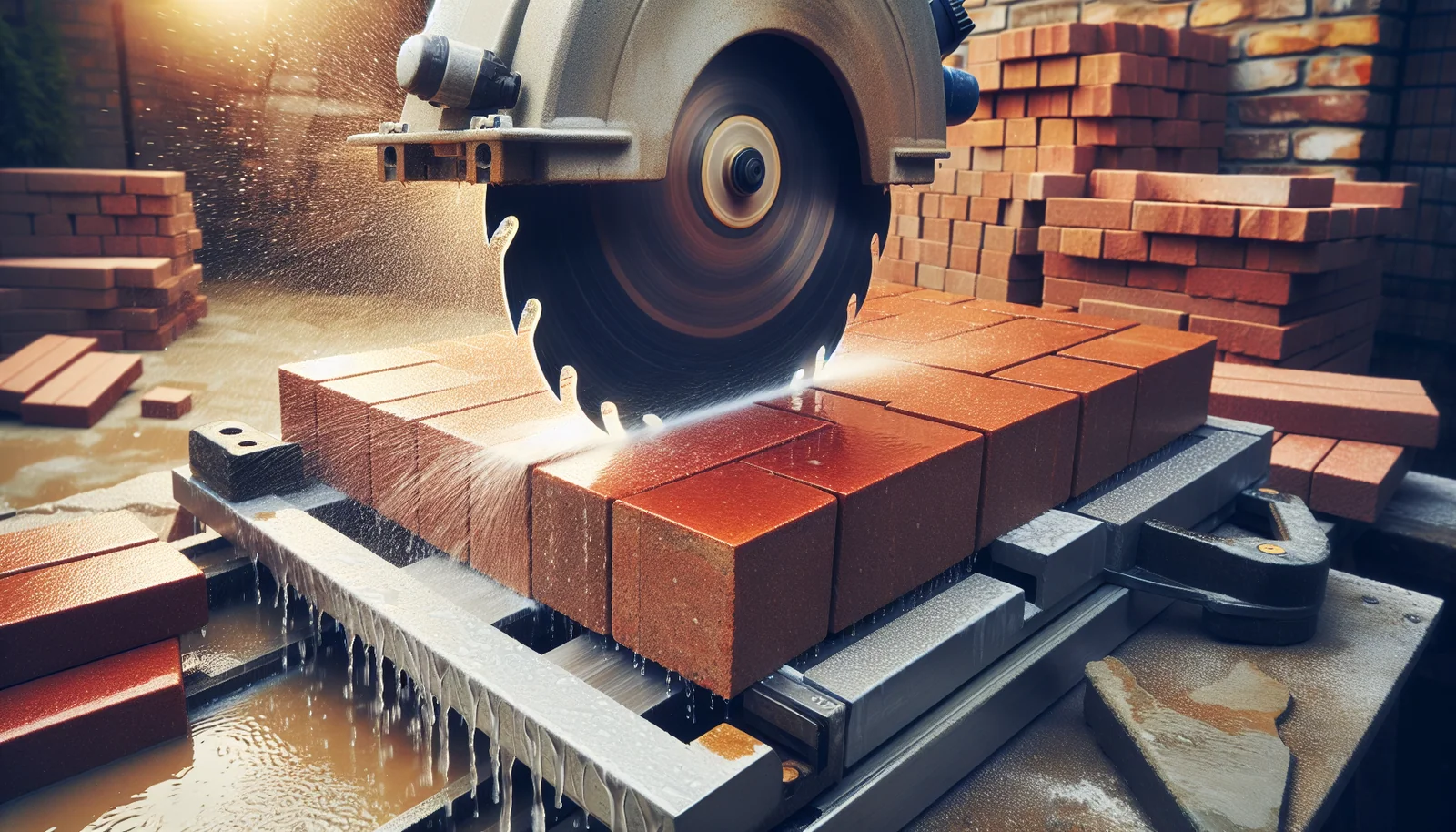
Table of Contents
- Match the Tool to the Material and Cut Count
- Pick the Saw
- Wet-cutting masonry table saw (the workhorse)
- Handheld 14” cut-off saw
- 4.5” angle grinder with diamond blade
- Mechanical paver splitter (no power)
- Pick the Blade
- For concrete pavers
- For clay brick pavers
- For natural stone (bluestone, travertine, granite)
- For porcelain pavers
- Technique by Cut Type
- Straight cross-cut (most common — pavers at the field edge)
- Diagonal cut (curves and angles at patio edges)
- Notch cut (paver fitting around a column, post, or drain)
- Curved cut (paver fitting against an arc)
- Wet Cutting Pavers — The Slurry Problem
- Dust Control for Dry Cutting
- Production Workflow on a Real Patio
- What Will Trip You Up
- Related Guides
You’re installing a hardscape — patio, walkway, driveway border, fire pit, retaining wall cap, garden edging. The field of full-sized pavers goes down without cuts. The perimeter, the curves, the obstacles, and the pattern starts and stops are where every paver job lives or dies. This guide covers how to cut pavers — concrete, clay brick, natural stone, porcelain — with the right tool for the job, the right blade, and the technique that keeps the cuts clean.
Match the Tool to the Material and Cut Count
| Material | Cut count | Right tool |
|---|---|---|
| Concrete pavers (segmental concrete) | 5-20 cuts | 4.5” angle grinder + diamond blade |
| Concrete pavers | 20-100+ cuts | 14” wet-cutting masonry table saw |
| Concrete pavers, simple straight cross-cuts only | 50+ cuts | Mechanical paver splitter (faster than the saw for that one cut type) |
| Clay brick pavers | 5-20 cuts | 4.5” grinder or wet saw |
| Clay brick pavers | 20+ cuts | 14” wet-cutting masonry table saw |
| Natural stone (bluestone, travertine, granite) | Any count | 14” wet saw with continuous-rim diamond blade — segmented blades chip stone |
| Porcelain pavers | Any count | 14” wet saw with continuous-rim porcelain blade — segmented blades destroy porcelain |
| Concrete cap blocks (heavy, 2-3” thick) | Any count | 14” handheld cut-off saw + segmented blade — table saws often can’t accommodate cap block thickness |
The single biggest decision: wet saw or handheld? Wet table saws give the cleanest cuts and the most control on smaller pieces. Handheld cut-off saws are faster on big or thick pieces and reach into spots a table saw can’t. Most production hardscape crews run both.
Pick the Saw
Wet-cutting masonry table saw (the workhorse)
Brands worth knowing: Husqvarna MS 360, MK Diamond MK-2001, iQ Power Tools iQTS244 (the iQ has integrated dust collection for dry cutting indoor — premium feature), Norton Clipper TR-201.
- Rental: $75-125/day from home centers and rental yards.
- Purchase: $700-2,500 depending on tier.
- Wet cuts only for these saws. Have water reservoir + drain plan before you plug in.
- Standard blade size: 14” diamond with 1” arbor.
Wrong for you if: you’re doing 5 cuts. Renting and returning takes longer than the cuts.
Handheld 14” cut-off saw
Stihl TS 420, Husqvarna K 770/K 970, Milwaukee MX FUEL COS350, Hilti DSH 700-X. Same saws used for concrete demo and joint cutting.
- Faster on thick pieces (3”+ cap block, retaining wall caps) than a table saw.
- Cuts on the install site without lifting the paver to a saw.
- Dustier than wet table saws unless you run the water kit.
Wrong for you if: you’re doing precision repeat cuts on small pieces. A table saw is faster and cleaner for that work.
4.5” angle grinder with diamond blade
Any standard 4.5” grinder + a diamond blade for concrete/brick (turbo or segmented rim) or porcelain (continuous rim).
- Cheapest entry. $80 grinder + $30 blade.
- 1.25” depth of cut — fine for pavers under 2.5” thick (you cut from both sides for thicker pavers).
- Dustiest option. Vacuum shroud + HEPA extractor mandatory for any serious cut count.
Wrong for you if: you’re cutting porcelain (use a wet saw) or doing 50+ cuts (rent a wet saw and save your arm).
Mechanical paver splitter (no power)
Hand-operated guillotine that breaks pavers along a scored line. Standard for production hardscape crews on patios with lots of straight cross-cuts.
- $50-150 rental, $300-800 purchase.
- Zero dust, zero noise, zero blade.
- Straight cross-cuts only. Useless for curves, diagonals, notches.
Wrong for you if: your patio has any curves, diagonal pattern starts, or obstacles to cut around. Most patios have at least some of these.
Pick the Blade
For concrete pavers
VA 14” Ultra Value (segmented, medium bond) handles concrete pavers on either a wet table saw or a handheld saw. Segmented rim cuts fast and clears slurry. Some chipping on the top edge is expected — score-and-flip technique minimizes it (see below).
For premium edge quality on concrete pavers, a continuous-rim or fine turbo blade gives cleaner cuts at slower speed. Most production crews accept the segmented blade’s faster cut speed and use score-and-flip for visible edges.
For clay brick pavers
Standard segmented diamond blade works. Clay brick is more abrasive than concrete — bond wears faster, so a slightly harder bond holds up better.
For natural stone (bluestone, travertine, granite)
Continuous-rim diamond blade. Segmented blades chip the edges of stone — the gaps between segments grab and tear material at the edge. Continuous rim cuts slower but produces a clean edge.
For porcelain pavers
Continuous-rim porcelain-specific diamond blade. Standard “concrete” continuous-rim blades will cut porcelain but wear fast and produce more chipping. Look for blades specifically labeled for porcelain — they have finer diamond grit and a softer bond optimized for porcelain’s hardness.
See Best Diamond Blades for Pavers for paver-specific picks across materials.
Technique by Cut Type
Straight cross-cut (most common — pavers at the field edge)
- Mark the cut on the top face with a permanent marker.
- Score the top face first at ~1/4” depth.
- Flip the paver, align the bottom-face cut to the score line, cut through to depth.
- The top edge stays clean; any chipping is on the bottom edge, hidden in the sand bed.
For a wet table saw: this is one continuous operation — the saw cuts straight through from the top. Slight chipping on the bottom face is normal and hidden.
For a handheld saw: score-then-flip is the right move for visible edges.
Diagonal cut (curves and angles at patio edges)
Mark the diagonal on the top face. For wet table saws, set the fence to the angle or freehand it. For handheld saws, clamp a straight edge to the paver and freehand against it. Always cut the visible edge cleanest — pavers facing the lawn or grass get the cleanest cut.
Notch cut (paver fitting around a column, post, or drain)
The hardest cut. Two approaches:
- Three-pass method: Mark the notch. Cut the two parallel cuts of the notch to depth. Cut the back of the notch perpendicular to release the waste piece. Three cuts produce a clean notch with a wet saw or handheld.
- Score-and-break method: Score the notch perimeter at ~1/4” depth. Tap the notch with a chisel until the waste piece breaks free. Faster but more chipping — fine for hidden edges, not for visible.
Curved cut (paver fitting against an arc)
For a tight curve, make multiple straight relief cuts perpendicular to the arc, then break out the small triangles between cuts. Dress the rough arc with a 4.5” grinder + cup wheel.
For a wide arc, freehand along the arc with a wet saw on a slow feed rate. Continuous-rim blade only — segmented chips the arc edge.
Wet Cutting Pavers — The Slurry Problem
Wet table saws produce slurry. A production hardscape job (300-500 sq ft patio, 100+ cuts) generates 30-50 gallons of slurry over a day’s work.
- The slurry is high-pH (12-13) cement waste. It’s a prohibited non-stormwater discharge under EPA’s NPDES Construction General Permit.
- Wet saw water reservoirs collect slurry, but reservoirs fill up. You drain them periodically. Where the drain water goes matters.
- Do NOT drain the reservoir into the lawn (“it’s just water” — no, it’s high-pH water that kills grass and leaches), into the storm drain, into the street gutter, or into a finished surface.
- Do drain into a 5-gallon bucket, let slurry settle, decant clean(er) water, solidify the remaining slurry with SlurryShield or quicklime, dispose at C&D landfill. Or pump straight into a containment tank for off-site disposal.
Full slurry compliance and disposal methods: Wet vs Dry Cutting Concrete.
Dust Control for Dry Cutting
If you’re cutting pavers dry — angle grinder field work or a non-wet table saw — silica dust is the issue. A dry cut on a concrete paver throws respirable silica, and OSHA’s PEL of 50 μg/m³ is an 8-hour average that uncontrolled dry cutting can exceed. On a crew job, a dry cut is outside Table 1, which lists only water for saws, including a grinder fitted with a cutting blade, so the employer needs an exposure assessment.
- Vacuum shroud on the grinder mated to a HEPA-rated extractor. Shop vacs do not qualify.
- Fit-tested respirator — N95 minimum, P100 better. Beard breaks the seal.
- Cut into the wind or run a fan to push dust away from the operator and the homeowner’s house.
- See Silica Dust Safety Guide for the full PPE breakdown.
The iQ Power Tools iQTS244 is the one production-grade dry-cutting table saw I’m aware of with integrated HEPA dust collection — worth considering if you’re an interior installer cutting pavers in finished spaces.
Production Workflow on a Real Patio
For a typical 400 sq ft patio with ~80 cuts:
- Layout the field — set all the full-sized pavers first. Mark the cut pavers in place with chalk or marker on the top face before lifting.
- Batch the cuts by type — all straight cross-cuts first, then diagonals, then notches. Setting up the saw once per cut type is faster than swapping back and forth.
- Cut and immediately reinstall — don’t stockpile cut pavers. Cut one, walk it back to its spot, set it, move to the next mark.
- Save the off-cuts. A 4” off-cut from one paver might be the right starter piece for the next row. Don’t throw scrap until the job is done.
- Sweep and tamp at the end of each row to keep cut edges from drifting under the next paver as you set them.
What Will Trip You Up
- Skipping the score on visible edges. Visible chipping ruins the look of an otherwise tight job.
- Wet cut without slurry plan. Reservoir full, slurry on the lawn, dead grass, homeowner unhappy.
- Dry cut without dust extraction. Silica exposure for you, dust storm on the homeowner’s siding and windows.
- Wrong blade for porcelain. Standard segmented blade on porcelain pavers = chipped edges and a destroyed blade in 10 cuts.
- Cutting on the wrong saw for the material thickness. A table saw can’t accommodate a 3.5” thick cap block — you need a handheld for that, or you cut from both sides on the table saw, which is slow and produces a stepped edge.
- No batching. Swapping the saw setup between straight, diagonal, and notch cuts wastes more time than the cuts themselves.
- Cutting in line of sight to the homeowner without warning. Wet saws spray slurry. Spinning concrete paver fragments fly farther than people expect. Set up a safety zone.
Related Guides
- Best Diamond Blades for Pavers — blade picks by material
- Diamond Blade Buying Guide — bond, segment, RPM fundamentals
- Concrete Saw Buying Guide — saw selection
- Silica Dust Safety Guide — dust control + PPE
- Wet vs Dry Cutting Concrete — slurry disposal
Frequently Asked Questions
What's the fastest way to cut pavers for a patio install? ▼
For a typical residential patio (200-500 sq ft) with 30-100 cuts, a wet-cutting masonry table saw with a 14" continuous-rim diamond blade is fastest and cleanest. Rent for $75-125/day. A paver splitter (mechanical, no power) is faster for straight breaks on standard rectangular pavers but loses on diagonal cuts and curves. An angle grinder with a 4.5" diamond blade is the slowest and dustiest option — fine for 5-10 cuts, miserable for 50.
Can I cut pavers with a regular angle grinder? ▼
Yes — a 4.5" angle grinder with a diamond blade cuts concrete and brick pavers. The trade-off is dust (massive without a vacuum shroud), chipping (worse than a wet saw), and speed (slower per cut). For a few cuts, fine. For a patio's worth, rent a wet saw and save the time and lungs. If you go with the grinder, run a vacuum shroud and HEPA extractor — concrete paver dust is silica-rich.
How do I keep concrete pavers from chipping when I cut them? ▼
Three rules: wet cut whenever possible (water cools the blade and lubricates the cut, reducing chipping), score the top face first then cut through from the bottom (the top stays clean, the bottom edge is hidden in the sand bed), and use a continuous-rim or turbo blade on porcelain and stone pavers (segmented blades chip the edge). A masonry table saw with a wet 14-inch continuous-rim blade gives the cleanest edge.
Do I need a paver splitter for a small patio? ▼
No. A paver splitter is a mechanical guillotine — fast for straight cross-cuts on standard rectangular pavers, useless for diagonals, curves, or notch cuts around obstacles. For a small patio (100-200 sq ft) with simple cuts, a 4.5" angle grinder with a diamond blade handles every cut adequately. Skip the splitter unless you're cutting 200+ pavers and they're all straight cross-cuts (i.e. you're cutting standard 8×4 brick pavers in half for a herringbone field).
Related Guides
- Best Diamond Blades for Pavers— Best diamond blades for pavers — concrete, clay, natural stone, and porcelain. P…
- Concrete Saws: The Complete Buying Guide— Concrete saw buying guide: gas vs electric vs battery, handheld vs walk-behind, …
- Diamond Blades: The Complete Buying Guide— Complete diamond blade buying guide covering bond types, segment styles, sizes, …
- Silica Dust Safety for Concrete Cutting Pros— OSHA silica dust standards for concrete cutting. Table 1 compliance, dust contro…
- Wet vs Dry Cutting Concrete: Which Is Better?— Wet vs dry cutting concrete — blade life, dust control, OSHA silica compliance, …
Shop Virginia Abrasives on Amazon
Diamond blades, cut-off wheels, and grinding tools, sold on Amazon.
Browse Products →