Best Diamond Polishing Pads for Concrete
Matt Lipman is CEO of Capstone Holdings Corp. (NASDAQ: CAPS) and a board member of Virginia Abrasives. He discloses this relationship for full transparency in our reviews.
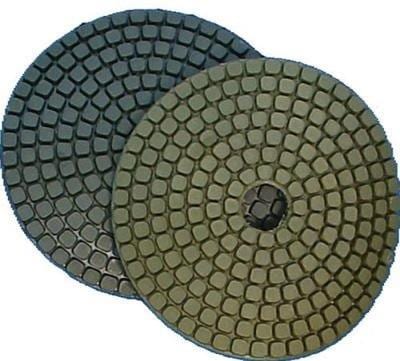
Table of Contents
- The Short Answer
- Top Picks at a Glance
- How We Picked
- Metal-Bond vs. Resin-Bond
- Metal-Bond Pads (Grinding Phase, 30-200 Grit)
- Resin-Bond Pads (Polishing Phase, 50-3000 Grit)
- When You Use Each
- Best Polishing Pads by Format
- 4″ Hand-Polishing Pads (Countertops, Edges, Small Floors)
- Floor-Format Pads (Planetary Grinders)
- Metal-Bond Grinding Pads
- Wet vs. Dry Polishing
- Wet Polishing
- Dry Polishing
- Grit Progression for Concrete
- Pad Life Expectations
- Common Problems and Fixes
- Hazy Finish After Final Grit
- Pads Wear Out Fast
- Swirl Marks Visible at Final Grit
- Burn Marks on the Floor
- Recommended Pads
- Related Workflows
- Virginia Abrasives Note
The best polishing pads for concrete combine metal-bond grinding pads (30-200 grit) with resin-bond polishing pads (50-3000 grit) in a complete progression system. Grit choice, bond type, wet-vs-dry rating, and floor-grinder format all matter — a mismatched pad set produces uneven scratches, hazy finishes, or burned segments. This guide covers the picks for every format and the progression that produces mirror-finish concrete.
The Short Answer
For most concrete polishing work:
- Best full kit for countertop and small-area pros — Stadea 4″ Wet/Dry 8-Piece Set ($40-80). Industry standard, resin-bond, 50-3000 grit.
- Best value set with backer pad — POLISHSURF 11+1 Set ($30-55). Includes backing pad and polishing guide.
- Best floor-format pads — HTC EZ Change, Husqvarna Redi Lock, or Lavina Quick Change. Match to your planetary grinder head. Premium pad choice depends on the grinder brand.
- Best metal-bond for grinding phase — Husqvarna Piranha or HTC Gold Series. 30-200 grit metal-bond pads for leveling and initial grinding.
- Best grinder for hand polishing — Makita PW5001C ($400-550) or DeWalt DWP849X ($200-280). Variable speed is mandatory.
Top Picks at a Glance
| Tier | Pad Set / System | Format | Grit Range | Best For | Typical Price |
|---|---|---|---|---|---|
| Pro 4″ Hand Polish | Stadea 4″ Wet/Dry 8-Piece | 4″ hook-and-loop | 50-3000 resin | Countertop, edge, small area | $40-80 |
| Starter 4″ Kit | POLISHSURF 11+1 | 4″ hook-and-loop | 50-3000 resin | DIY to semi-pro | $30-55 |
| Floor Metal-Bond | HTC Gold / Husqvarna Piranha | Grinder-specific | 30-200 metal | Floor grinding phase | $15-45/pad |
| Floor Resin | HTC EZ Change / Husqvarna Redi Lock / Lavina Quick Change | Grinder-specific | 50-3000 resin | Floor polishing phase | $25-80/pad |
| Countertop Metal | Husqvarna Piranha 4″ | 4″ hook-and-loop | 30-200 metal | Regrinding damaged concrete | $15-30/pad |
How We Picked
Every pad here is a diamond-embedded resin or metal-bond polishing tool rated for concrete. We ranked on what can be checked without running the pads: bond type (resin or metal) against the grit step, compatibility with common grinder formats (HTC, Husqvarna, Lavina for floors; angle grinders for hand work), price, availability, and the size of each pad’s review base. We have not run these ourselves and publish no measured figure for finish quality or pad life. Virginia Abrasives does not sell diamond polishing pads for concrete, so the picks are Stadea, POLISHSURF, HTC, Husqvarna and Lavina, chosen on published specifications and customer reviews.
Metal-Bond vs. Resin-Bond
Concrete polishing needs both types. They’re not interchangeable — each does a specific job.
Metal-Bond Pads (Grinding Phase, 30-200 Grit)
Harder bond, larger diamonds, aggressive cut. Used to flatten the surface, remove high spots, and prepare the concrete for polish development. Always wet for large floors, often dry for small hand work with vacuum dust control.
Grit range:
- 30-50 grit metal: rough grinding, coating removal, leveling major high spots
- 100-150 grit metal: transition smoothing, scratch removal
- 200 grit metal: final grinding pass before resin transition
Resin-Bond Pads (Polishing Phase, 50-3000 Grit)
Softer bond, finer diamonds, gradual surface refinement. Develops gloss and clarity. Most of the polishing work happens in this phase.
Grit range:
- 50-100 grit resin: transition from metal-bond, remove 200-grit metal scratches
- 200-400 grit resin: pre-densifier finish, apply densifier here
- 800 grit resin: satin finish (matte-sheen stopping point)
- 1500 grit resin: semi-gloss
- 3000 grit resin: mirror finish
When You Use Each
Most concrete polishing jobs use both: metal-bond to flatten and rough-smooth, resin-bond to build gloss. Skipping metal-bond on rough concrete produces a shiny surface with visible dips. Skipping fine-resin produces a flat but dull finish.
Exception: polishing an already-ground concrete floor (overlay, recent pour) may skip metal-bond entirely. Start with 50-grit resin instead.
Best Polishing Pads by Format
4″ Hand-Polishing Pads (Countertops, Edges, Small Floors)
The most common pad format. Hook-and-loop backed, 4-inch diameter, for use on an angle grinder with a backer pad or a dedicated 4-inch polisher.
Stadea 4″ Wet/Dry Diamond Polishing Pads (8-Piece Set)
Complete 50-3000 grit resin-bond progression for concrete, granite, and engineered stone. 4″ hook-and-loop backed, wet or dry rated. The industry-standard hand polishing kit.
Typical price: $40-80. Check current price on Amazon →
Pros: Complete grit set in one purchase. Fits any 4-inch backer pad. Good pad life per dollar. Wet or dry rated.
Cons: Backer pad not always included — check product listing. Grinder must be variable-speed for best results.
POLISHSURF 11+1 Diamond Polishing Pad Set with Backer Pad
Full 50-3000 grit progression plus buffer pad, backing pad, and polishing guide. 4″ hook-and-loop, resin-bond, wet or dry. Starter-to-pro kit for concrete and stone.
Typical price: $30-55. Check current price on Amazon →
Floor-Format Pads (Planetary Grinders)
For large-area concrete polishing on walk-behind planetary grinders. Pad format depends on grinder brand:
- HTC EZ Change — fits HTC planetary grinders
- Husqvarna Redi Lock — fits Husqvarna PG series grinders
- Lavina Quick Change — fits Lavina planetary grinders
- Scanmaskin QuickChange — fits Scanmaskin grinders
- Universal magnetic / Velcro — some grinders accept multiple formats
Buy pads that match your grinder’s head format. Cross-brand mounting is possible with adapters but produces inferior results.
Pros: Fastest area coverage (1,500-3,000 sq ft/hour typical). Consistent finish. Multiple pads per grit for multi-head grinders.
Cons: Format-locked to grinder brand. Higher per-pad cost. Not suitable for small areas or edges.
Metal-Bond Grinding Pads
Used in the grinding phase before resin polishing. For both hand (4-inch format) and floor (grinder-specific format).
Top picks:
- Husqvarna Piranha (30-200 grit metal) — premium metal-bond for floor and hand work
- HTC Gold Series — floor-format metal-bond for HTC grinders
- Diamatic / STI — heavy-duty metal-bond for leveling aggressive jobs
Wet vs. Dry Polishing
Wet Polishing
Water flushes slurry, cools pads, and extends pad life 30-50%. Produces slightly better gloss at final grit. Required for:
- Commercial floors over 1,000 sq ft
- Concrete countertop polishing (fabricator standard)
- High-production crews where pad life matters most
Requires: GFCI-protected power, slurry management (pumps, vacuum recovery, or floor drains), and indoor floor protection if working in occupied spaces.
Dry Polishing
Uses dry-rated pads with a dust shroud and HEPA vacuum. Faster setup, no slurry cleanup, but shorter pad life and slightly less final gloss. Preferred for:
- Residential and small commercial (under 1,000 sq ft)
- Occupied buildings where water is impractical
- Upper floors without drains
OSHA silica compliance requires either wet polishing OR 99%-efficient dry dust extraction. Dry polishing without vacuum is not compliant.
Pad compatibility: wet pads and dry pads are not interchangeable. The bond formulation differs. Check the pad rating before use — some are rated wet/dry (universal), most are one or the other.
Grit Progression for Concrete
The standard 8-step progression:
| Step | Bond | Grit | Purpose | Typical Time per 500 sq ft |
|---|---|---|---|---|
| 1 | Metal | 30-50 | Rough grinding, coating removal | 45-75 min |
| 2 | Metal | 100 | Transition smoothing | 30-45 min |
| 3 | Metal | 200 | Final grind, pre-densifier | 30 min |
| — | — | — | Apply densifier, let cure | 2-24 hours |
| 4 | Resin | 50 (optional) | Clean densifier haze | 20 min |
| 5 | Resin | 100-200 | Scratch removal | 30-40 min |
| 6 | Resin | 400 | Start gloss | 25-35 min |
| 7 | Resin | 800 | Satin finish (stop here for matte) | 20-30 min |
| 8 | Resin | 1500 | Semi-gloss | 20-30 min |
| 9 | Resin | 3000 | Mirror finish | 20-30 min |
Stop points:
- 400 grit: matte/low-sheen
- 800 grit: satin (common commercial spec)
- 1500 grit: semi-gloss
- 3000 grit: full mirror
For the detailed grit progression science see Concrete Polishing Grit Progression Guide.
Pad Life Expectations
Typical coverage per pad on standard 3,000-5,000 PSI cured concrete:
| Pad | Coverage per Grit | Notes |
|---|---|---|
| Metal-bond 30-50 grit | 1,500-3,000 sq ft | First pass eats pads fast |
| Metal-bond 100-200 grit | 2,500-5,000 sq ft | Longer life, less aggressive cut |
| Resin-bond 50-200 grit | 500-1,500 sq ft | Transition pads take heavy wear |
| Resin-bond 400-800 grit | 1,000-2,000 sq ft | Balance of life and cut |
| Resin-bond 1500-3000 grit | 1,500-3,000 sq ft | Longest life — gentle abrasion |
Hard aggregate (granite, trap rock) cuts pad life 20-40%. Soft aggregate (limestone, river rock) extends it slightly.
Common Problems and Fixes
Hazy Finish After Final Grit
Skipped grit or insufficient densifier cure time. Return to the skipped grit and re-polish the area. If densifier was under-cured, reapply and allow full cure before continuing.
Pads Wear Out Fast
Feed rate too aggressive, wrong bond for concrete hardness, or grinder running too fast for the grit. On coarse grits, let the pad cut — don’t force.
Swirl Marks Visible at Final Grit
Grinder held in one spot too long, or inconsistent overlap pattern. Maintain continuous motion during polishing, overlap each pass by 50%.
Burn Marks on the Floor
Dry polishing without adequate dust extraction (pad overheats) or wet polishing with insufficient water flow. Fix: increase water flow on wet work; improve vacuum suction on dry work.
Recommended Pads
| Pad Set | Format | Grit Range | Best For | Link |
|---|---|---|---|---|
| Stadea 4″ Wet/Dry 8-Piece | 4″ hook-and-loop | 50-3000 resin | Countertops, small floors | Amazon |
| POLISHSURF 11+1 Set | 4″ hook-and-loop | 50-3000 resin | DIY to semi-pro | Amazon |
| HTC Gold Series | HTC-format | 30-200 metal | HTC grinder, floor metal bond | HTC dealer |
| Husqvarna Piranha | Husqvarna-format | 30-200 metal | Husqvarna grinder, regrinding | Husqvarna dealer |
| HTC EZ Change Resin | HTC-format | 50-3000 resin | HTC grinder, floor polish | HTC dealer |
Related Workflows
Polishing is the final step in floor finishing. Upstream and related workflows:
- Grinding cup wheels (prep before polishing) — Best Grinding Cup Wheels for Concrete
- Floor grinding technique — How to Grind a Concrete Floor
- Floor polishing process — How to Polish Concrete Floors
- Grit progression science — Concrete Polishing Grit Progression Guide
- Granite polishing (different hardness) — Best Polishing Pads for Granite
For the full pad buying framework, see Polishing Pad Buying Guide.
Virginia Abrasives Note
Virginia Abrasives does not manufacture polishing pads — the VA lineup focuses on diamond blades and grinding cup wheels for concrete and masonry. We recommend Stadea and POLISHSURF for hand polishing; HTC, Husqvarna, and Lavina for floor-format work. For grinding cup wheels that prepare concrete before the polishing phase, see Best Grinding Cup Wheels for Concrete. For diamond blades and concrete cutting tools, see the VA Amazon store.
Amazon Associate disclosure: we earn from qualifying purchases at no extra cost to you.
Frequently Asked Questions
What polishing pads do I need for concrete? ▼
A complete concrete polishing kit needs metal-bond segments (30-200 grit) for the grinding phase and resin-bond pads (50-3000 grit) for polish development. Most jobs use 8 grit steps: 30-50-100 metal-bond, then 50-100-200-400-800-1500-3000 resin-bond. Grit count depends on the finish target — satin stops at 800, mirror at 3000.
Are wet or dry polishing pads better for concrete? ▼
Wet pads run cooler, and the water controls the dust. Dry pads are faster to set up (no water management, no slurry cleanup) and work well with a dust shroud and HEPA vacuum. Most residential and office polishing is dry; most large commercial jobs are wet. OSHA silica compliance requires either wet or 99%-vacuum dry.
How many square feet do polishing pads cover? ▼
A 4-inch resin-bond pad covers 500-2,000 square feet per grit depending on concrete hardness. Lower grits (50-200) wear faster — plan 500-1,000 sq ft per pad. Higher grits (1500-3000) last 1,500-3,000 sq ft per pad. Metal-bond pads cover 1,000-5,000 sq ft because metal bond is more durable than resin.
Can I polish a concrete floor with an angle grinder? ▼
Yes, for small areas, edges, corners, and countertops. Use a variable-speed grinder with a 4-inch backer pad and 4-inch polishing pads. For floors over 100 square feet, rent a walk-behind planetary grinder — hand-polishing large floors takes 10-20x the time for worse results.
What's the difference between resin-bond and metal-bond pads? ▼
Metal-bond pads use a harder bond with larger diamonds — used in the 30-200 grit range for aggressive grinding and leveling. Resin-bond pads use a softer bond with finer diamonds — used in the 50-3000 grit range for polish development. Most jobs transition from metal to resin between 100 and 200 grit.
Do I need a floor grinder or can I use an angle grinder? ▼
For floors over 50-100 square feet, use a walk-behind planetary grinder (HTC, Husqvarna, Lavina). Angle grinder polishing is acceptable for small areas, edges, and countertops. Floor grinders produce flatter, more consistent surfaces and cover area 10-20x faster than hand polishing.
Should I apply a densifier during polishing? ▼
Yes. Apply a lithium silicate or sodium silicate densifier between the grinding phase (metal bond) and the polishing phase (resin bond) — typically after 200 grit metal-bond. The densifier hardens the concrete surface, improves stain resistance, and produces a deeper shine at final grit.
Related Guides
- Best Grinding Cup Wheels for Concrete— Best diamond grinding cup wheels for concrete — single-row, double-row, turbo, a…
- Best Diamond Polishing Pads for Granite— Best diamond polishing pads for granite countertops and floors — soft-bond wet p…
- Concrete Polishing Grit Progression Guide— Concrete polishing grit progression: step-by-step sequence from 50-grit metal bo…
- How to Grind a Concrete Floor— How to grind a concrete floor — equipment selection, diamond tooling, dust contr…
- How to Polish Concrete Floors— How to polish concrete floors — equipment, grit progression, densifier applicati…
- Diamond Polishing Pads: The Complete Buying Guide— Diamond polishing pad buying guide: wet vs dry polishing, grit progression from …
Shop Virginia Abrasives on Amazon
Diamond blades, cut-off wheels, and grinding tools, sold on Amazon.
Browse Products →