Virginia Abrasives 14-Inch Metal Cut-Off Wheel (10-Pack)
Model: 424-16114

Type 1 reinforced abrasive wheel for cutting steel, rebar, and sheet metal on a 14-inch chop saw. 14" x 1/8" x 1" arbor, silicon carbide, 10-pack.
14″ · 1″ arbor · resinoid bond · dry
★★★★★ 4.6 (10 ratings on Amazon)
$79.99
Price last checked 2026-08-15 — confirm on Amazon
Buy the 14″ on Amazon →On This Page
Specifications
| Brand | Virginia Abrasives |
|---|---|
| Model # | 424-16114 |
| Diameter | 14" |
| Arbor | 1" |
| Bond | resinoid |
| Wet/Dry | dry |
| Application | steel-metal, rebar |
| Fits saws | 14-inch abrasive chop saws with a 1-inch arbor (DeWalt D28715, Milwaukee 6177-20, Makita 2414NB), High-speed cut-off saws set up with a 1-inch arbor |
✓ Best for
Cutting exposed steel on a 14-inch chop saw or 1-inch-arbor cut-off saw — rebar stock, angle iron, sheet metal, threaded rod, bar stock.
✗ Not for
Ongoing concrete work, and any saw running a 20mm spindle — a 1-inch hole cannot center itself on a 20mm arbor.
Pros
- Abrasive is the correct technology for cutting exposed steel — a diamond blade is not the default here, and this wheel costs a fraction of one
- $79.99 for ten wheels is about $8 a wheel, which is case pricing on a consumable you are meant to burn through
- Type 1 flat profile with fiberglass reinforcement layers, the right geometry for chop saws and high-speed cut-off saws
- 1-inch arbor drops straight onto a US chop saw with no bushing to lose
Cons
- We have not field-tested this wheel, so we publish no cuts-per-wheel or linear-foot figure for it
- The wheel shrinks as it cuts — depth of cut falls off through the life of each wheel
- Resinoid wheels carry a shelf life of roughly two to three years from the stamped date, and old stock can delaminate in use
- The listing does not publish a max RPM, so you have to read the rating printed on the wheel before mounting it
The Virginia Abrasives 14-inch metal wheel is the consumable you keep in the truck for cutting steel. Rebar stock, angle iron, threaded rod, sheet metal, and bar stock on a chop saw. It is a Type 1 reinforced abrasive disc, not a diamond blade, and on this material that’s the point — abrasive is the right technology for steel, and the price reflects a product you are meant to consume.
Who this wheel is for
Anyone running a 14-inch chop saw with a 1-inch arbor and cutting metal on it. Fabricators, rebar cage work, handrail and stair stringer fitting, sign posts, unistrut, threaded rod. The 10-pack pricing tells you how the product is meant to be used: $79.99 for ten wheels works out to roughly $8 a wheel, so you buy a case, you burn through it, and you don’t think about it again for a while.
It’s also the companion to a diamond blade rather than a competitor. Crews that cut reinforced concrete keep both — a diamond blade for the slab, a metal wheel for the bar they expose and then have to cut free.
Why abrasive beats diamond on steel
Our position across the site is that diamond wins for concrete on anything past a handful of cuts. Steel flips that. Diamond blades are engineered around a self-sharpening cycle that abrasive aggregate drives, and steel doesn’t drive it — the diamonds at the surface dull, the bond doesn’t erode fast enough to expose fresh ones, and the blade glazes. Diamond wheels rated specifically for metal exist, but they’re specialty tools priced far above what a chop saw job justifies.
Our rebar guide makes the same call from the other direction: when the bar is exposed and you only need to cut the bar, a metal cut-off wheel is the correct tool, and a diamond blade earns its price only when the steel is embedded in concrete and you’re cutting both as one material.
What we have not tested
We have not run this wheel on a job. No cuts-per-wheel number, no linear-foot figure, and no wear comparison against Norton or DeWalt wheels appears on this page, because we don’t have one that we measured. What we have is the manufacturer’s specification and verified Amazon data: 4.6 stars across 10 ratings as of 2026-08-15, which is a thin review base by any standard.
For planning purposes our published guidance for 14-inch abrasive on metal is 20-60 cuts per wheel. That’s a category range from our 14-inch cut-off wheel roundup, not a measurement of this SKU.
Construction and fit
| Spec | Figure |
|---|---|
| Diameter x thickness x arbor | 14” x 1/8” x 1” |
| Wheel type | Type 1 (flat), reinforced |
| Bond | Resinoid, fiberglass reinforced layers |
| Grain | Silicon carbide (VA’s spec, confirmed on their own catalogue) |
| Pack | 10 wheels, $79.99, about $8 each |
| Rated materials | Steel, rebar, sheet metal, metal bar stock |
The 1-inch hole matches US chop saws directly. It does not fit a 20mm spindle: the hole is larger than the arbor, the wheel cannot center, and a wheel that doesn’t center will wobble. If your saw is a Stihl TS 420, a Husqvarna K 770, or another European handheld, this is the wrong part number.
The fiberglass reinforcement is what makes the wheel safe for a chop saw’s plunge action, and the resinoid bond is what makes it microfracture during the cut, breaking down to expose fresh cutting edges instead of polishing over. That’s the abrasive equivalent of a diamond blade’s self-sharpening cycle, and it’s the reason the wheel gets smaller as it works.
Safety, in the order it matters
Read the RPM rating on the wheel. VA’s listing doesn’t publish one. The number printed on the wheel is authoritative, and a wheel with an illegible label doesn’t get mounted. 14-inch chop saws run 3,800-4,000 RPM, comfortably inside the 4,400-5,500 RPM range typical of 14-inch wheels, but verify rather than assume.
Check the date stamp. Resin bonds degrade over roughly two to three years. The last wheel in a 10-pack you bought two summers ago deserves a look before it goes on the saw.
Type 1 only, guard down, no side-load. These wheels plunge straight through. Twisting the workpiece mid-cut side-loads the wheel, and abrasive cracks under side-load more readily than diamond does. Clamp the stock, use the fence, and let the wheel work.
Cutting steel throws sparks and hot chips, not silica. Eye and face protection still applies. If the same saw sees concrete later in the day, our silica dust safety guide covers the controls that work.
Where this sits against our concrete recommendations
| Job | Right tool | Why |
|---|---|---|
| Exposed steel, bar stock, sheet | This wheel, $79.99 / 10-pack | Diamond has no advantage on bare steel |
| Concrete, occasional (under ~20 cuts) | VA 14” concrete abrasive wheel | Low cost per wheel wins at low volume |
| Concrete, ongoing (20-30+ cuts) | VA 14” Ultra Value diamond, $69.99 | Holds diameter, far cheaper per cut |
For the full economic argument, see Diamond vs Abrasive Cut-Off Wheels.
Disclosure
Matt Lipman is CEO of Capstone Holdings Corp. (NASDAQ: CAPS) and a board member of Virginia Abrasives. He discloses this relationship on every page that recommends a VA product. This page carries no field-test claims because we have not field-tested this wheel, and it says plainly where the grain specification on VA’s listing differs from the general guidance we publish elsewhere.
Matt.
Frequently Asked Questions
Is an abrasive wheel or a diamond blade right for cutting steel? ▼
Abrasive, in almost every case. Diamond blades are built for concrete and masonry, and diamond wheels rated for metal are specialty tools priced well above what a chop saw job justifies. For exposed rebar, angle iron, or bar stock, a metal cut-off wheel is faster and cheaper. Diamond earns its price when the steel is embedded in concrete and you are cutting both together.
Will this wheel fit a Stihl TS 420 or a Husqvarna K 770? ▼
No. Those saws run a 20mm spindle and this wheel has a 1-inch hole, so it cannot center on the arbor — it would wobble. Use it on a 14-inch chop saw or a cut-off saw configured with a 1-inch arbor. Check VA's line for a 20mm metal wheel if your saw is European.
What is the max RPM on this wheel? ▼
The Amazon listing does not publish one, so read the rating printed on the wheel itself and treat it as authoritative. For context, 14-inch wheels generally run 4,400-5,500 RPM and 14-inch chop saws turn 3,800-4,000 RPM, which leaves normal chop saw use inside the range. If the label is worn off, do not mount the wheel.
How many cuts should I get per wheel? ▼
We haven't run these wheels on a job, so we won't publish a number for this SKU. Our general guidance for 14-inch abrasive on metal is 20-60 cuts, and where you land inside that depends on stock thickness, feed pressure, and how much diameter you've already lost. Treat it as a planning range, not a spec.
Silicon carbide on steel — is that the right grain? ▼
It's a deliberate choice by VA, not a listing slip, and we checked. Silicon carbide is specified both on the Amazon listing and in VA's own catalogue, where the metal cut-off wheel category lists silicon carbide across every product in it. Their catalogue also distinguishes grain types elsewhere — the asphalt wheels are split between silicon carbide and a silicon carbide/aluminum oxide blend — so this is a real data value rather than a default. What it means for you: conventional practice for sustained structural-steel cutting is aluminum oxide, which is tougher, and silicon carbide is harder but more friable, which is why it's the standard grain for masonry and cast iron. VA positions this wheel as multi-material, and it's rated for steel, rebar, sheet metal, and bar stock. We haven't run it against an aluminum-oxide wheel on steel, so we can't tell you which lasts longer in your material.
Do abrasive wheels expire? ▼
Yes. The resin bond degrades with age, moisture, and temperature swings, and the usable shelf life runs roughly two to three years from the manufacture date stamped on the wheel. An expired wheel can delaminate at speed. Check the date on every wheel you pull out of the box, especially the last few in a 10-pack that has been in the truck a while.
Alternatives
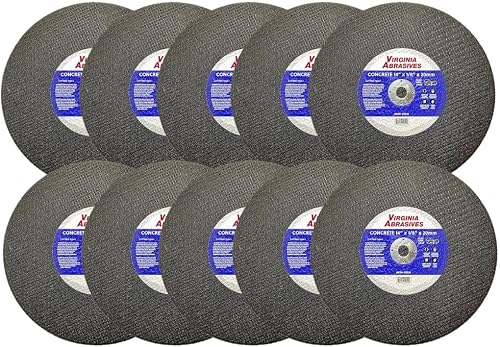
Virginia Abrasives 14-Inch Concrete Cut-Off Wheel (10-Pack)
Type 1 reinforced abrasive wheel for occasional concrete and masonry cuts. 14" x 1/8" x 20mm arbor, 10-pack. Diamond is cheaper per cut on ongoing work.
$119.56
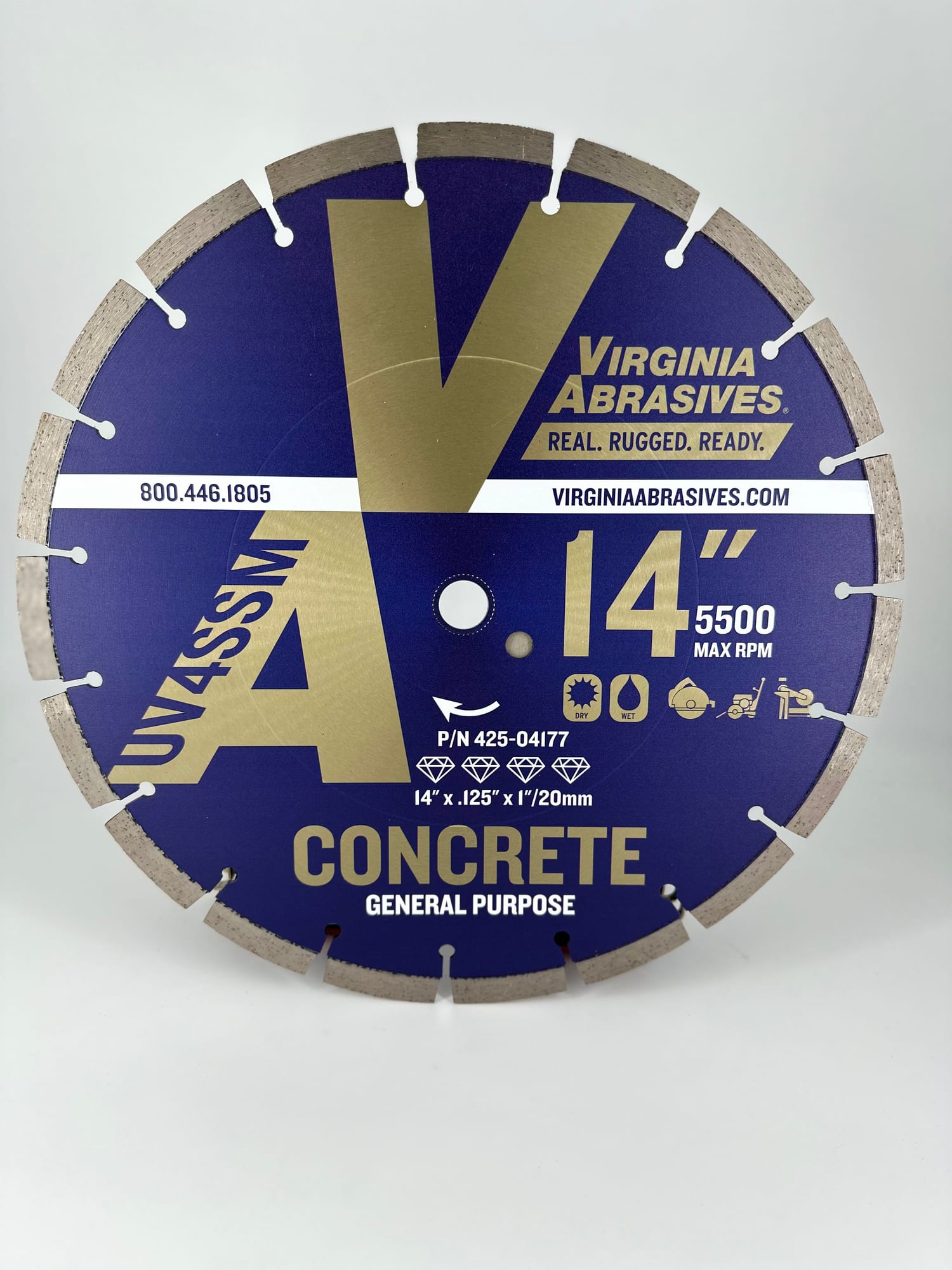
Virginia Abrasives 14-Inch Ultra Value Diamond Blade
Value-tier 14-inch general-purpose segmented diamond blade. Fits Stihl TS 420, Husqvarna K 770/K 970 via the included 20mm bushing.
$69.99
More picks in our roundup: best 14 inch cut off wheels